
Dance Freely: Effective Hip Stretches for Every Dancer
Why Your Hips Are Your Most Important Dance Asset
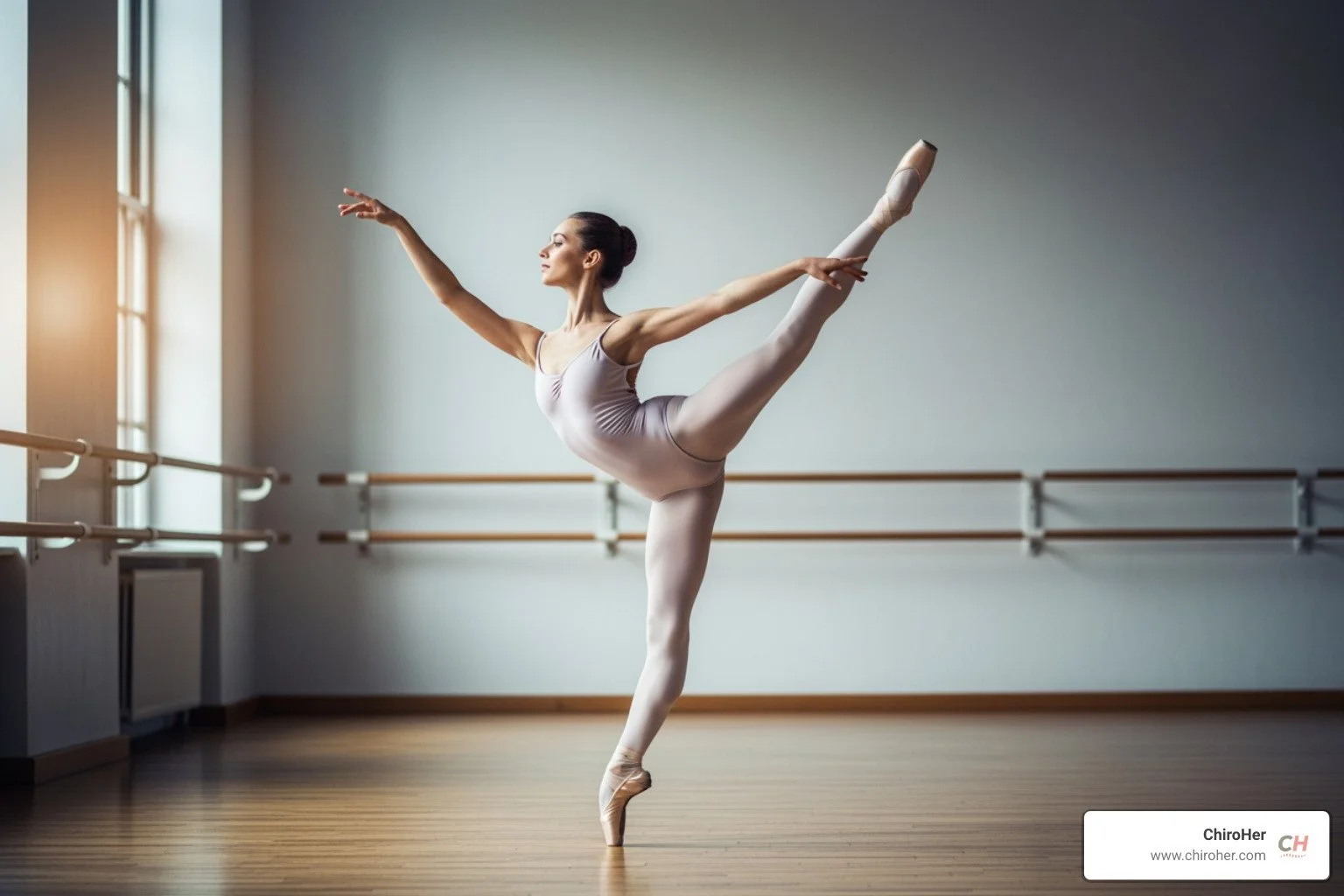
Hip stretches for dancers are important for maintaining flexibility, preventing injury, and achieving the beautiful lines that define a great performance. Whether you want a higher arabesque, smoother turns, or less snapping in your hip, the right stretching routine can transform your dancing.
Quick Answer: Top 5 Hip Stretches Every Dancer Needs
Kneeling Hip Flexor Stretch - Targets tight psoas and rectus femoris muscles
Pigeon Pose - Opens hips and releases deep rotators
Butterfly Stretch - Improves turnout and inner hip flexibility
Seated Glute & Hip Stretch - Lengthens posterior hip muscles
IT Band Wall Stretch - Reduces snapping hip syndrome symptoms
Hold each stretch for 15-30 seconds and repeat 2-3 times per side after your muscles are warm.
Your hips are the foundation for turnout, the power for jumps, and the key to extensions. But tight hip flexors are a common complaint among dancers. When these muscles are tight, they restrict your range of motion, especially the hip hyperextension needed for an arabesque. This can lead to incorrect pelvic rotation and lower back pain.
The good news is that regular, targeted stretching can help you dance more freely and with less pain.
Hi! I'm Dr. Michelle Andrews, a chiropractor who has worked with hundreds of athletes and dancers. I've seen how proper hip stretches for dancers can reduce pain, increase flexibility, and help dancers reach their full potential.
Why Healthy Hips Matter for Dancers
For dancers, the hips are the central hub of movement and power. Understanding the muscles involved is the first step toward opening your full potential.
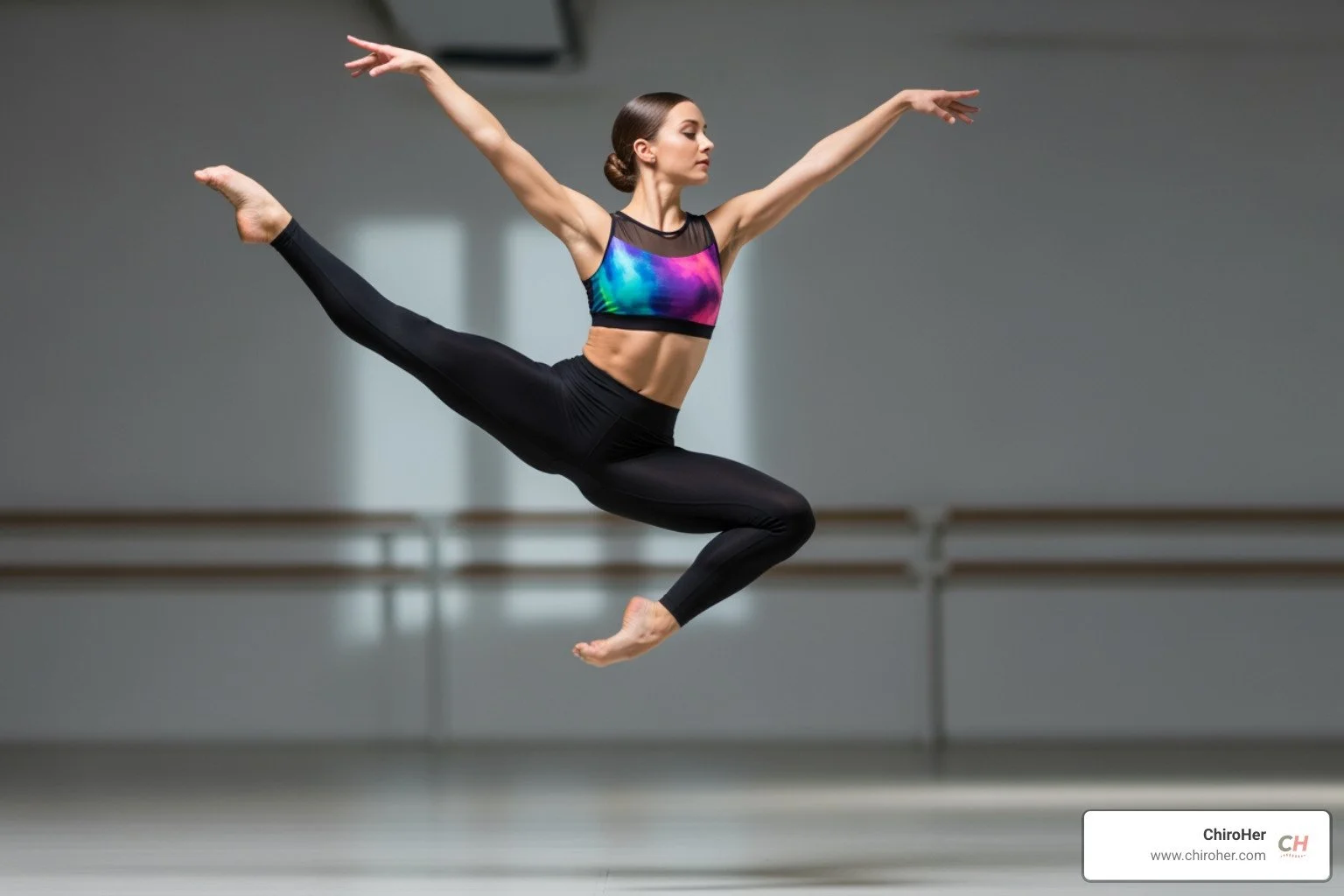
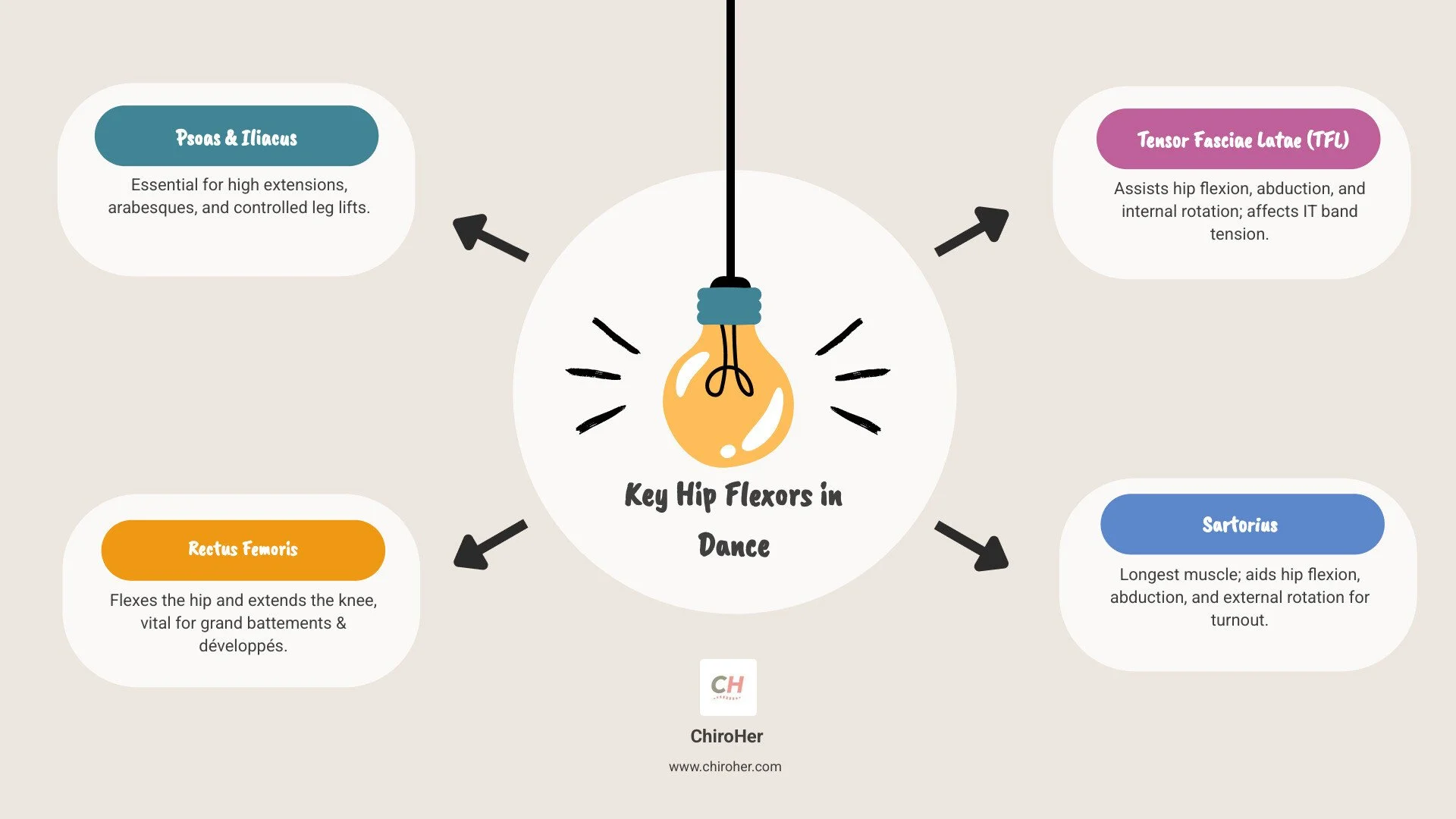
The hip flexors are a group of muscles at the front of your hip that lift your leg. They include the Psoas, Iliacus, Rectus Femoris, and Sartorius. These muscles power movements like développés, arabesques, and grand battements. Without strong, flexible hip flexors, achieving these positions with grace is nearly impossible.
Maintaining hip flexibility offers several benefits:
Increased Range of Motion: Flexible hips allow for higher extensions and deeper pliés.
Improved Performance: Better flexibility translates to more control, fluidity, and power.
Injury Prevention: Proper hip mobility reduces the risk of common dance injuries. Learn more about injury prevention in our other resources.
Conversely, tight hip flexors restrict your range of motion, especially the hip hyperextension needed for a beautiful arabesque. This often leads to compensation, like incorrectly rotating the pelvis, which can cause lower back pain.
Common Hip Issues in Dancers
The intense demands of dance can lead to several hip issues:
Snapping Hip Syndrome (Dancer's Hip): A snapping sensation caused by a tendon moving over a bony part of the hip. It can be internal (front of the hip) or external (outside of the hip) and may become painful.
Bursitis: Inflammation of the fluid-filled sacs that cushion your joints, often caused by repetitive motion.
Labral Tears: Tears in the cartilage rimming the hip socket, which can cause pain, clicking, or locking.
Pelvic Misalignment: Tight hip flexors can pull the pelvis forward into an anterior pelvic tilt, affecting your entire body's alignment. We offer specific stretches to align pelvis to help restore balance.
How Hip Flexibility Improves Dance Performance
Flexibility isn't just about extreme lines; it improves every part of your performance.
Aesthetic Lines: An arabesque relies on hip hyperextension, which is restricted by tight hip flexors.
Higher Extensions: Hip flexibility directly impacts the height and ease of your extensions, like grand battements.
Power and Control: Flexible hips allow for more powerful jumps, controlled landings, and stable turns.
Fluidity of Movement: Mobile hips contribute to seamless, effortless movements.
Core Stability: Healthy hip flexors support proper pelvic alignment and posture, which is key for all functional movement exercises.
The Ultimate Guide to Hip Stretches for Dancers
A comprehensive approach to hip stretching is key to keeping your body healthy.
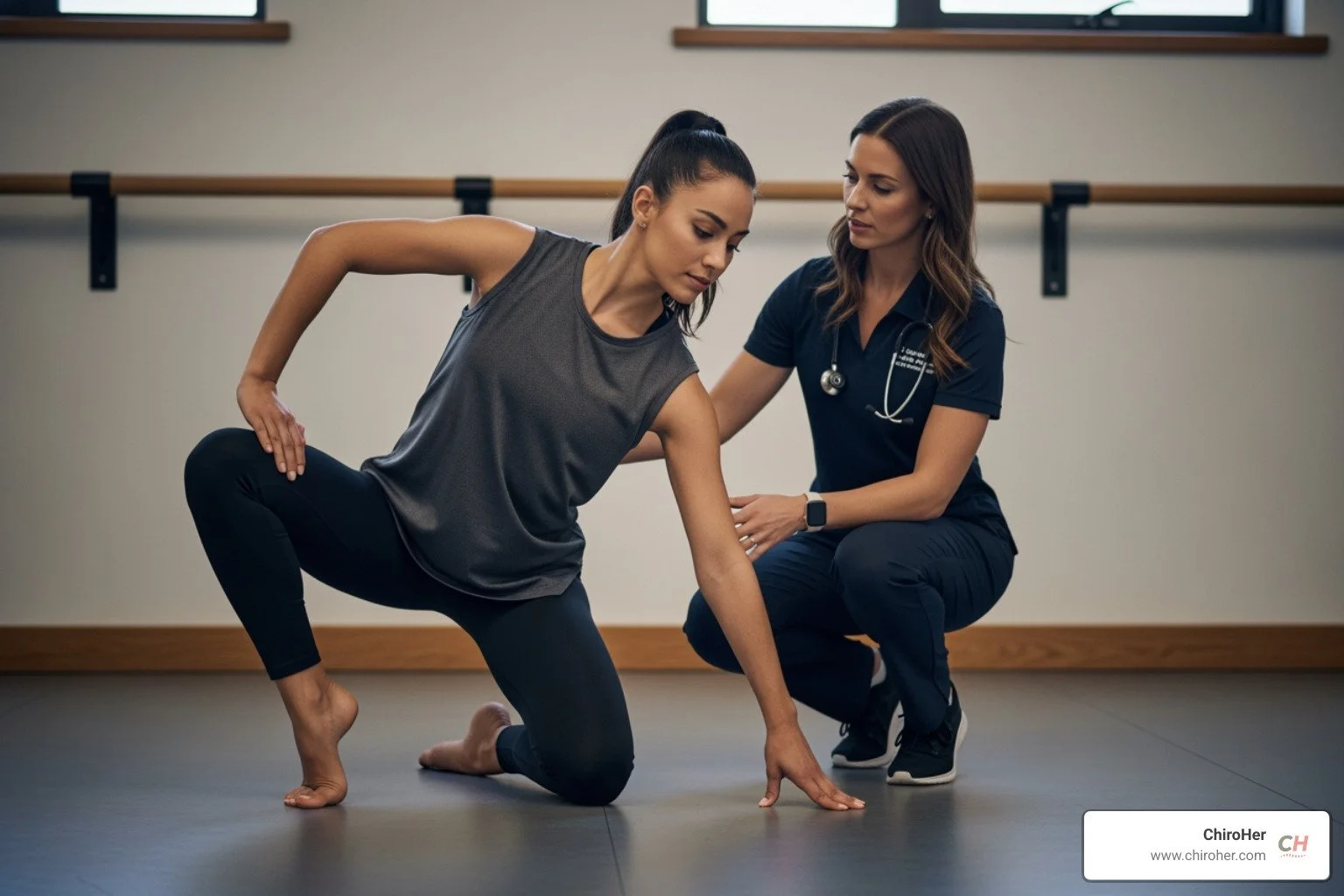
Best Practices for Effective Hip Stretching:
Warm-Up First: Always warm up with light cardio or dynamic stretches (like leg swings) before static stretching.
Consistency is Key: Incorporate these stretches into your routine several times a week for the best results.
Listen to Your Body: A stretch should be a gentle pull, not a sharp pain. Stop if you feel discomfort.
Maintain Proper Form: Focus on alignment to make stretches effective and avoid injury.
Breathe Deeply: Use your breath to relax and deepen into each stretch.
Use Tools: Foam rollers and massage balls can help release tight muscles. Our therapeutic exercises guide has more information.
5 Foundational Hip Stretches for Dancers
These stretches target key areas of the hip to improve flexibility and range of motion.
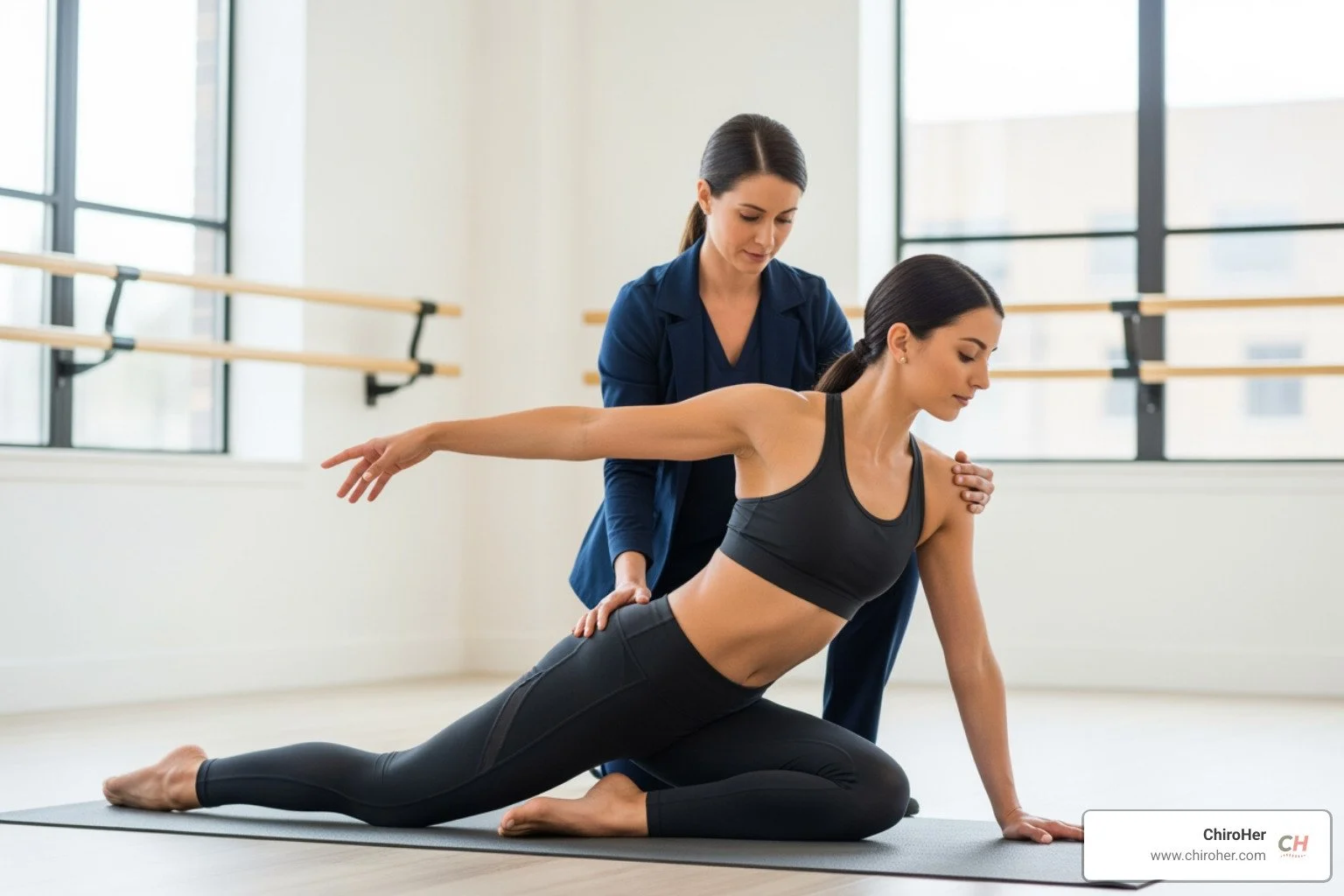
Kneeling Hip Flexor Stretch
How to Perform: Kneel on one knee with the other foot flat on the floor in front, creating 90-degree angles at both knees. Tuck your pelvis and gently push your hips forward until you feel a stretch in the front of the kneeling leg's hip.
Why it Helps: Targets the iliopsoas and rectus femoris, which is important for hip extension in moves like an arabesque.
Duration: Hold for 30 seconds per side, repeat 2-3 times.
Pigeon Pose
How to Perform: From a tabletop position, bring your right knee forward behind your right wrist. Extend your left leg straight back. Keep your hips square and either stay upright or fold your torso over your front leg.
Why it Helps: Opens the hips and releases deep external rotators and glutes, improving turnout.
Duration: Hold for 30-60 seconds per side.
Butterfly Stretch
How to Perform: Sit with the soles of your feet together and let your knees fall out to the sides. Sit tall and gently press your knees toward the floor, or lean forward to deepen the stretch.
Why it Helps: Targets the inner thighs and groin, which is vital for turnout and hip mobility.
Duration: Hold for 30 seconds, repeat 2-3 times.
Seated Glute & Hip Stretch
How to Perform: Sit with your knees bent. Cross your right ankle over your left knee. Gently pull your left thigh toward your chest or lean forward until you feel a stretch in your right glute.
Why it Helps: Stretches the piriformis and deep gluteal muscles, which can become tight from repetitive movements. For more ideas, see ACE Fitness on opening tight hips.
Duration: Hold for 60 seconds per side, repeat 2-3 times.
IT Band Wall Stretch
How to Perform: Stand sideways to a wall. Cross your outside leg behind your inside leg. Lean your hips toward the wall until you feel a stretch along your outer thigh.
Why it Helps: Lengthens the IT band, which can reduce symptoms of external snapping hip syndrome.
Duration: Hold for 30 seconds per side, repeat 2-3 times.
Advanced Stretches and Integration
For experienced dancers, consider adding advanced stretches like Open Lizard Pose or using props for assisted splits. Integrate stretching into your routine by using dynamic stretches for warm-ups and static stretches for cool-downs. Always listen to your body and modify as needed. The psoas muscle is particularly important; find specific stretches for it, as discussed in resources like Dance Spirit.
When to Seek Professional Help
While stretching helps, sometimes you need professional guidance. Consult a healthcare professional if you experience:
Persistent pain that doesn't improve with rest.
A sudden decrease in your hip's range of motion.
Sharp pain, popping, or clicking that suggests an injury.
Numbness or tingling.
A chiropractor or physical therapist can provide an accurate diagnosis and a personalized treatment plan. At ChiroHer, we help dancers in Oklahoma City, Yukon, Edmond, Nichols Hills, Del City, Mustang, and Moore. Our services include:
Chiropractic care: For proper spinal and pelvic alignment.
Acupuncture: To reduce pain and inflammation.
Manual therapy: To release muscle tension and improve joint mobility.
If you're struggling with hip pain, we encourage you to book a consultation. We're here to help you dance freely and without pain.
Building Trust: Expert Guidance and Resources
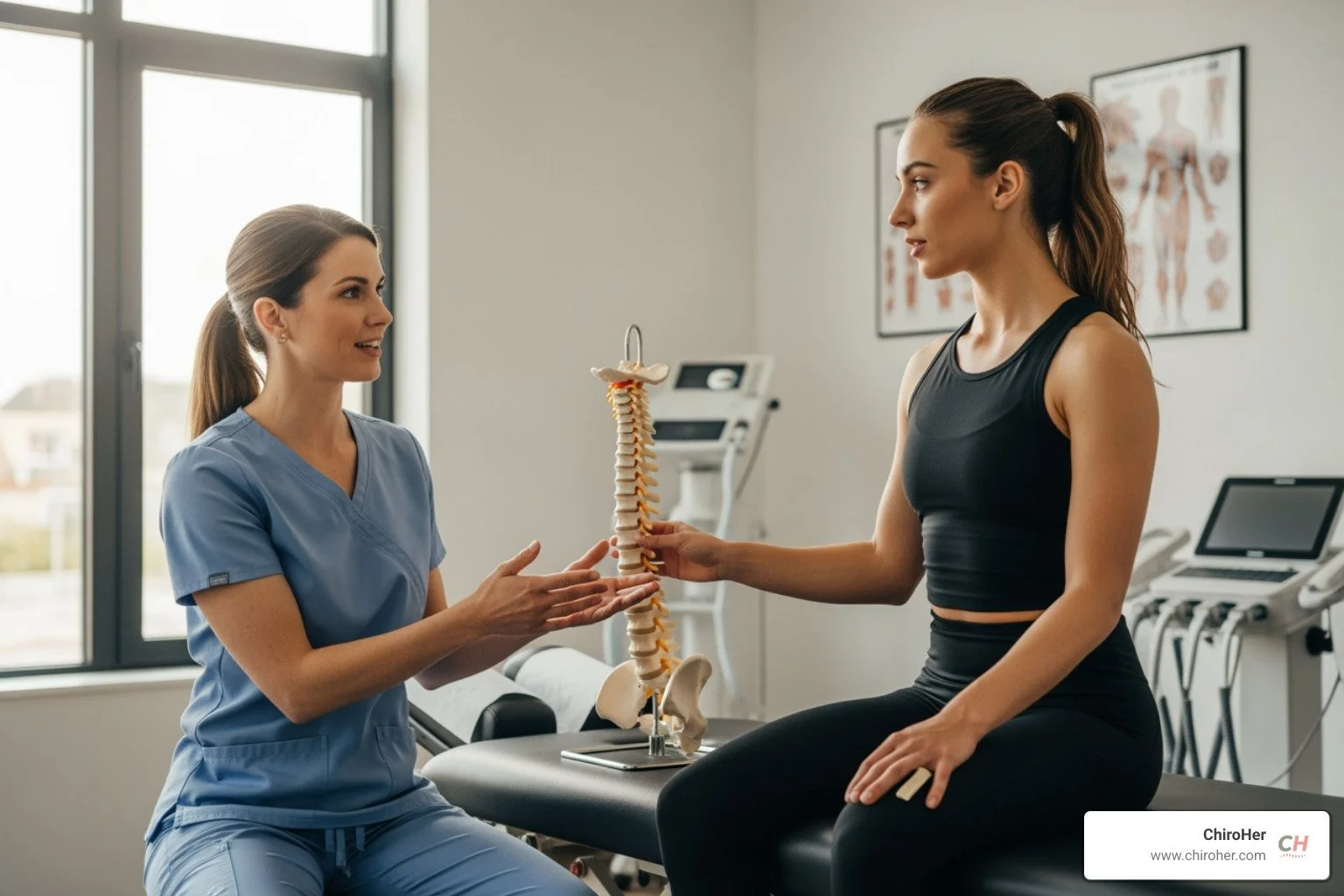
Hi! I'm Dr. Michelle Andrews, a chiropractor with years of experience helping dancers stay healthy and flexible. We understand the unique demands of dance and how crucial hip health is to your performance. Our approach focuses on understanding the root cause of your discomfort and empowering you with the tools to prevent future issues.
While this guide provides valuable information, it is not a substitute for a personalized assessment from a healthcare professional.
For further reading on hip health and stretching, we recommend these reputable sources:
American Academy of Orthopaedic Surgeons: Learn more about common hip conditions.
National Institutes of Health: Explore the science and benefits of stretching.
This guide is for informational purposes and is not a substitute for already established medical advice from your healthcare provider.