
Third Trimester Mid-Back Woes? Here's How to Find Relief
Understanding Middle Back Pain in Your Third Trimester

Middle back pain during the third trimester is one of the most common discomforts expecting mothers face. If you're experiencing this, you're far from alone. Research shows that 50 to 80 percent of pregnant women experience back pain, with the third trimester often being the most challenging period.
Quick Relief Strategies:
Practice good posture - Stand tall with shoulders back and use supportive chairs
Apply heat therapy - Use a heating pad on low for 15 minutes at a time
Sleep on your side - Use pregnancy pillows between knees and under your belly
Try gentle stretches - Cat-cow stretches and door frame stretches can help
Wear supportive shoes - Low-heeled shoes with good arch support
Consider professional care - Chiropractic adjustments and prenatal massage
During the third trimester, your growing baby, shifting center of gravity, and pregnancy hormones like relaxin all put extra strain on your thoracic spine (the middle back). The good news? This pain doesn't have to be something you just endure. There are safe, effective strategies to find real relief.
Hi! I'm Dr. Michelle Andrews, founder of ChiroHer in Oklahoma City. As a Webster Technique certified chiropractor, I've helped hundreds of expecting mothers find drug-free relief from middle back pain. My goal is to help you feel comfortable and strong as you approach delivery.
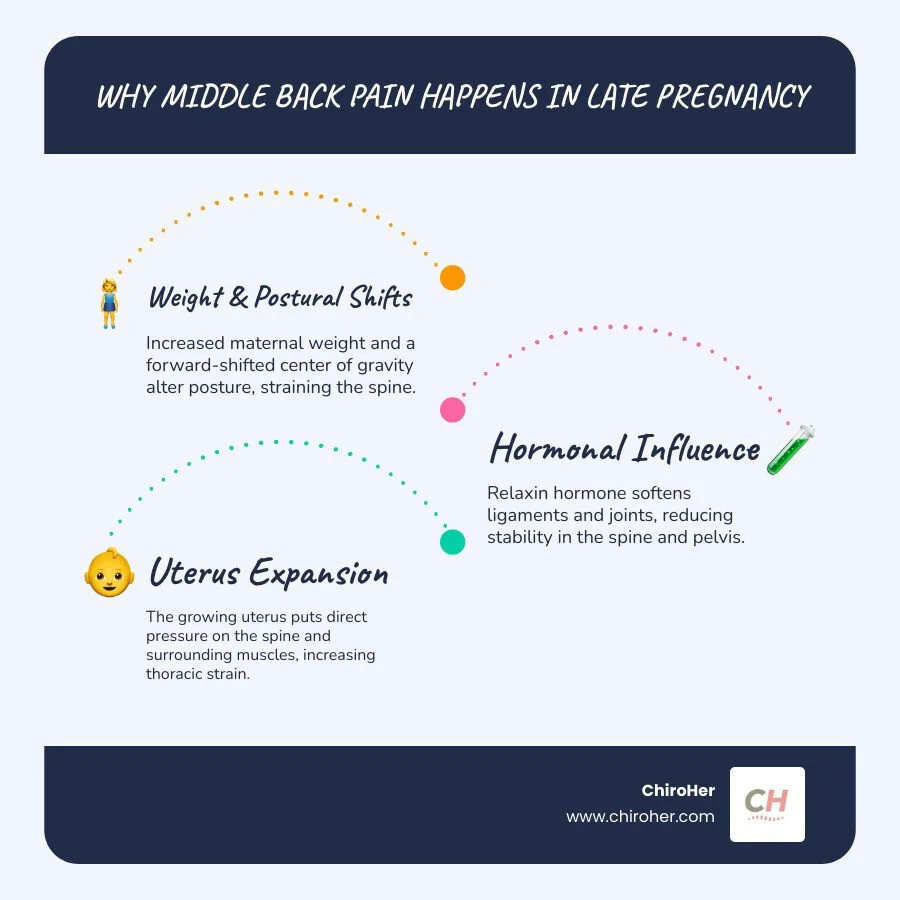
Why Middle Back Pain Happens in Late Pregnancy
As your pregnancy progresses, your body undergoes remarkable changes to prepare for your baby's arrival. While miraculous, these changes can introduce new aches, particularly in the middle back. Understanding why this happens is the first step toward finding relief.
Here are the key factors contributing to middle back pain during this stage:
Weight Gain: The recommended weight gain during pregnancy, typically 25-35 pounds according to the CDC, places extra stress on your musculoskeletal system. A 2023 review noted that a higher BMI was associated with more back pain. This increased load can lead to fatigue and strain in the muscles supporting your middle back.
Shifting Center of Gravity: As your uterus expands, your body's center of gravity shifts forward. To compensate, many women lean back, which exaggerates the curve in the lower back. This postural change puts a disproportionate amount of strain on the thoracic spine, leading to middle back pain.
Postural Changes: The expansion of your chest and growth of your breasts can lead to rounded shoulders and a forward head posture. This pulls on the muscles in your upper and middle back, creating tension. The abdominal muscles, which help support your spine, also stretch and weaken, further reducing spinal stability.
Hormones (Relaxin): Your body produces a hormone called relaxin to soften the ligaments in your pelvis for delivery. However, relaxin affects ligaments throughout your body, leading to instability in spinal joints. This can cause your mid-back muscles to work harder to maintain stability, resulting in strain and pain.
Uterus Expansion: In the third trimester, your growing uterus can put pressure on nerves and blood vessels, which can refer pain to your back. The increased intra-abdominal pressure also affects overall spinal mechanics, potentially worsening middle back issues.
The combination of these factors puts significant stress on your middle back. While common, this pain is often manageable with the right strategies and support.
How to Manage Middle Back Pain in Pregnancy Third Trimester
Managing middle back pain in the third trimester involves a combination of mindful daily habits, gentle exercises, and knowing when to seek professional guidance. Our goal at ChiroHer is to empower you with actionable strategies for relief.
Practice Good Posture and Supportive Positioning
Proper posture and supportive devices can significantly alleviate strain on your middle back.
Standing Posture: Stand tall, with shoulders back and relaxed. If you must stand for long periods, place one foot on a low stool and take frequent breaks to walk or stretch.
Sitting Posture: Choose chairs with good lumbar support, or place a small pillow behind your lower back. Keep your feet flat on the floor and avoid crossing your legs.
Supportive Shoes: Opt for low-heeled shoes with excellent arch support. Proper footwear helps distribute your weight evenly and maintains spinal alignment.
Sleeping on Your Side: Sleep on your side (preferably the left) with knees bent. Use pillows between your knees, under your belly, and behind your back to keep your spine aligned.
Pregnancy Pillows: These specially designed pillows cradle your body, providing support for your belly, hips, and back to alleviate pain.
Abdominal Support Garments: A maternity belt can help lift your belly, taking weight off your back muscles. The Mayo Clinic notes that many women find them helpful. Consult your provider for proper fit.
For more information, explore our resources on correct posture exercises.
Gentle Stretches and Exercises for Middle Back Pain in Pregnancy Third Trimester
Regular, gentle movement is one of the most effective ways to manage middle back pain. These exercises focus on strengthening supportive muscles and relieving tension.
Low-Impact Exercise: Staying active is key. Activities like walking, swimming, and prenatal yoga are excellent choices.
Walking: A simple yet powerful exercise. Wear supportive shoes and maintain good posture.
Swimming: The buoyancy of water reduces the load on your spine and joints.
Prenatal Yoga: Promotes flexibility, strength, and relaxation, easing muscle tension.
Pelvic Tilts: This exercise strengthens abdominal muscles and helps stabilize your pelvis.
On your hands and knees, exhale and gently pull your belly button towards your spine, arching your back slightly. Inhale and relax. Repeat 10-15 times.
Cat-Cow Stretch: This movement improves flexibility and relieves back tension. The Cleveland Clinic highlights this stretch for back pain relief.
On your hands and knees, exhale and round your spine towards the ceiling (Cat Pose). Inhale and arch your back, dropping your belly (Cow Pose). Flow between poses for 10-15 repetitions.
Door Frame Stretch: This opens your chest and relieves tension in your upper and middle back.
Stand in a doorway with forearms on the frame. Step forward with one foot until you feel a stretch across your chest. Hold for 20-30 seconds.
Remember to listen to your body and never push into pain. For a comprehensive approach, explore our resources on therapeutic exercises.
Home Remedies and Self-Care Strategies
Simple home remedies can provide significant relief from middle back pain.
Heat Therapy: A heating pad on low (wrapped in a towel) for 15 minutes can relax tense muscles. A warm bath can also be soothing. The Cleveland Clinic confirms this is generally safe if you don't raise your core body temperature.
Cold Packs: If inflammation is a factor, an ice pack (wrapped in a cloth) for 10-15 minutes can help.
Prenatal Massage: A massage from a trained prenatal specialist can release muscle tension. Ask your partner for a gentle back rub if a professional massage isn't an option.
Rest: Prioritize rest and avoid prolonged periods in one position. Discuss modifications with your employer if you have a physically demanding job.
Proper Lifting Techniques: Always bend at your knees, not your waist. Keep your back straight and lift with your legs, holding the object close to your body. Avoid twisting and ask for help with heavy items.
When to Seek Professional Help for Middle Back Pain in Pregnancy Third Trimester
While some back pain is normal, certain symptoms warrant a call to your healthcare provider. According to the American College of Obstetricians and Gynecologists (ACOG), you should seek professional help for the following:
Severe or Worsening Pain: The pain is intense, sudden, or lasts more than two weeks despite self-care.
Fever: Back pain accompanied by a fever could signal an infection.
Vaginal Bleeding: Always requires immediate medical evaluation.
Painful Urination: Could indicate a urinary tract infection (UTI).
Numbness or Tingling: Numbness, tingling, or weakness in your legs, feet, or buttocks requires immediate attention.
Signs of Preterm Labor: Cyclical back pain, cramping, regular contractions, or pelvic pressure.
Symptoms of Preeclampsia: Severe headaches, blurred vision, sudden swelling, or high blood pressure.
Always err on the side of caution and contact your provider if you are concerned. For more details, refer to the ACOG guidance on back pain during pregnancy.
Your Path to a More Comfortable Third Trimester
Experiencing middle back pain in the third trimester can feel isolating, but you don't have to manage it alone. At ChiroHer, we provide personalized, patient-focused care to help you feel your best. We offer a holistic approach for expecting mothers in Oklahoma City, Yukon, Edmond, Nichols Hills, Del City, Mustang, and Moore.
Our approach focuses on:
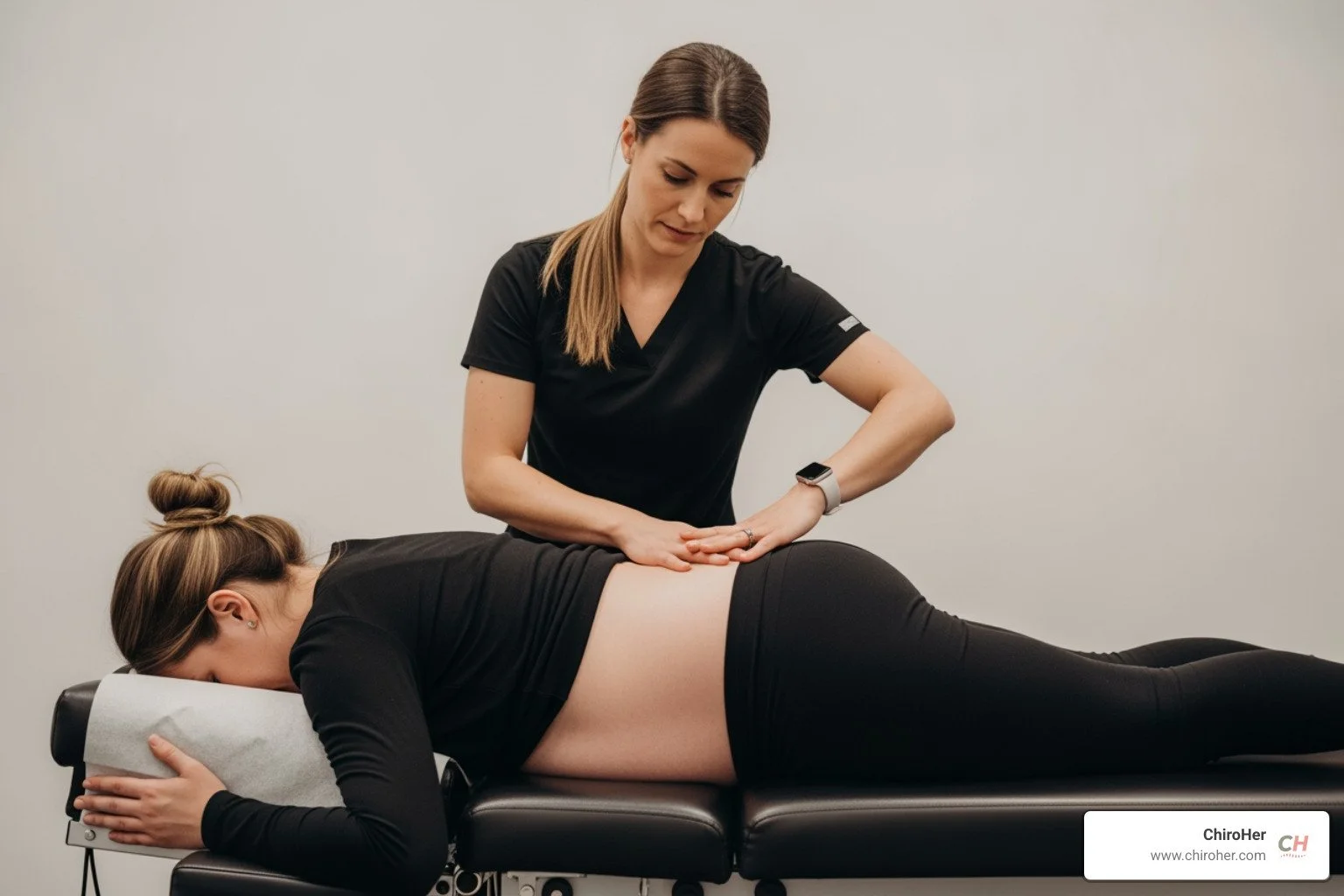
Chiropractic Adjustments: As a Webster Technique certified chiropractor, I use gentle adjustments to restore spinal alignment and balance. This is very important as your center of gravity shifts and ligaments loosen. Regular prenatal chiropractic care can reduce pain and help prepare your body for an easier labor and delivery.
Acupuncture: We offer acupuncture as a complementary therapy. This practice can be highly effective in managing pregnancy discomforts, including back pain, by promoting natural pain relief and relaxation. Learn more about the benefits of acupuncture during pregnancy.
Manual Therapy: Our manual therapy techniques focus on releasing tension in muscles and connective tissues that contribute to middle back pain. By addressing these soft tissue restrictions, we can improve flexibility and provide lasting relief.
We understand that every pregnancy is unique. We take the time to listen, conduct a thorough assessment, and develop a customized care plan that supports your well-being. Our upscale, comfortable clinic is designed to make you feel at ease.
Don't let middle back pain overshadow the joy of your final trimester. We're here to help you move with greater comfort and confidence. Ready to find relief? We invite you to schedule a consultation with us today.
This guide is for informational purposes and is not a substitute for already established medical advice from your healthcare provider.