
A Comprehensive Guide to TMJ Chiropractic Treatment
Understanding Your Path to Jaw Pain Relief
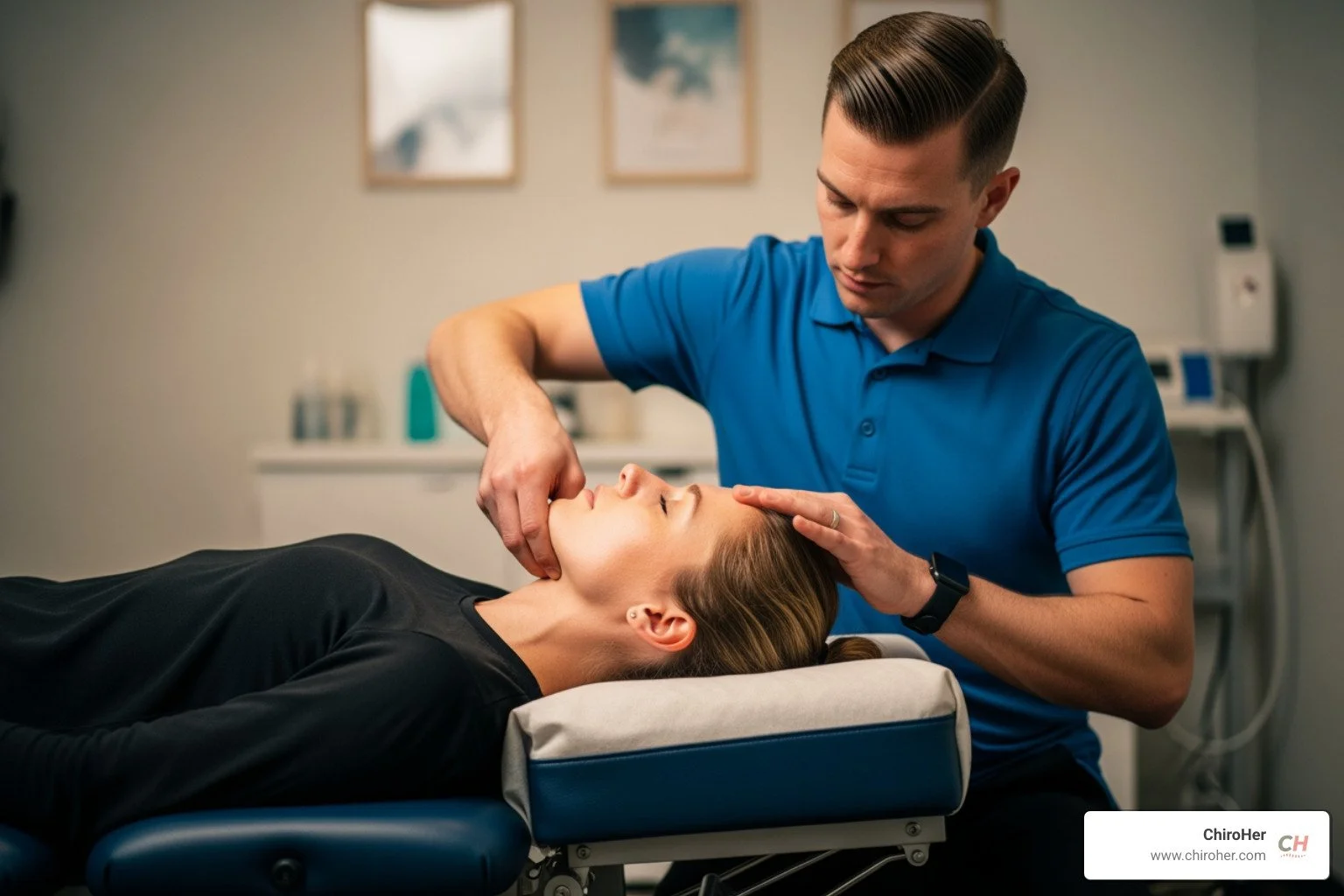
TMJ chiropractic treatment is a non-invasive approach to temporomandibular joint (TMJ) dysfunction. It uses spinal adjustments, soft tissue therapy, and corrective exercises to relieve jaw pain and restore proper joint function.
Quick Overview: What TMJ Chiropractic Treatment Offers
Pain Relief: Reduces jaw, facial, and neck pain without medication.
Improved Function: Restores normal jaw movement and reduces clicking.
Holistic Approach: Addresses root causes like posture and spinal alignment.
Timeline: Most patients see improvement within 4-6 weeks.
Techniques Used: Spinal adjustments, soft tissue therapy, and exercise rehabilitation.
If you experience jaw pain, clicking sounds when you open your mouth, or persistent headaches, you're not alone. TMJ disorder affects millions of adults, and the pain can significantly impact daily life. While traditional options often focus on symptom management, research shows that chiropractic therapy can significantly improve pain and jaw function in TMD patients. A recent case study showed a patient's resolution of TMJ symptoms after just four weeks of chiropractic care.
Hi! I'm Dr. Michelle Andrews, founder of ChiroHer in Oklahoma City. I've helped hundreds of patients find relief from complex musculoskeletal issues. My training in structural alignment and soft tissue therapy is particularly effective for TMJ chiropractic treatment, as jaw dysfunction is often linked to neck misalignment and postural imbalances that respond well to targeted chiropractic care.
Understanding TMJ Disorder and Its Impact
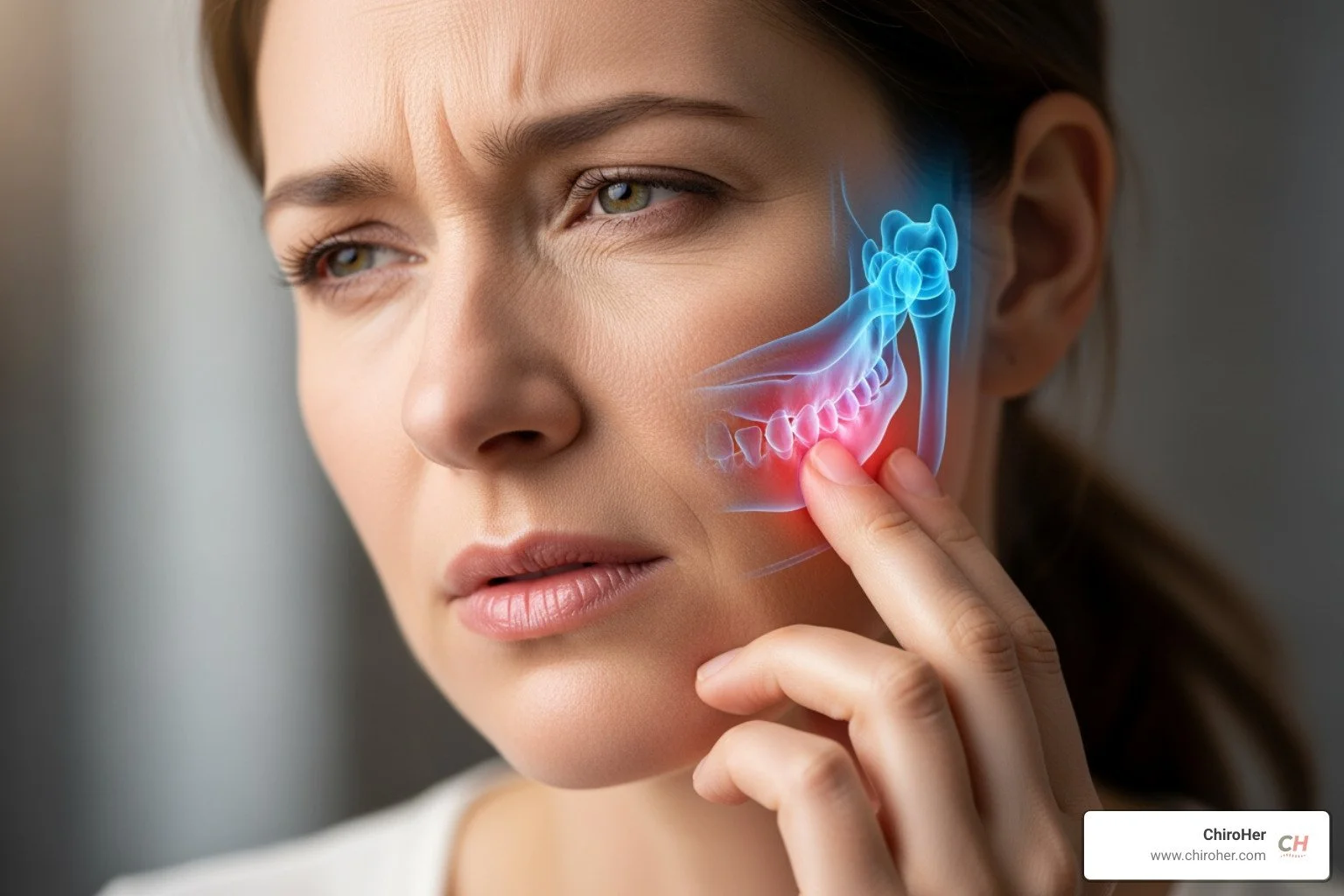
The temporomandibular joint (TMJ) is the hinge connecting your jaw to your skull, allowing you to chew, speak, and yawn. When this joint or its surrounding muscles don't work correctly, it results in a group of conditions known as Temporomandibular Disorder (TMD). Understanding the causes of TMD is the first step toward finding effective relief.
What is TMJ Disorder and What Causes It?
Temporomandibular disorder (TMD) refers to various conditions affecting the TMJ and its surrounding muscles. The causes are often multifaceted, involving a mix of mechanical issues and broader musculoskeletal imbalances. Here are common culprits we see in our Oklahoma City, Yukon, and Edmond area clinics:
Bruxism (Teeth Grinding): Unconscious grinding or clenching, often during sleep or stress, places immense pressure on the jaw joint.
Jaw Injury: A direct blow to the jaw or a whiplash injury can damage the TMJ and its surrounding tissues.
Arthritis: Osteoarthritis or rheumatoid arthritis can affect the TMJ, causing pain, stiffness, and reduced mobility.
Stress: Emotional stress often causes tension in the jaw and neck muscles, contributing to clenching and grinding.
Poor Posture: Forward head posture, or "Tech Neck," alters the curve of your cervical spine and strains the jaw muscles and nerves. Learn more about how posture affects your health with our guide on Tech Neck Pain.
Neck Misalignments: The skull, neck, and jaw are interconnected. Misalignments in the upper cervical spine directly affect TMJ biomechanics, leading to pain and dysfunction.
Occlusal Abnormalities: An uneven bite or misaligned teeth can create an unbalanced load on the joint.
Addressing the root cause is key. For more information on TMD, we refer to resources like the American Academy of Family Physicians TMJ resource.
Recognizing the Symptoms and Daily Effects of TMJ

TMJ disorder can manifest in many ways, from mild discomfort to severe pain. If you're experiencing any of these symptoms, it's a good idea to seek an assessment.
Common symptoms we see in patients from Oklahoma City, Yukon, Edmond, and surrounding areas include:
Jaw Pain or Tenderness: The most common symptom, felt in the joint, chewing muscles, or around the ear.
Clicking, Popping, or Grating Sounds: Noises that occur when opening or closing your mouth. Painful sounds often indicate a joint problem.
Limited Jaw Movement or Locked Jaw: Difficulty opening your mouth fully, or the jaw getting "stuck" in an open or closed position.
Difficulty Chewing: Pain and stiffness can make eating, especially hard or chewy foods, a challenge.
Facial Pain: Pain can radiate throughout the face, cheeks, and temples.
Headaches: Tension-type headaches or migraines are common due to the connection between jaw, head, and neck muscles.
Earaches: Pain in or around the ear, sometimes mistaken for an ear infection. It can also include ringing (tinnitus) or a feeling of fullness.
Neck and Shoulder Discomfort: TMJ issues can cause or be worsened by pain and stiffness in the neck and shoulders.
These symptoms can disrupt daily life, affecting eating, sleeping, and overall well-being. You can explore our resources on Jaw Pain and Headache and Neck Stiffness and Pain. The Mayo Clinic also offers insights into TMJ symptoms. Early assessment is important to prevent chronic pain and joint damage.
The Role of TMJ Chiropractic Treatment in Pain Relief

At ChiroHer, our approach to TMJ disorder is centered on comprehensive and holistic TMJ chiropractic treatment. We believe true relief comes from addressing the root causes of your discomfort, not just managing symptoms. Chiropractic care offers a non-invasive, drug-free path to restoring proper jaw function and improving your well-being. We don't just look at your jaw; we consider its connection to your neck, spine, and posture to provide lasting relief for our patients across the Oklahoma City area.
The Chiropractic Assessment and Diagnosis Process
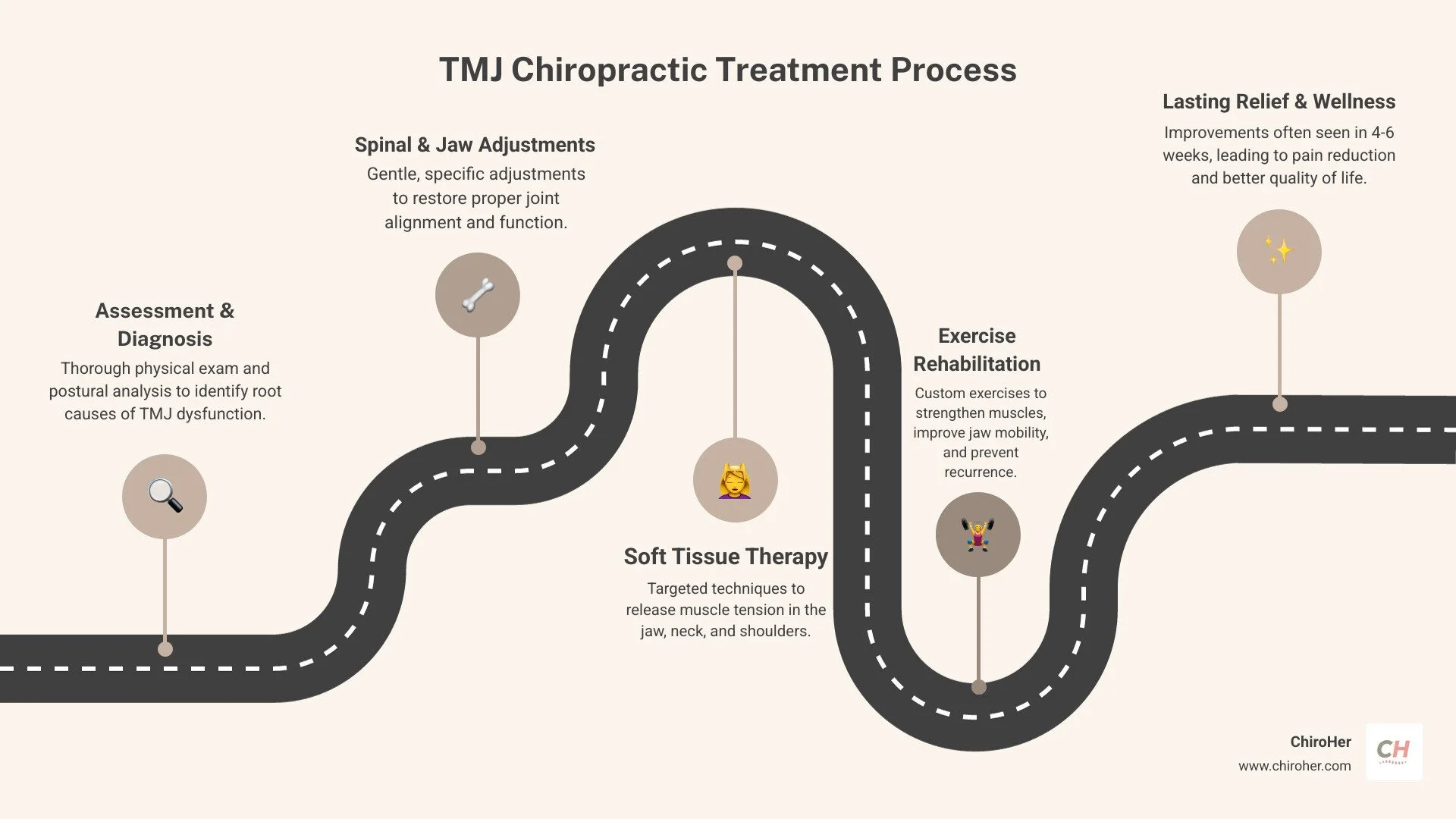
Before any TMJ chiropractic treatment begins, a thorough assessment is performed to create a personalized care plan. Our chiropractors are experts in diagnosing musculoskeletal conditions and will conduct a comprehensive evaluation.
Here's what to expect during our assessment:
Patient History: A discussion of your symptoms, health history, and lifestyle factors.
Physical Examination: This includes:
Jaw Function Assessment: We observe your jaw movement, listen for sounds, and measure your range of motion.
Muscle Palpation: We gently feel the muscles around your jaw, face, and neck to identify tightness or trigger points.
Spinal and Postural Analysis: We assess your neck and upper back for misalignments and analyze your overall posture.
Range of Motion Tests: We test the mobility of your jaw and neck to identify limitations.
Diagnostic Imaging (if necessary): X-rays may be recommended to get a clearer picture of the joint and spinal alignment.
This detailed process allows us to understand the underlying causes of your TMJ symptoms. This is part of our commitment to providing effective Chiropractic Care. For more details, visit our guide on What Does a Chiropractor Do.
Key Benefits of TMJ Chiropractic Treatment
Choosing TMJ chiropractic treatment at ChiroHer offers many benefits beyond simple pain relief. Our goal is to restore optimal function and empower your body's natural healing capabilities.
Key benefits our patients experience:
Pain Reduction: By addressing misalignments and muscle tension, chiropractic care significantly decreases pain in the jaw, face, head, and neck.
Improved Jaw Mobility: Adjustments and soft tissue work help restore the normal range of motion in your TMJ, making it easier to chew and speak.
Decreased Inflammation: Improving joint mechanics reduces stress on the tissues, which helps lower inflammation.
Reduced Muscle Tension: We use soft tissue therapies to release tight muscles in your jaw, face, and neck.
Headache Relief: Correcting spinal misalignments and relaxing jaw muscles can significantly reduce headache frequency and intensity.
Aims for Lasting Correction: Our treatment aims to correct underlying structural imbalances for more lasting relief.
Holistic Approach: We treat the body as an integrated system, recognizing that neck health profoundly impacts the jaw.
Non-Invasive and Drug-Free: Chiropractic care is a natural and gentle solution with minimal side effects.
Our chiropractors use a variety of techniques, including spinal adjustments, manual jaw therapy, soft tissue therapy, and specific exercise recommendations to restore balance to your musculoskeletal system. Learn more in our articles on the Benefits of a Chiropractic Spinal Adjustment and our Manual Therapy Guide.
Recovery and Long-Term Wellness with TMJ Chiropractic Care

Finding relief from TMJ disorder is the first step, but at ChiroHer, our vision extends to your long-term wellness. We want you to overcome your current pain and prevent future flare-ups. This involves understanding healing timelines, embracing supportive care, and integrating sustainable lifestyle habits.
Healing Timelines and Supportive Care for TMJ Chiropractic Treatment
One of the most common questions we hear in our Oklahoma City area clinics is, "How long will it take to feel better?" The healing timeline for TMJ chiropractic treatment varies, but we can provide a general expectation.
Typical Healing Timeline: Most people see significant improvement within 4 to 6 weeks of consistent care. Chronic cases may take longer.
Influencing Factors: Your recovery speed depends on the severity of your condition, consistency with your treatment plan, and your body's individual response.
Combining TMJ chiropractic treatment with other supportive care can accelerate your recovery:
Massage Therapy: Our Manual Therapy techniques help relax tight jaw, neck, and shoulder muscles.
Postural Exercises: Specific exercises strengthen core muscles and correct posture, reducing strain on the TMJ.
Dental Interventions: We may collaborate with your dentist, who might recommend a night guard to prevent teeth grinding.
Stress Management: Techniques like meditation and deep breathing can be highly effective since stress is a major contributor to jaw tension.
Prevention, Lifestyle Habits, and Choosing Your Provider
Once you achieve relief, prevention is key. Integrating certain lifestyle habits can support your jaw health. Choosing the right chiropractor for your TMJ chiropractic treatment is also paramount.
Lifestyle Habits for Prevention:
Soft Food Diet: During flare-ups, opt for softer foods to reduce strain on your jaw.
Stress Management: Find healthy ways to manage stress, such as exercise or hobbies.
Posture Correction: Maintain good posture, especially at a desk, to alleviate strain on your neck and jaw.
Avoid Gum Chewing: Constant chewing can overwork your jaw muscles.
Mindful Jaw Movements: Avoid wide yawning. Rest your tongue on the roof of your mouth with teeth slightly apart to keep the jaw relaxed.
Potential Side Effects of Treatment:
Chiropractic care for TMJ is safe. Some individuals may experience mild, temporary soreness in the jaw or neck, which typically resolves within a day or two. Serious side effects are extremely rare with a qualified chiropractor.
What to Look for in a Chiropractor for TMJ:
Experience with TMJ: Ensure the chiropractor has specific training and success in treating TMJ disorders.
Holistic Approach: Look for a provider who considers the jaw, neck, and spine connection.
Comprehensive Assessment: A thorough initial exam is a sign of a diligent practitioner.
Personalized Treatment Plans: Your care should be customized to your unique condition.
Patient Reviews: Testimonials provide valuable insight into a chiropractor's care.
At ChiroHer, we offer award-winning, patient-focused care in Oklahoma City and surrounding areas like Yukon and Edmond. If you're ready to find lasting relief from TMJ pain, we invite you to Schedule a Consultation with us today.
Building Trust: Authority and Evidence in TMJ Chiropractic Care
At ChiroHer, we are committed to providing care that is both compassionate and grounded in scientific evidence. We believe empowering our patients with knowledge about their condition and the effectiveness of TMJ chiropractic treatment is a crucial part of their healing.
Our approach is informed by the latest research in biomechanics and musculoskeletal health. A growing body of evidence highlights chiropractic therapy's positive impact on pain and function in TMD patients, reinforcing our confidence in this treatment. We encourage you to explore reputable sources and discuss any questions with us. For comprehensive medical information, we often refer patients to trusted resources like the American Academy of Family Physicians TMJ Resource and the Mayo Clinic TMJ Overview.
Choosing ChiroHer means selecting a team dedicated to your well-being through proven methods. We are passionate about helping you understand how your body works and how chiropractic care can help it heal naturally.
The information, including but not limited to, text, graphics, images and other material contained on this website are for informational purposes only. No material on this site is intended to be a substitute for professional medical advice, diagnosis or treatment. Always seek the advice of your physician or other qualified health care provider with any questions you may have regarding a medical condition or treatment and before undertaking a new health care regimen, and never disregard professional medical advice or delay in seeking it because of something you have read on this website.