
Decoding COVID Back Pain: Symptoms, Causes, and What You Can Do
Understanding the Rise of COVID-19 Related Back Pain
Covid back pain has emerged as a surprising symptom of SARS-CoV-2 infection, affecting about one in five people with the Omicron variant. If you have back pain during or after a COVID-19 infection, you're not alone. Research shows musculoskeletal pain is the third most common symptom after fever and coughing, occurring in 36% of cases.
Key Facts:
Prevalence: Affects about 20% of COVID-19 patients.
Characteristics: A deep, diffuse ache in the lower back, usually mild to moderate.
Causes: The body's inflammatory response, cytokine release, and direct viral effects on muscles.
Duration: Can last through the acute infection and sometimes persist as a long COVID symptom.
Management: Gentle movement, heat/cold therapy, hydration, and professional care.
The pandemic brought a surge in back pain complaints. Besides the virus, lifestyle changes like remote work and less physical activity led to a 49% increase in chronic lower back pain reports. Some people describe their COVID-related back pain as intense, similar to muscle spasms. Others feel a persistent, dull ache that disrupts daily life.
Hi! I'm Dr. Michelle Andrews, founder of ChiroHer in Oklahoma City. I've helped many patients with covid back pain, both during their acute illness and as a lingering symptom. I help them find relief through personalized, holistic chiropractic care. My approach focuses on the root cause of your pain to create a plan for relief and long-term wellness.
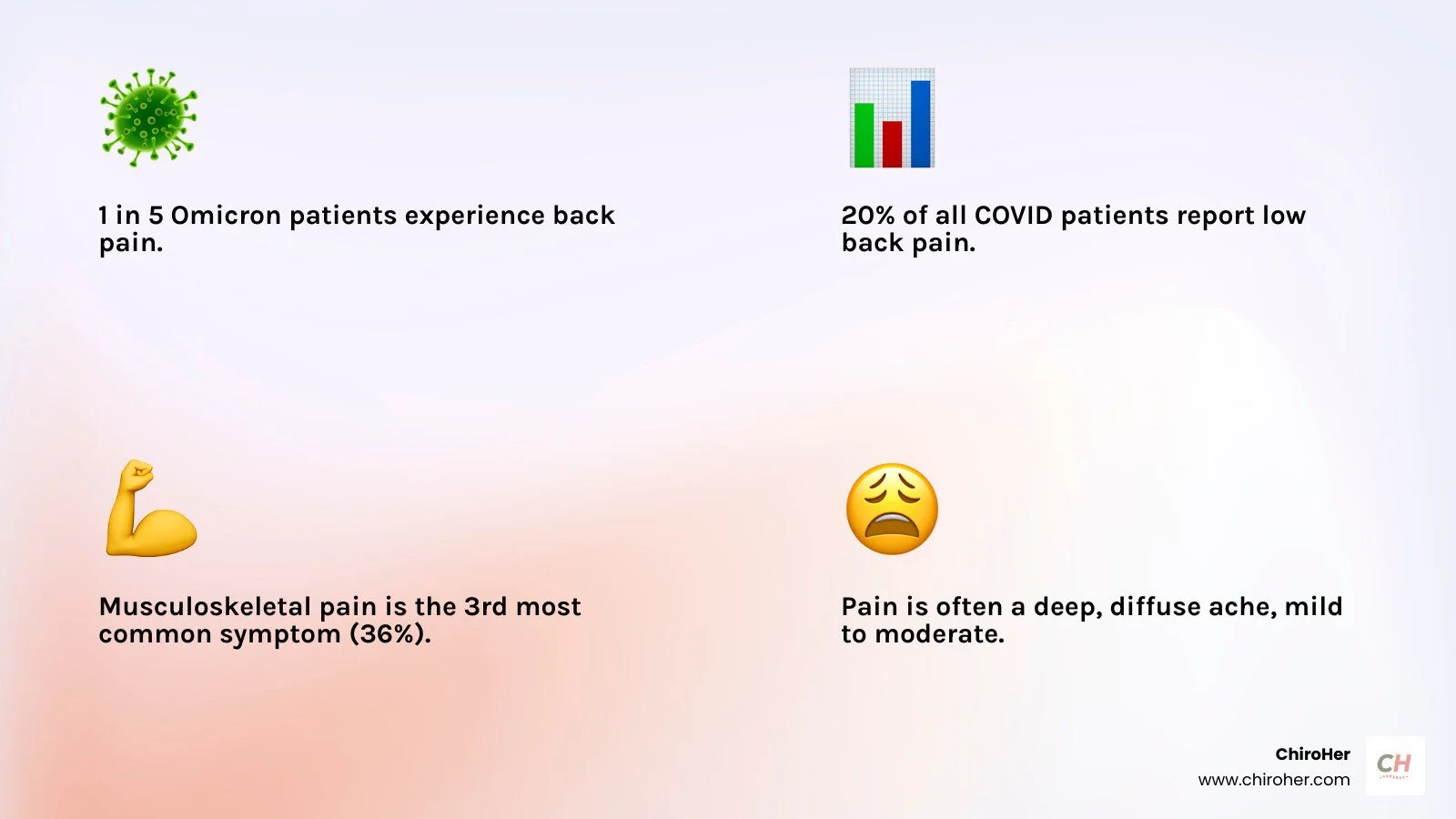
The link between COVID-19 and back pain is now clear. While not initially a primary symptom, data from the Zoe COVID Symptom Study shows it's now a top 20 symptom, especially with variants like Omicron. Studies confirm that about 20% of patients report low back pain. Overall, musculoskeletal (MSK) pain is the third most common symptom of COVID-19 at 36%, after fever and coughing.
Identifying COVID Back Pain Symptoms
COVID-19 related back pain often feels like a generalized muscle pain (myalgia). It's usually a deep, diffuse ache, not a sharp, stabbing pain. The intensity is typically mild to moderate and may not change with posture. While it can affect the upper and lower back, some people, especially with the Omicron variant, report intense pain similar to muscle spasms or kidney stones. This discomfort comes from within the muscles, unlike a specific injury. During an acute infection, the pain can last for a few days to a couple of weeks.
To learn more about relieving general back discomfort, you can explore our Low Back Pain Relief Guide. For a deeper scientific understanding of how pain manifests in COVID-19, a scientific review of COVID pain manifestations provides valuable insights.
What Causes Back Pain During a COVID Infection?
Understanding why COVID-19 causes back pain requires a look at both the direct actions of the virus and the body's response, as well as some indirect factors.
Direct Causes: The Body's Inflammatory Response and Viral Interaction
Your body's immune response to the virus is a primary cause. The immune system releases inflammatory molecules called cytokines. While fighting the virus, these cytokines can also stimulate nerves, causing body aches and back pain. This inflammatory process leads to stiffness and soreness.
The virus may also have a direct effect. SARS-CoV-2 enters human cells via ACE2 receptors, which are found in skeletal muscles. This suggests the virus could directly damage muscle tissue, contributing to pain. A research on inflammatory mechanisms offers more detail on this.
Indirect Causes: Lifestyle and Illness-Related Factors
Prolonged Bed Rest: Resting is important, but too much inactivity leads to muscle stiffness and weakness in the back.
Dehydration: Fever and low fluid intake can cause dehydration, which affects the water-filled spinal discs and can increase back pain. Learn more in our article, Can Dehydration Lead to Back Pain?.
Persistent Coughing: Frequent coughing puts a strain on back and abdominal muscles, leading to soreness and fatigue, especially in the upper and mid-back.
Is It COVID Back Pain or Something Else?
Because back pain is such a common ailment, it can be tricky to determine if your discomfort is specifically related to a COVID-19 infection or if it stems from another cause. Here's a quick guide to help differentiate:
Feature COVID-19 Related Back Pain Mechanical Back Pain (e.g., muscle strain, disc issue) Onset Appears with other COVID-19 symptoms like fever and cough. Linked to a specific injury, movement, or poor posture. Pain Character Deep, diffuse muscle ache (myalgia). Not very responsive to posture changes. Sharp, localized pain. Changes with movement or position. Can radiate. Associated Symptoms Fever, cough, fatigue, and other systemic symptoms. No systemic illness symptoms. May have localized tenderness. Response to Movement Stiffness, but pain doesn't change much with specific movements. Pain changes with movement, posture, or rest. Location Widespread, often lower back. Can be upper back from coughing. Localized to a specific spinal area or nerve path.
Back pain also occurs with illnesses like the flu, so testing is the only way to confirm COVID-19. It's also important to distinguish it from kidney pain, which is felt higher in the back, below the ribs. Kidney pain may be accompanied by fever, nausea, or urinary symptoms and requires prompt medical attention. If your back pain feels different or has unusual symptoms, our resource on different types of back injuries may help.
Your Guide to Managing COVID Back Pain

If you're dealing with covid back pain, you can take practical steps to feel better. At ChiroHer, we help you recover with at-home strategies and professional care.
At-Home Relief Strategies
You can start managing covid back pain at home. Simple, gentle approaches can make a real difference.
Gentle movement is vital, even when you feel tired. Complete rest can worsen back pain by making muscles stiff. Try short walks or light stretching. Our guides on Stretching for Back Pain and Correct Posture Exercises offer safe movements.
Heat and cold therapy can offer comfort. Heat relaxes sore muscles, while cold packs reduce inflammation and numb pain. Try alternating between them for best results.
Staying hydrated is key. COVID-19 can cause dehydration, which can worsen back pain by affecting your spinal discs. Keep water nearby and sip it throughout the day. Learn more in our article: Can Dehydration Lead to Back Pain?
Over-the-counter pain relievers like ibuprofen or naproxen can manage pain and inflammation. Always check with your doctor before taking any new medication.
Your posture deserves attention, especially if you're resting more. Try to maintain a neutral spine when sitting. An ergonomic home workspace can help, with your screen at eye level and feet flat on the floor.
Sleeping positions can either help or hurt. Try sleeping on your side with a pillow between your knees or on your back with a pillow under your knees to reduce pressure on your lower back.
When Back Pain Lingers: Long COVID
Sometimes covid back pain persists after other symptoms resolve. If back pain continues for more than a month, you might have Long COVID, also known as post-COVID conditions.
Back pain is a common Long COVID symptom. One study found muscle aches were the second most common lingering symptom. This persistent pain can interfere with daily life and work.
The good news is that Long COVID back pain often improves over time, but you don't have to just wait. There are active steps you can take to feel better sooner.
Physical therapy is very helpful for Long COVID back pain. A physical therapist can create a custom exercise program to help you safely regain strength and flexibility.
Continuing gentle exercise is important for persistent pain. Walking, swimming, and water-based exercises are great options because they are low-impact. The warm water in aquatic therapy also helps relax muscles.
A holistic approach works well for complex Long COVID symptoms. At ChiroHer, we look at the whole picture to find the root cause of your pain. Our chiropractic care services focus on restoring spinal alignment to support your body's natural healing. Many patients find chiropractic adjustments make a real difference in their recovery.
For more information about Long COVID and its various symptoms, the CDC's resource on Long COVID provides comprehensive, up-to-date information.
When to See a Professional
While home care is effective, some signs mean you need professional help. Seek immediate medical attention for red flag symptoms like numbness, tingling, or weakness in your legs; loss of bladder or bowel control; or severe, unrelenting pain.
Also see a doctor for pain that radiates down your leg, or if you have back pain with fever, chills, or unexplained weight loss. If your pain started after an injury, get it checked out.
You should also seek help if your pain isn't improving after a week or two of home care, or if it's getting worse. If the pain feels different than usual or lingers long after your infection, a professional evaluation is a good idea.
At ChiroHer, we specialize in musculoskeletal pain. As your chiropractor in Oklahoma City, I focus on finding the root cause of your covid back pain, whether it's inflammation, inactivity, or spinal misalignment.
Our holistic approach may include:
Chiropractic adjustments: To restore spinal alignment and reduce nerve interference.
Manual therapy: To address tight muscles and stiff joints.
Therapeutic exercises: To strengthen your core and improve flexibility.
Acupuncture: To help manage pain and reduce inflammation.
Lifestyle guidance: Advice on posture, ergonomics, and movement to support your recovery.
We treat the whole person, not just the symptoms. Our focus on women's health and prenatal care means we understand our patients' unique challenges. We are here to help you feel better, whether you're recovering from COVID-19 or managing persistent back pain.
If you're curious about What Does a Chiropractor Do? or need to Find a Back Doctor Near You, I encourage you to reach out. We would love to be part of your recovery.

Building Authority: Our Commitment to Your Health
At ChiroHer, excellent care is just the start. We are also committed to providing accurate, evidence-based information so you can make informed health decisions.
Our information is grounded in research and clinical experience. We use trusted sources like the CDC, NIH, and peer-reviewed medical journals to stay current on conditions like covid back pain. We incorporate new research into our practice and guidance.
Our holistic approach supports your body's natural healing ability. We believe in transparency and empowering you with knowledge, and we work to ensure our recommendations are backed by medical science.
This article is for informational purposes only and does not constitute medical advice. Always seek the advice of a qualified health provider with any questions you may have regarding a medical condition.