
Acupuncture for TMJ: A Prickly Solution to Pain?
Why Jaw Pain Deserves a Natural Solution

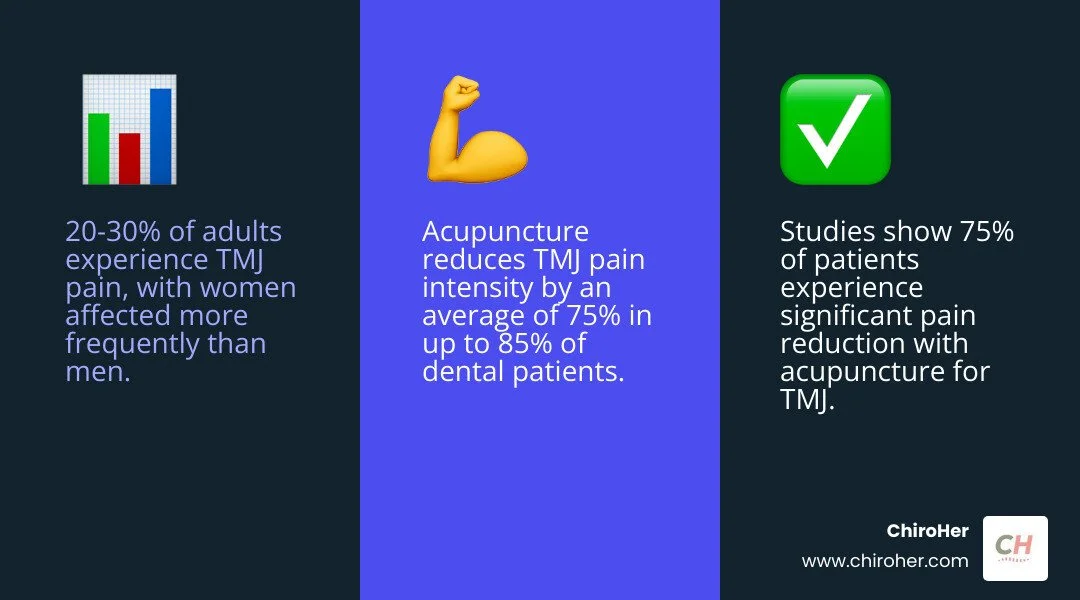
Acupuncture for jaw pain offers a drug-free path to relief for the millions experiencing temporomandibular joint (TMJ) disorder. If you're waking up with a sore jaw, hearing clicking sounds when you chew, or dealing with persistent headaches, you're not alone. Research shows that 20-30% of adults experience TMJ pain, with women affected more frequently than men.
Quick Answer: Does Acupuncture Work for Jaw Pain?
Yes, research supports it. Studies show 75% of patients experience significant pain reduction with acupuncture compared to 33% with sham treatment.
It targets multiple symptoms. Acupuncture addresses jaw pain, facial tightness, neck tension, and headaches simultaneously.
Relief can be immediate. Many patients report pain reduction after just one session, with cumulative benefits over time.
It's safe and natural. Minimal side effects compared to medication, with no risk of dependency.
Works well with other treatments. Acupuncture improves results when combined with chiropractic care or physical therapy.
TMJ disorder affects more than just your jaw, leading to chronic headaches, neck pain, and difficulty eating. The standard approach often involves pain medication or invasive procedures, but there's a gentler way forward.
Acupuncture works by stimulating specific points to relax tense muscles, reduce inflammation, and trigger your body's natural pain-relieving mechanisms. Research published in Medicine confirms its effectiveness, with some studies showing an 85% benefit rate among dental patients, who saw an average 75% reduction in pain.
Hi! I'm Dr. Michelle Andrews, founder of ChiroHer in Oklahoma City. While I specialize in chiropractic care, I've worked with many patients exploring acupuncture for jaw pain as part of a holistic approach. My goal is to help you understand all your options so you can make informed decisions about your health.
How Acupuncture for Jaw Pain Works

What is TMJ Disorder and Its Symptoms?
Your temporomandibular joint (TMJ) connects your jaw to your skull. When these joints or the surrounding muscles malfunction, it results in TMJ disorder (TMD). Common symptoms include:
Jaw pain or tenderness: A dull ache or sharp pain near the ear or across the face.
Jaw stiffness: Difficulty opening your mouth wide for eating or yawning.
Clicking or popping sounds: Noises from the jaw joint during movement.
Facial, neck, and shoulder tension: Tightness that can lead to chronic headaches.
Chewing difficulty: Pain or discomfort while eating.
Earaches: Pain in or around the ear not caused by an infection.
Bruxism: Grinding or clenching teeth, especially during sleep, which strains the jaw.
Stress: Both a cause and a symptom, creating a difficult pain cycle.
Without treatment, TMJ can lead to worsening pain, limited jaw movement, and a lower quality of life. For more information on this condition, check out our resources on TMJ and Jaw Pain.
The Science Behind Acupuncture's Effectiveness
Modern research shows that acupuncture for jaw pain works by engaging the body's own healing systems. It provides relief through several key mechanisms:
Muscle relaxation: Needles stimulate nerves that signal the brain to release muscle tension in the jaw, face, and neck. This is particularly effective for the myofascial pain common in TMJ disorder.
Inflammation reduction: Acupuncture increases blood flow to the jaw, delivering oxygen and flushing out inflammatory substances that cause pain.
Endorphin release: The treatment triggers the release of endorphins, your body's natural painkillers, which block pain signals and promote a sense of well-being.
Nervous system regulation: It helps shift your body from a stressed "fight-or-flight" state to a relaxed "rest-and-digest" mode, breaking the cycle of stress-induced teeth clenching.
Research supports these effects. One clinical trial found that 75% of participants had significant pain reduction after real acupuncture, compared to only 33% who received a sham treatment. The National Institutes of Health reports that acupuncture is safe with few complications when performed by a licensed professional, offering a natural alternative without the risk of medication dependency.
Want to understand more about how this works? Read about how acupuncture relieves pain or explore the scientific research on acupuncture's effectiveness.
Key Acupoints Used for TMJ Relief
Acupuncturists use a combination of local points (near the jaw) and distal points (on the hands and feet) to relieve TMJ pain.
Local Acupoints:
ST6 (Jiache): Located on the large jaw muscle, this point targets jaw pain and swelling.
ST7 (Xiaguan): Found in front of the ear where the jaw joint is, it addresses jaw pain and related headaches.
SI19 (Tinggong): Situated in the depression before the ear canal, it helps with ear-related symptoms like pain or ringing.
GB20 (Fengchi): At the base of the skull, this point is key for releasing the neck and shoulder tension that often accompanies jaw problems.
Distal Acupoints:
LI4 (Hegu): In the webbing between the thumb and index finger, this is a powerful point for any pain in the head and face.
LV3 (Taichong): On top of the foot, it helps calm the nervous system and reduce stress-related muscle tension.
ST44 (Neiting): Also on the foot, this point helps reduce inflammation in the jaw area.
A licensed acupuncturist selects the right combination of these points to create a personalized treatment that addresses your specific symptoms.
What to Expect During Acupuncture at ChiroHer
If you're considering acupuncture for jaw pain, you might wonder what a session at ChiroHer involves. I want you to feel completely at ease, so here is what a typical visit looks like.
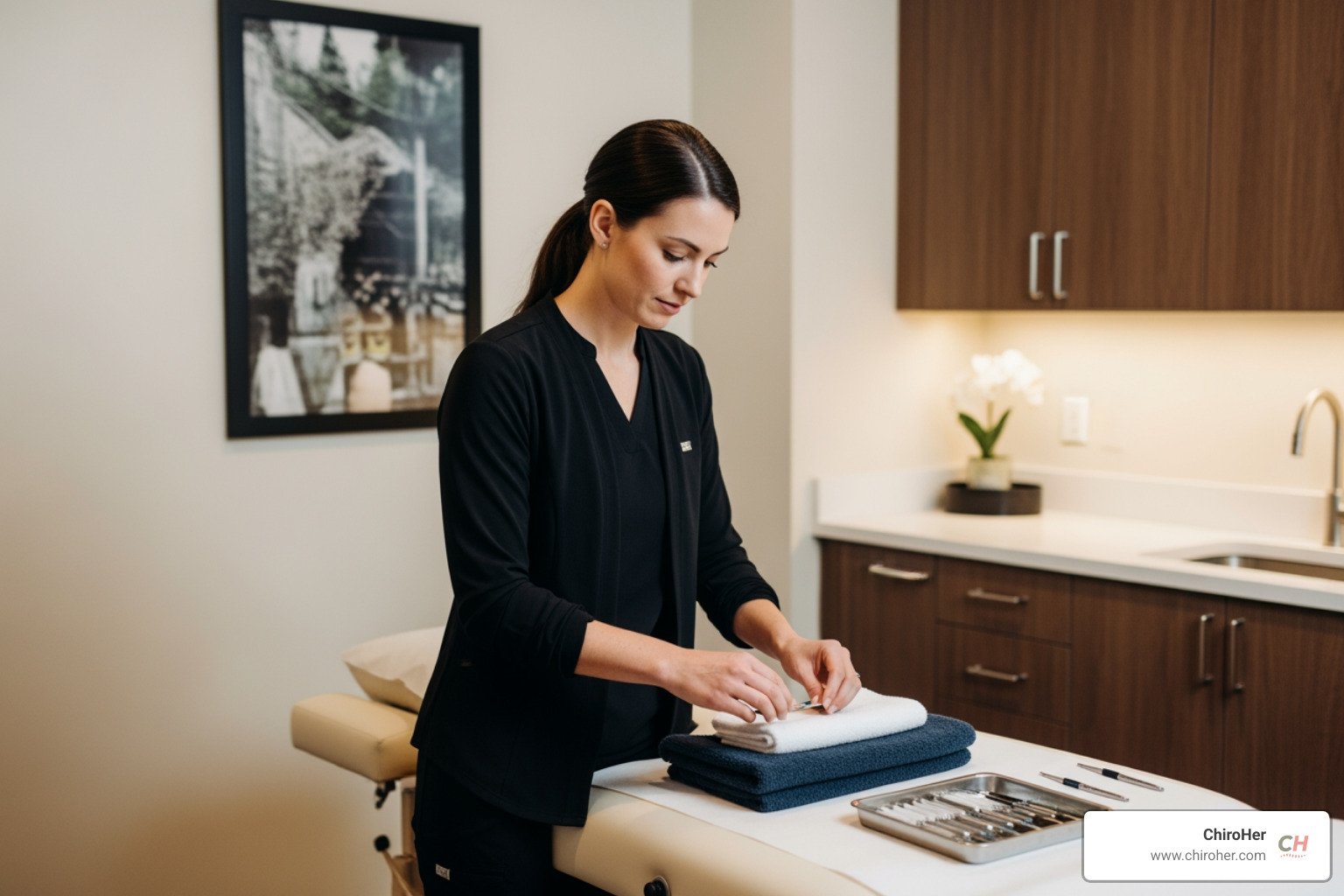
Initial Consultation: We'll start with a conversation about your medical history, symptoms, and lifestyle factors like stress and sleep. This helps me understand the full picture of your TMJ.
Personalized Treatment Plan: Based on our talk, I'll create a plan outlining the acupoints we'll use, the recommended frequency of visits, and any complementary therapies.
Needle Insertion: You'll lie comfortably in a private room. I use hair-thin, sterile, single-use needles at specific points. Most patients feel little to no discomfort, perhaps a slight pressure or a tingling sensation known as "de-qi," which indicates the point is activated.
Relaxation: Once the needles are in, you'll rest for 20 to 30 minutes. This quiet time allows the treatment to stimulate your nervous system, release endorphins, and calm your jaw muscles. Many patients find this part deeply relaxing.
A complete session lasts 45 to 60 minutes. The number of sessions needed varies; some feel relief after one visit, but chronic pain often requires a series of treatments. We'll regularly assess your progress and adjust the plan. Afterward, you may feel relaxed and notice your jaw is looser and less painful.
If you're curious about the details or worried about discomfort, you can learn more on our acupuncture page or read about whether acupuncture hurts. Most people are pleasantly surprised by how comfortable and calming the experience is.
Acupuncture and Integrative Care for TMJ

At ChiroHer, we look at the whole picture, not just the symptoms. Jaw pain is often connected to neck tension, stress, or spinal alignment. Our integrative approach combines therapies to address all aspects of your health.
For TMJ disorder, combining acupuncture for jaw pain with chiropractic care can be highly effective. Acupuncture works from the inside out by calming the nervous system and releasing muscle tension. Chiropractic care works from the outside in by correcting structural imbalances in the spine, neck, and jaw.
When used together, the results are powerful. Acupuncture relaxes the muscles around your jaw, making chiropractic adjustments more effective. In turn, adjustments improve posture and take pressure off the jaw joint. This combination also reduces stress. When your nervous system is calm, you are less likely to clench your jaw.
Our patients often report benefits beyond jaw pain relief, including better sleep, less anxiety, and fewer headaches. This is the power of treating the whole person, not just the painful joint.
To learn more about how these powerful therapies complement each other, check out our article on the benefits of combining chiropractic care with acupuncture. You can also explore how chiropractic can help with TMJ.
Building Trust: Is Acupuncture Safe and Effective?
When you're considering any new treatment for jaw pain, you naturally want to know: Is this safe? Will it actually work? You deserve clear, honest answers.

At ChiroHer, treatments are performed by licensed acupuncturists who follow strict safety protocols, including using sterile, single-use needles. The NIH resource on acupuncture safety confirms that complications are rare when performed by a qualified professional. Minor side effects, like temporary soreness at the needle site, are mild and resolve quickly.
The research on effectiveness is compelling. Studies show that 75% of patients experience significant pain reduction with real acupuncture compared to just 33% with sham treatment. A comprehensive review found acupuncture can be superior to physical therapy or no treatment for orofacial pain. It's also comparable to conventional splinting without the inconvenience.
Long-term studies show high satisfaction and sustained improvement, indicating that the relief can be long-lasting. Your plan at ChiroHer will be customized to your specific symptoms and health history. We adjust your care as you progress to promote lasting relief and improved jaw function.
If you're tired of jaw pain and ready to explore a natural, effective approach to relief, we're here to support you. We proudly serve patients throughout Oklahoma City, Yukon, Edmond, Nichols Hills, Del City, Mustang, and Moore. Let's work together to help you find the relief you deserve.
Schedule a consultation with our experts
Book your acupuncture session now
This guide is for informational purposes and is not a substitute for already established medical advice from your healthcare provider.