
The Power of Motion: A Guide to Movement Therapy Exercises
Why Movement Therapy Exercises Matter for Your Wellbeing

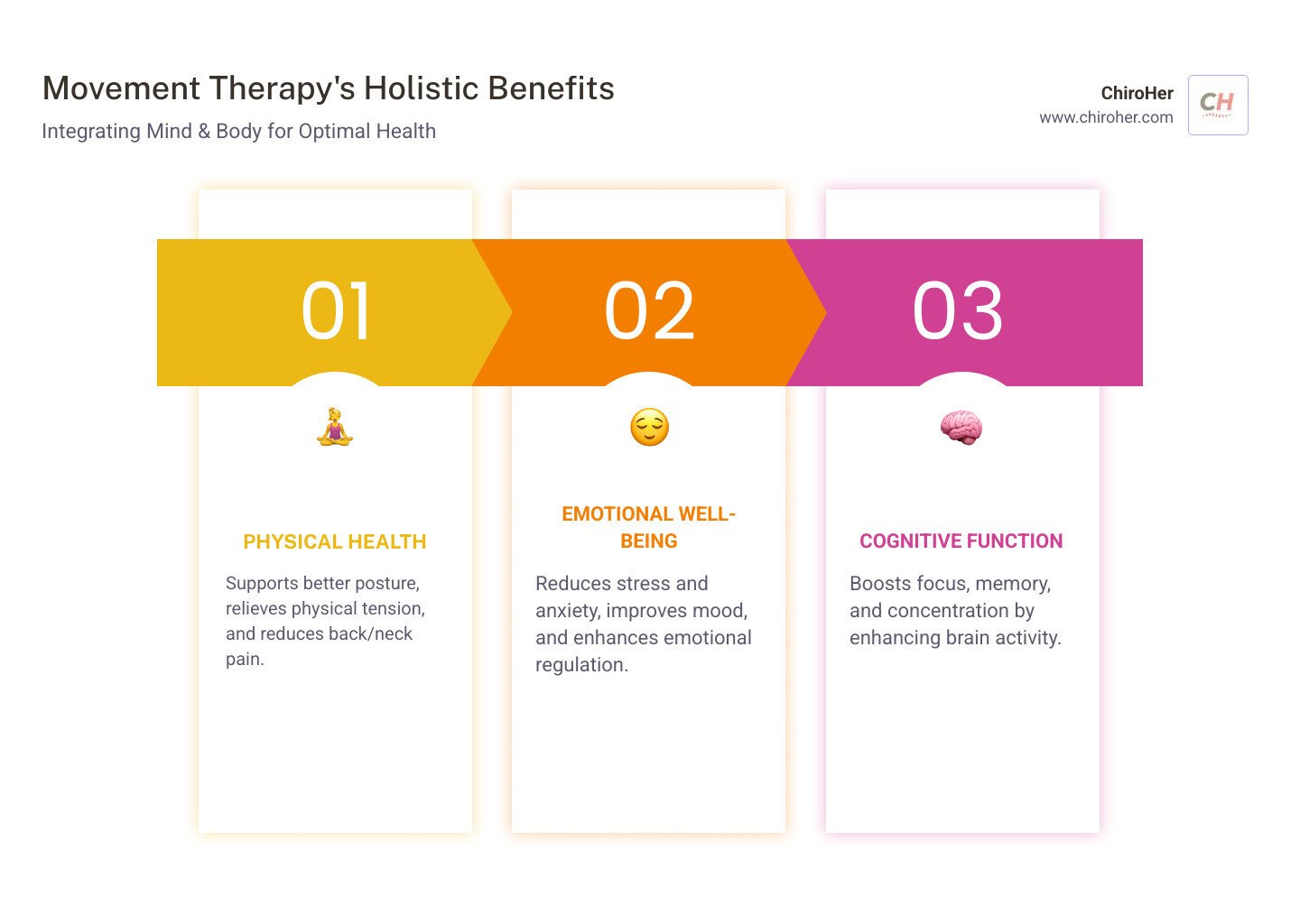
Movement therapy exercises are intentional movements designed to connect your body and mind. Unlike regular exercise focused on external performance, this therapy emphasizes internal awareness and how movement makes you feel, helping to reduce stress and improve physical and emotional health.
Quick Answer: What Are Movement Therapy Exercises?
• Somatic movements: Slow, conscious movements that increase body awareness (like body scans and breath work)
• Dance/movement therapy: Using rhythm and creative expression to process emotions and improve mood
• Functional movements: Exercises that improve daily activities (like seated pelvic shifts and grounding exercises)
• Mindful stretches: Gentle movements performed with complete internal focus and attention
Key Benefits:
• Reduces stress and anxiety through neurotransmitter release (serotonin, dopamine, endorphins)
• Improves cognitive function and memory by enhancing hippocampus activity
• Relieves physical tension in the neck, shoulders, and back • Improves emotional regulation and self-awareness
• Supports better posture and body alignment
Movement therapy treats your body as an integrated whole. Research shows that simple movement-based activities can boost performance and focus. For example, physically fit students are 27% more likely to be proficient in math and 24% more likely to be proficient in reading. These same principles apply to adults managing stress and pain.
Hi! I'm Dr. Michelle Andrews, founder of ChiroHer in Oklahoma City. I help busy professionals and moms find relief through personalized, holistic care. I integrate movement therapy exercises with chiropractic adjustments to provide lasting solutions for back pain, neck tension, and stress management.
Understanding Movement Therapy: Principles and Benefits
Many of us spend our days disconnected from our bodies, leading to tension, tightness, and a sense that something is off. Movement therapy exercises offer a way back to ourselves, teaching us to listen, respond, and heal through intentional movement.
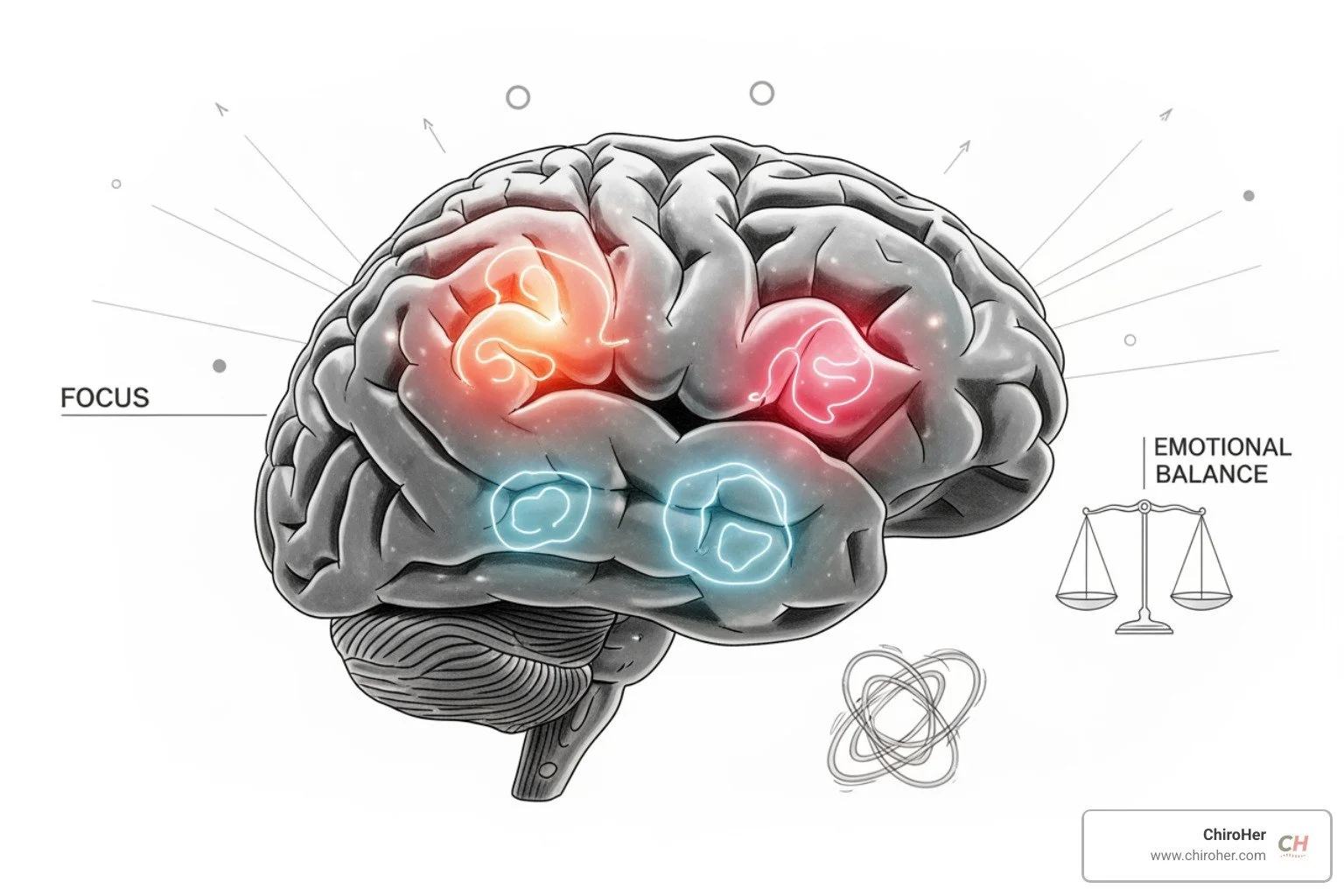
At its heart, movement therapy is the therapeutic use of movement to support your emotional, social, cognitive, and physical health. It recognizes that your mind and body are deeply intertwined. Unlike a typical workout focused on external goals, movement therapy centers on your internal experience: How does this feel? What emotions come up? What is your body telling you?
Studies on dance therapy show improvements in cognitive function, emotional wellbeing, and behavior across all age groups, highlighting benefits that are transformative for your whole self.
What Makes Movement Therapy Unique?
What sets movement therapy apart is its focus on somatic awareness and therapeutic intention. It uses your body's movements as a language to explore what's happening inside. The foundation is proprioception (sensing your body in space) and interoception (sensing internal sensations). You tune into subtle shifts, like tension releasing in your jaw or your breath deepening with a stretch.
This practice treats you as a whole person. For neck pain, we explore how stress or posture contributes and what movements can release that pattern. Every movement is performed with conscious engagement and internal focus. This mindful approach helps you build a stronger relationship with your body, learning to work with its wisdom instead of pushing through pain.
At ChiroHer, our patient-focused philosophy recognizes your body's capacity for healing. Movement therapy helps open up that potential, working with therapeutic exercises to promote lasting results.
Aspect Movement Therapy at ChiroHer Goals Reduce stress and anxiety, process emotions, improve self-awareness, relieve physical tension, support healing from trauma or chronic pain Focus Internal sensations, mind-body connection, therapeutic outcomes, emotional expression through movement Approach Slow, conscious movements performed with complete internal attention; personalized to your needs; integrated with chiropractic care for comprehensive healing
The Science-Backed Physical and Psychological Benefits
Movement therapy works on multiple levels, changing your brain chemistry and rewiring your nervous system's response to stress.
• Your brain gets a boost. Physical activity improves the hippocampus (for learning and memory) and the prefrontal cortex (for decision-making and creativity)
• Your mood naturally lifts. Movement releases serotonin, dopamine, and endorphins, which are natural mood stabilizers. The research on how physical activity improves cognition and mood shows these benefits are immediate and long-lasting
• Emotional healing becomes possible. Movement therapy creates space for emotions that words can't always express. It can be a supportive practice for those with depression and allows trauma survivors to rebuild a sense of safety in their bodies
• Connection deepens. Movement can be a bridge to authentic connection with yourself and others. For example, children with autism have shown improved social skills through dance interventions
I often recommend movement therapy with chiropractic care for reducing anxiety. This combination addresses both the physical symptoms of stress and the underlying nervous system patterns.
Movement Therapy Approaches at ChiroHer
In our Oklahoma City clinic, my approach blends several evidence-based methods customized to your body's needs.
• Somatic movement: These gentle, slow movements help you tune into your body's internal sensations and release long-held tension patterns
• Mindful movement: This practice encourages you to pay attention to every breath and sensation as you move, reducing stress and improving your relationship with yourself
• Guided therapeutic movement: I guide you through specific exercises for your unique situation, whether you're recovering from an injury, managing chronic pain, or improving posture
We integrate these approaches with your chiropractic adjustments. While manual therapy addresses alignment, movement therapy retrains your muscles and movement patterns. For example, after a pelvic adjustment, I might teach you core exercises to improve stability and help your body hold the adjustment longer. This combination promotes lasting results for our patients.
Your Guide to At-Home Movement Therapy Exercises
You don't need a fancy studio or expensive equipment to experience the benefits of movement therapy. Some of the most effective movement therapy exercises can be practiced at your desk, in your living room, or during a quick break. These simple practices can reduce stress, help you reconnect with your body, and restore balance to your day.

Simple Movement Therapy Exercises for Daily Life
A five-minute movement break can shift your entire day. These quick movement therapy exercises are designed to bring you back to center, no matter where you are.
• Body Scan: Close your eyes and slowly bring your attention to different parts of your body, from your toes up. Notice any sensations without judgment to identify where you're holding tension
• Conscious Breathing: Place a hand on your belly and feel it rise and fall with your breath. Simply noticing your natural rhythm can calm your nervous system. For more, see this helpful video from Johns Hopkins Medicine on Somatic Movement
• Grounding Your Weight: Whether standing or sitting, feel your contact points with the floor or chair. Imagine your weight sinking into the earth to feel more stable and release tension
• Seated Pelvic Shift: While sitting, gently rock your pelvis forward, backward, and side to side. This mobilizes your spine and prevents stiffness from sitting. It pairs well with exercises for correct posture
• Finding Your Groove: Put on a song and let your body move freely without choreography or judgment. This honors your body's need to move and can be a joyful release
Movement Therapy Exercises for Different Age Groups and Needs
Movement therapy adapts to meet people where they are, offering value at every stage of life.
• Children: Movement is natural for kids and helps build their brains. Physically fit students perform better in math and reading. Short "brain breaks" with activities like freeze dance can improve focus and impulse control. Movement also provides a healthy outlet for emotions, and mirroring games can build communication skills. Learn more about supporting your child with our pediatric chiropractic services
• Adults: Many adults feel disconnected or stressed. Somatic movements like conscious breathing and body scans calm the nervous system by triggering the release of mood-boosting neurochemicals like serotonin and dopamine. For emotional wellbeing, free dance can be therapeutic. It is especially powerful for trauma survivors, creating a safe space to reconnect with the body
• Seniors: Movement therapy is excellent for maintaining balance, mobility, and cognitive function. Dance therapy has been shown to reduce the risk of falling by improving stability and coordination. Group movement activities also combat loneliness and foster social connection, which are vital for overall wellbeing
Getting Started with Professional Guidance
While you can practice many movement therapy exercises on your own, working with a certified practitioner can deepen your experience, especially if you're dealing with chronic pain or trauma. A movement therapist acts as a guide, creating a safe space to explore movement and any emotions that arise. They use techniques like attunement (matching your energy) and mirroring (matching your movements) to build rapport.
A skilled practitioner helps you cultivate body awareness, regulate your emotions, and find meaning in your movements by connecting them to your emotional state. Becoming a certified movement therapist requires extensive training, typically a master's degree.
It's normal to feel uncomfortable at first, but a good therapist will honor your pace. The focus is always on your internal experience, not performance. Since movement can bring up emotions, professional support is valuable.
At ChiroHer, we understand that movement therapy works well with therapeutic exercises and manual therapy. If you're in Oklahoma City, Yukon, Edmond, or surrounding areas and are curious about how movement therapy can help you, schedule a consultation today.
Building Trust: The Science and Expertise Behind Movement Therapy
At ChiroHer, we are committed to providing evidence-based care. Our approach to movement therapy is grounded in scientific research and clinical experience, ensuring you receive effective support.
The growing body of research on movement and its impact on mental and physical health solidifies its role as a powerful therapeutic tool. We know that physical exercise improves hippocampal activity, improves cognition, and regulates mood. This scientific backing allows us to confidently integrate movement therapy into our holistic treatment plans.
We continuously engage in ongoing education and adhere to professional standards set by organizations like the American Chiropractic Association. This commitment ensures our practitioners are equipped with current knowledge to serve our community in Oklahoma City and beyond. Our patient-focused approach means we customize every aspect of your care to your unique health goals.
By understanding the science behind movement therapy, you can feel confident in its ability to support your wellbeing. We’re here to guide you.
This guide is for informational purposes only and does not constitute medical advice. It is not a substitute for professional medical advice, diagnosis, or treatment. Always seek the advice of your physician or other qualified health provider with any questions you may have regarding a medical condition.