
Pediatric Asthma Relief: Can Chiropractic Make a Difference?
Understanding the Connection Between Chiropractic Care and Pediatric Asthma

Many parents explore chiropractic and pediatric asthma when seeking complementary approaches for their child's condition. Here's a summary of what research indicates:
Objective lung function: Studies found no significant improvement in spirometry measurements with chiropractic spinal manipulation compared to simulated treatment.
Subjective improvements: Parents and children have reported better quality of life, reduced asthma severity, and decreased medication use.
Safety profile: Serious adverse events from pediatric chiropractic care are rare when using gentle, low-force techniques.
Best approach: Chiropractic should be used to complement, not replace, conventional medical asthma treatment.
Evidence quality: Current research is limited by small sample sizes and other factors.
Asthma is a common chronic condition in childhood, and conventional treatments don't always fully control symptoms like wheezing, coughing, and shortness of breath. This leads many families to consider complementary therapies like chiropractic care. The chiropractic approach focuses on spinal health and its connection to nervous system function.
While research shows mixed results regarding objective lung function, some studies report subjective improvements in how children feel. This suggests benefits may stem from the overall therapeutic experience.
Hi! I'm Dr. Michelle Andrews, founder of ChiroHer in Oklahoma City. I help families make informed decisions about their children's holistic health. My goal is to ensure parents understand what the research shows and how chiropractic care can safely complement their child's existing medical treatment.

Understanding Pediatric Asthma and Its Management

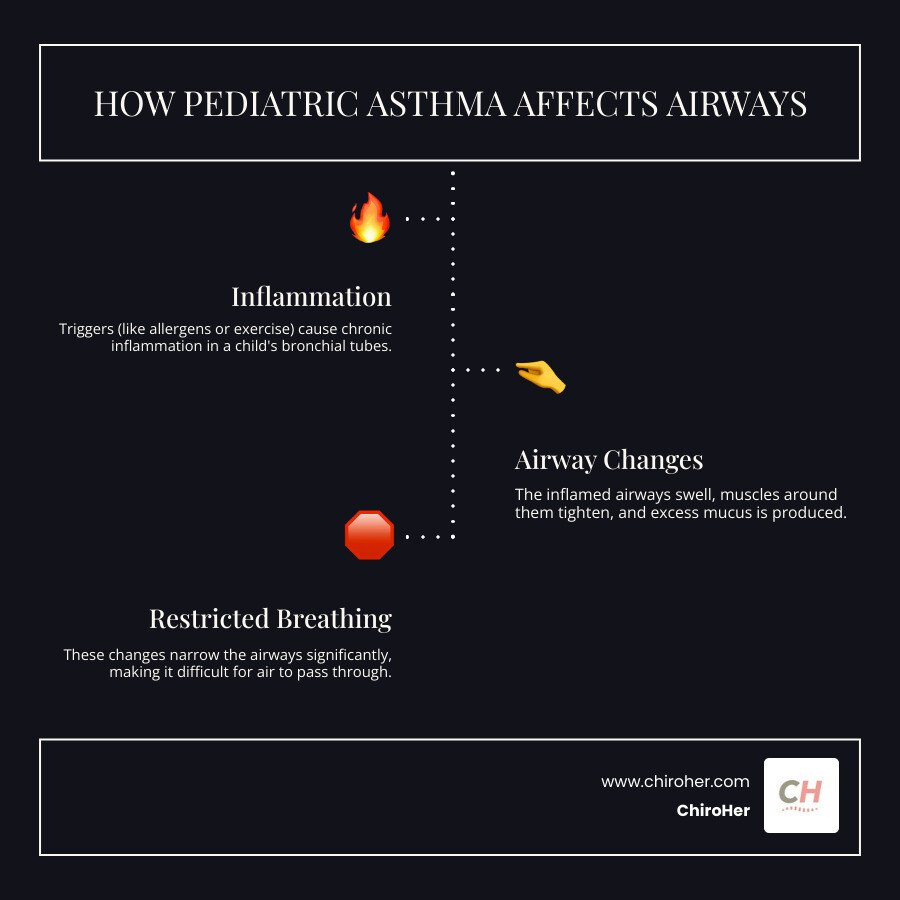
Pediatric asthma is a chronic lung disease where a child's airways become inflamed and swollen, making it difficult to breathe. It affects roughly one in ten children in the United States. Understanding the condition is the first step toward helping your child live a full, active life.
Common Symptoms and Medical Treatments
Asthma is characterized by recurring attacks. Key symptoms include:
Wheezing: A whistling sound when exhaling, often noticeable during play or at night.
Persistent coughing: Frequently worsens after dark or during exercise.
Shortness of breath: May appear as sudden fatigue during activity.
Chest tightness: A sensation of pressure or pain in the chest.
Conventional medical treatment focuses on controlling inflammation and preventing attacks. A pediatrician or pulmonologist will create a plan that may include:
Bronchodilators (Rescue Inhalers): Medications like Albuterol quickly open airways during an attack.
Inhaled Corticosteroids (Controller Medications): Used daily to reduce inflammation and prevent future attacks.
Other Medications: Leukotriene modifiers can also help reduce airway swelling.
Nebulizers: These devices turn liquid medication into a mist, which is helpful for young children or during severe attacks.
While these treatments are highly effective, some parents have concerns about long-term medication use and seek complementary approaches. This is where conversations about chiropractic care often begin. At ChiroHer, we work alongside your child's medical team, supporting overall wellness without replacing proven medical treatments.
Exploring Chiropractic and Pediatric Asthma: The Evidence and Approach

When families ask about chiropractic and pediatric asthma, they are often looking for a complementary approach to support their child's health. Chiropractic care is not a cure for asthma, but it can be part of a comprehensive wellness plan that works alongside conventional medical care.
The Theory: How Spinal Health May Influence Breathing
The theory behind chiropractic care for asthma is based on the connection between the spine, the nervous system, and respiratory function.
The nervous system controls all body functions, including breathing. Nerves that supply the lungs and diaphragm exit from the neck and mid-back (thoracic spine).
Spinal misalignments or restrictions, sometimes called vertebral subluxations, may cause nerve irritation. This could interfere with the signals between the brain and the respiratory system.
Chiropractic adjustments aim to address these spinal issues, potentially improving nerve function and supporting the body's ability to regulate breathing. This includes the function of the diaphragm, the main breathing muscle.
The goal is not to cure asthma but to support the body's overall function. You can learn more about the general approach by reading about what a chiropractor does.
What Pediatric Chiropractic Care for Asthma Involves

Pediatric chiropractic care is very different from adult care. It is gentle and patient-centered.
Initial Consultation: We start with a thorough health history to understand your child's asthma, triggers, and daily life.
Gentle Examination: We assess spinal alignment and movement in a non-threatening way, looking for tension patterns related to breathing.
Low-Force Adjustments: We use gentle techniques suitable for a child's developing spine. One example is the Activator method, which uses a small instrument to deliver a precise, light impulse.
Child-Friendly Environment: Our office is welcoming to ensure children feel relaxed and comfortable during their visit.
Care plans vary for each child. Many parents report improvements in overall wellness, such as better sleep and posture. You can discover the benefits of chiropractic care that may extend beyond respiratory support.
The Scientific Evidence on Chiropractic and Pediatric Asthma
The research on chiropractic care for pediatric asthma shows a mix of findings. It's important to understand the distinction between subjective feelings and objective measurements.
Subjective Improvements: Several studies, including a chronic pediatric asthma and chiropractic spinal manipulation study, found that parents and children reported better quality of life, fewer severe episodes, and less need for rescue inhalers.
Objective Measures: High-quality randomized controlled trials, like a key comparison of active and simulated chiropractic manipulation study, have not found significant improvements in objective lung function tests (like spirometry) when comparing real chiropractic adjustments to simulated ones.
What This Means: Both groups in these studies (real and simulated treatment) often reported feeling better. This suggests that the positive experience, caring attention, and placebo effect may play a large role in the perceived benefits.
Current research is limited by factors like small sample sizes. While chiropractic may not change objective lung function, the improvements in quality of life are still meaningful for many families.
Safety, Precautions, and Parental Concerns
Safety is the top priority when considering any care for your child. Pediatric chiropractic has an excellent safety record when performed by a trained practitioner.
The techniques used are gentle and low-force, with pressure often compared to testing the ripeness of a tomato.
Serious adverse events are exceptionally rare. The most common side effect is temporary, mild soreness.
We never use high-velocity, forceful techniques on children.
Open communication with your pediatrician is vital. We encourage you to keep your child's entire medical team informed. Chiropractic care is intended to be a complementary therapy, not a replacement for your child's prescribed asthma medications or medical plan.
A Parent's Guide to Making an Informed Decision

As a parent managing your child's asthma, it's natural to explore all options for relief. The best approach is often a thoughtful combination of treatments, guided by good information and open communication with a team of healthcare providers.
Creating a Multidisciplinary Wellness Team
Integrated care, where different healthcare professionals collaborate, is an effective way to manage pediatric asthma.
Your child's pediatrician or pulmonologist provides essential medical management.
A chiropractor can complement this care by focusing on spinal health and nervous system function to support overall wellness.
Open communication between all providers is key to this team approach. The role of chiropractic is to support the body's natural ability to function and adapt. This may also involve supporting the immune system, as some research suggests a link between chiropractic care and improved immune response. You can read more about how chiropractic care can improve your immune system.
How to Select a Qualified Pediatric Chiropractor
It's important to find a chiropractor with specialized training in pediatric care. Here’s what to look for:
Experience and Certifications: Ask about their postgraduate training and experience working with children.
Ask Questions: During a consultation, inquire about their approach to asthma, the techniques they use, and their philosophy on collaborating with medical doctors. A qualified provider will give honest answers and acknowledge the supportive role of chiropractic care.
Observe the Interaction: A good pediatric chiropractor will create a comfortable environment and communicate well with your child.
Red Flags: Be wary of anyone who promises to cure asthma or suggests stopping prescribed medications.
At ChiroHer in Oklahoma City, we provide patient-focused, evidence-based care for families. We prioritize honest communication and collaboration with your child's medical team. If you're in the OKC area, including Yukon, Edmond, or Moore, and are curious about our approach, we invite you to schedule a consultation with our team.
Building Authority and Trust
We believe in making informed decisions based on reliable information. We encourage you to be an active participant in your child's healthcare. For further reading on the science and medical consensus, we recommend these reputable sources:
National Center for Biotechnology Information (NCBI): An extensive database of biomedical research. NCBI Homepage.
MedlinePlus: A service of the National Library of Medicine with easy-to-understand health information on general asthma information and asthma in children.
Use these resources to ask better questions and have more productive conversations with your child's entire healthcare team.
The information contained in this article is for informational purposes only and is not intended to be a substitute for professional medical advice, diagnosis, or treatment. Always seek the advice of your physician or other qualified health provider with any questions you may have regarding a medical condition. Never disregard professional medical advice or delay in seeking it because of something you have read in this article.