
Beyond the Ache: Effective Ways to Soothe TMJ Symptoms
Quick Relief Strategies for TMJ Discomfort

TMJ symptoms relief is possible. If you're one of the 12 million US adults with jaw pain, clicking, or limited movement, you can find comfort through at-home remedies and professional care. Most cases respond well to conservative treatment, and you don't have to live with the discomfort.
Here are some ways to find comfort:
Immediate Relief (Start Today):
Apply a moist heat pack for 15-20 minutes to ease dull, achy pain.
Use a cold pack wrapped in a towel for sharp pain and swelling.
Take over-the-counter ibuprofen or acetaminophen as directed.
Switch to soft foods and avoid chewing gum.
Practice gentle jaw stretches and massage.
Longer-Term Solutions:
Work with a chiropractor or physical therapist.
Improve your posture.
Manage stress through breathing exercises or meditation.
Consider a custom night guard if you grind your teeth.
Explore acupuncture or other holistic therapies.
When your jaw hurts every time you chew, talk, or yawn, it affects your work, meals, and mood. These symptoms often stem from muscle tension, teeth grinding, stress, or injury.
Hi! I'm Dr. Michelle Andrews, founder of ChiroHer in Oklahoma City. I've developed effective protocols for TMJ symptoms relief that combine chiropractic adjustments, lifestyle modifications, and holistic care. Let's explore how you can start feeling better.
Understanding Your Jaw Pain: Symptoms and Causes of TMD
Your temporomandibular joint (TMJ) connects your lower jaw to your skull. While people often say they "have TMJ," the joint itself is the TMJ. The pain and dysfunction are called Temporomandibular Disorder, or TMD. It's a common condition, affecting 5% to 12% of adults, with women being twice as likely to experience symptoms.

Recognizing the Signs of a TMJ Disorder
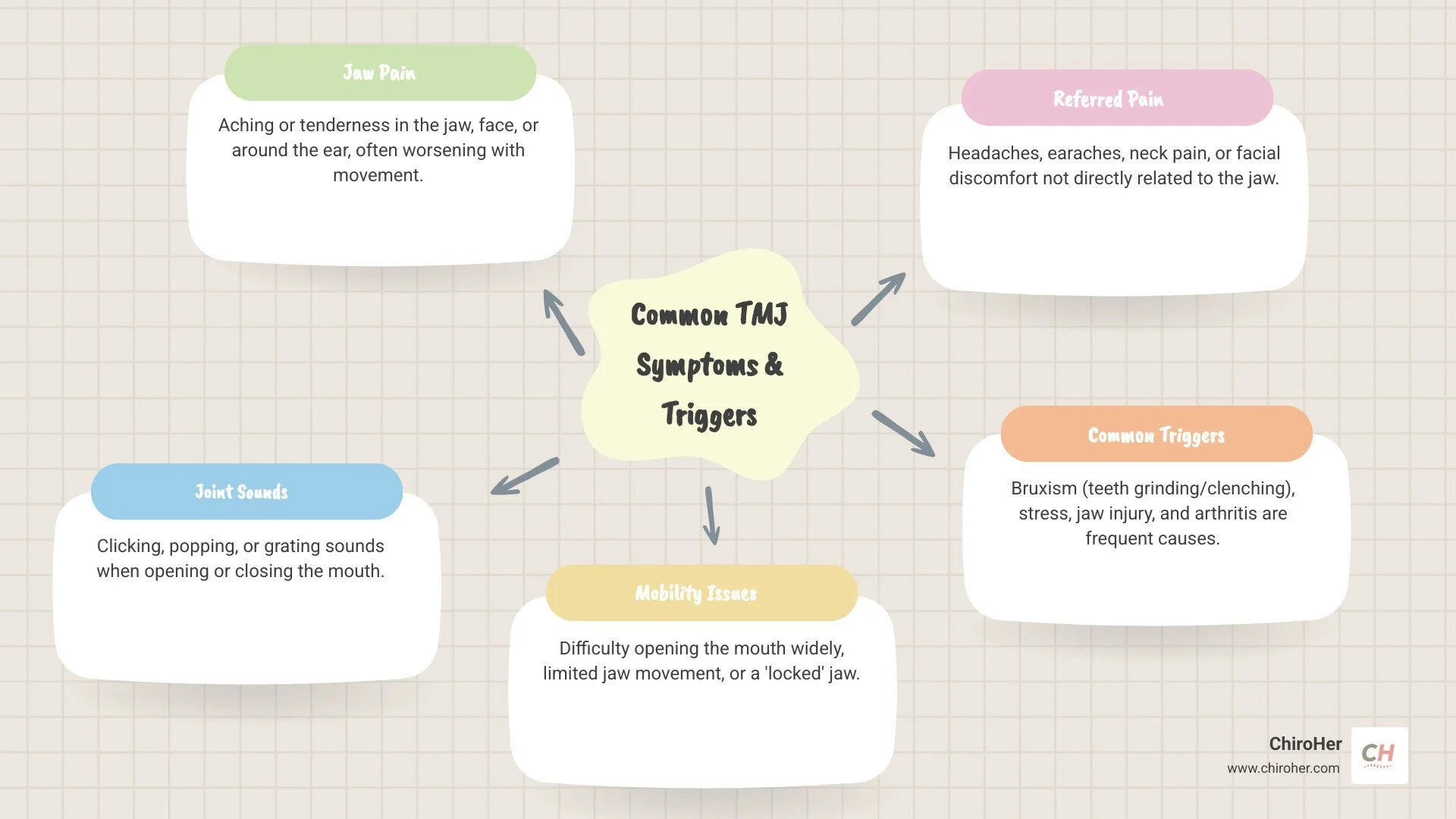
TMD symptoms can be obvious, like jaw pain, or more surprising, like headaches, earaches, or neck pain. Place your fingertips just in front of your ears and open your mouth. Tenderness, sounds, or uneven movement can be signs of TMD.
Common symptoms include:
Jaw tightness and difficulty opening your mouth fully.
Pain while chewing or yawning.
Clicking sounds or popping sounds, which are concerning when accompanied by pain or locking.
Facial pain, neck pain, and shoulder pain due to connected muscles.
Tinnitus (ringing in the ears), dizziness, or balance issues.
Worn teeth from grinding.
Left untreated, TMD can lead to chronic headaches, joint damage, and a lower quality of life. The Cleveland Clinic's overview on Temporomandibular Joint Disorders offers more detail on symptoms.
How TMJ Disorders Are Identified
Identifying TMD starts with a conversation about your symptoms, health history, and stress levels. This patient history discussion is crucial.
The physical examination follows, where we:
Perform palpation of jaw muscles to check for tenderness.
Observe your range of motion as you move your jaw.
Listen for joint sounds like clicking or grinding.
Imaging tests may be needed for a closer look. Dental X-rays show teeth and jawbone structure, while CT scans provide detailed bone images. An MRI is useful for viewing soft tissues like the joint's cushioning disc. These tests help clarify your specific condition and guide an effective care plan. You can find more information on the identification process from the Cleveland Clinic's resource on identifying and testing for TMD.
Your Guide to At-Home TMJ Symptoms Relief
Many people find meaningful TMJ symptoms relief at home. These self-care strategies address the root of the discomfort: tense muscles, inflammation, and habits that strain your jaw. Combining immediate relief with gentle exercises and lifestyle changes can lead to lasting improvement.

Simple Home Remedies for Immediate Comfort
When jaw pain strikes, these remedies can help ease discomfort quickly.
Moist heat: A warm, damp towel or heat pack applied for 15-20 minutes can relax tight muscles by increasing blood flow.
Cold packs: For sharp pain or swelling, a cold pack wrapped in a towel for 10-15 minutes can reduce inflammation and numb the area.
Over-the-counter pain relievers: Ibuprofen or acetaminophen can provide temporary relief from pain and inflammation. Follow package directions.
Gentle jaw massage: Using your fingertips to apply light, circular pressure to sore spots can release tension. The Cleveland Clinic offers additional guidance on finding relief.
Gentle Exercises for Jaw Mobility and Pain Reduction
Gentle movement can improve jaw function. Move slowly and stop if you feel sharp pain.
Relaxed jaw exercise: Rest your tongue on the roof of your mouth behind your front teeth. Let your teeth separate slightly to relax your jaw muscles.
Goldfish exercises: Place one finger on your chin and another on your TMJ. Drop your jaw halfway (partial) or fully (full), then close. Repeat 6 times in a set, 6 times a day.
Chin tucks: Sit or stand tall and pull your chin straight back, creating a double chin. This improves posture, which is linked to TMJ health. See the research on the connection between posture and TMJ disorders.
Resisted opening: Place your thumb under your chin and gently resist as you slowly open your mouth.
We incorporate these therapeutic exercises into our care plans because they are effective.
Lifestyle Adjustments for Long-Term TMJ Symptoms Relief
Lasting TMJ symptoms relief often comes from changing daily habits.
Diet: Switch to a soft food diet (soups, yogurt, smoothies) for a few weeks. Avoid hard, crunchy, or chewy foods like raw vegetables, nuts, and tough meats.
Posture: Sit and stand tall with your head balanced over your spine. Avoid slouching, especially at a desk or on your phone.
Sleep: Sleeping on your back helps maintain natural alignment. Avoid sleeping on your stomach.
Habits: Be mindful of habits like nail biting, chewing on pens, or clenching your teeth. Try to keep your teeth slightly apart during the day.
Stress Management: Since stress contributes to jaw tension, practice deep breathing, meditation, or mindfulness to relax your jaw muscles. We share more guidance in our articles on Jaw Pain.
Professional Pathways to Lasting Relief
While home remedies are a great start, professional care can provide lasting TMJ symptoms relief. We offer a range of conservative and holistic treatments in Oklahoma City, Yukon, Edmond, Nichols Hills, Del City, Mustang, and Moore.

When to See a Professional for Your TMJ
If home care doesn't help after several weeks, it's time to see a provider. Seek professional help for:
Persistent pain that interferes with daily life.
Severe headaches or earaches.
Jaw locking (getting stuck open or closed).
Difficulty chewing, speaking, or yawning.
Dizziness or ringing in your ears.
During your appointment, we'll discuss your symptom history, triggers, and previous treatments to create a personalized plan. If you're wondering when to seek help, read our guide on TMJ Pain? Here's When to See a Specialist in OKC.
Exploring Conservative and Alternative TMJ Symptoms Relief
Most professional treatments are conservative and non-invasive.
Physiotherapy: Involves specific exercises, manual therapy, and heat or cold therapy to restore muscle and joint function.
Occlusal splints: Also known as night guards, these custom oral appliances reduce pressure from clenching or grinding.
Acupuncture: This practice uses thin needles to help reduce pain and muscle tension. We offer acupuncture at ChiroHer to support healing.
Chiropractic care: At ChiroHer, we take a holistic approach. We know the jaw is connected to the rest of the body. Our care focuses on spinal alignment, muscle tension in the neck and jaw, gentle jaw adjustments, posture correction, and stress-reducing methods. Learn more about our TMJ services and how a chiropractor can help with TMJ.
Advanced Medical Options
When conservative treatments aren't enough, other options may be considered.
Prescription medications: Muscle relaxants can ease spasms, while low-dose antidepressants can help with pain and grinding.
Injections: Trigger point injections target tight muscles, while corticosteroid injections can reduce joint inflammation. Botox is sometimes used but is less common for TMJ pain.
Surgical options: These are a last resort for structural problems. Procedures range from minimally invasive arthrocentesis (flushing the joint) to open-joint surgery for severe cases.
Discuss the benefits and risks of any advanced treatment with your provider. The Mayo Clinic provides a comprehensive overview of TMJ disorders, diagnosis, and treatment.
Building Trust: Authority and Resources for TMJ Relief
When dealing with jaw pain, it's important to rely on information grounded in solid research. We are committed to evidence-based care and encourage you to explore trusted sources as you learn about TMJ symptoms relief.

Here are some reputable resources we recommend:
The Cleveland Clinic's overview on TMJ disorders offers a clear breakdown of anatomy, symptoms, and diagnosis.
The Mayo Clinic's page on TMJ diagnosis and treatment provides a thorough guide to treatment options, from conservative care to surgery.
The National Institutes of Health offers a comprehensive resource through their MedlinePlus page on Temporomandibular Joint Dysfunction for those interested in the broader research landscape.
Here in Oklahoma City and surrounding areas like Yukon, Edmond, and Moore, ChiroHer provides evidence-based care with a personalized touch. We take the time to understand your unique situation and create a care plan that makes sense for you. We believe the best outcomes happen when you are an active participant in your care.
This guide is for informational purposes and is not a substitute for already established medical advice from your healthcare provider.