
Anterior Pelvic Tilt Exercises: Your Guide to a Balanced Posture
Why Exercise for Anterior Pelvic Tilt Matters
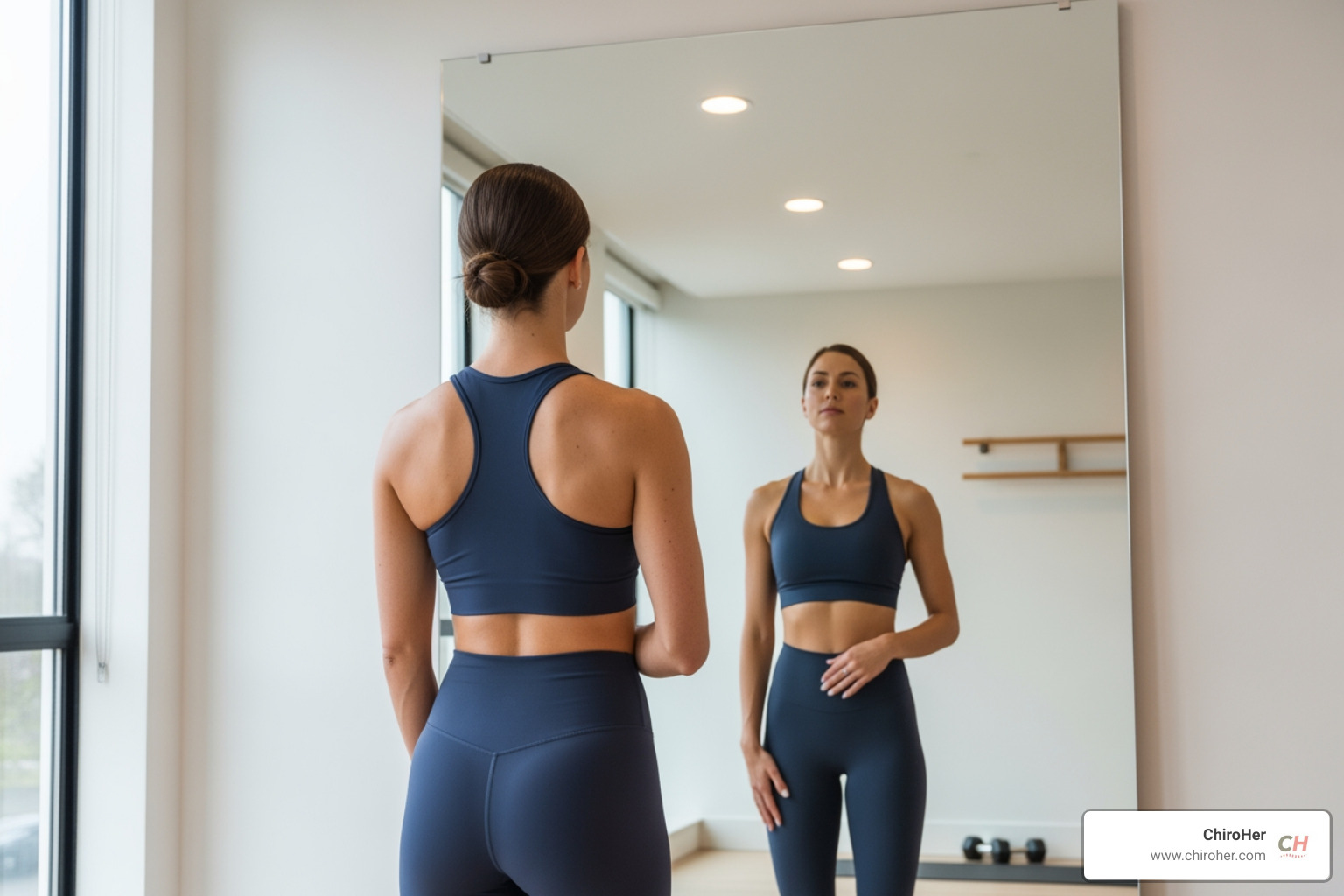
Exercise for anterior pelvic tilt can help improve the forward rotation of your pelvis that causes an unnatural spinal curve. This common postural issue affects a majority of adults and can lead to chronic lower back pain, a protruding stomach, and daily discomfort.
Quick Answer: Best Exercises for Anterior Pelvic Tilt
- Glute Bridges - Strengthen weak glutes and hamstrings
- Planks - Build core stability and strength
- Kneeling Hip Flexor Stretch - Loosen tight hip flexors
- Bird-Dog - Improve core control and spinal stability
- Squats - Activate glutes and strengthen the posterior chain
Research shows that consistent hip-focused exercises can reduce anterior pelvic tilt, with some studies suggesting improvement in as little as 8 weeks. If your lower back arches excessively or your stomach protrudes, you may have this postural imbalance caused by tight hip flexors and weak glutes.
Hi! I'm Dr. Michelle Andrews, founder of ChiroHer in Oklahoma City. I've helped hundreds of women improve their posture with chiropractic care and personalized exercise programs, especially during pregnancy and postpartum. My approach combines adjustments with at-home exercises for lasting change.
Understanding Anterior Pelvic Tilt
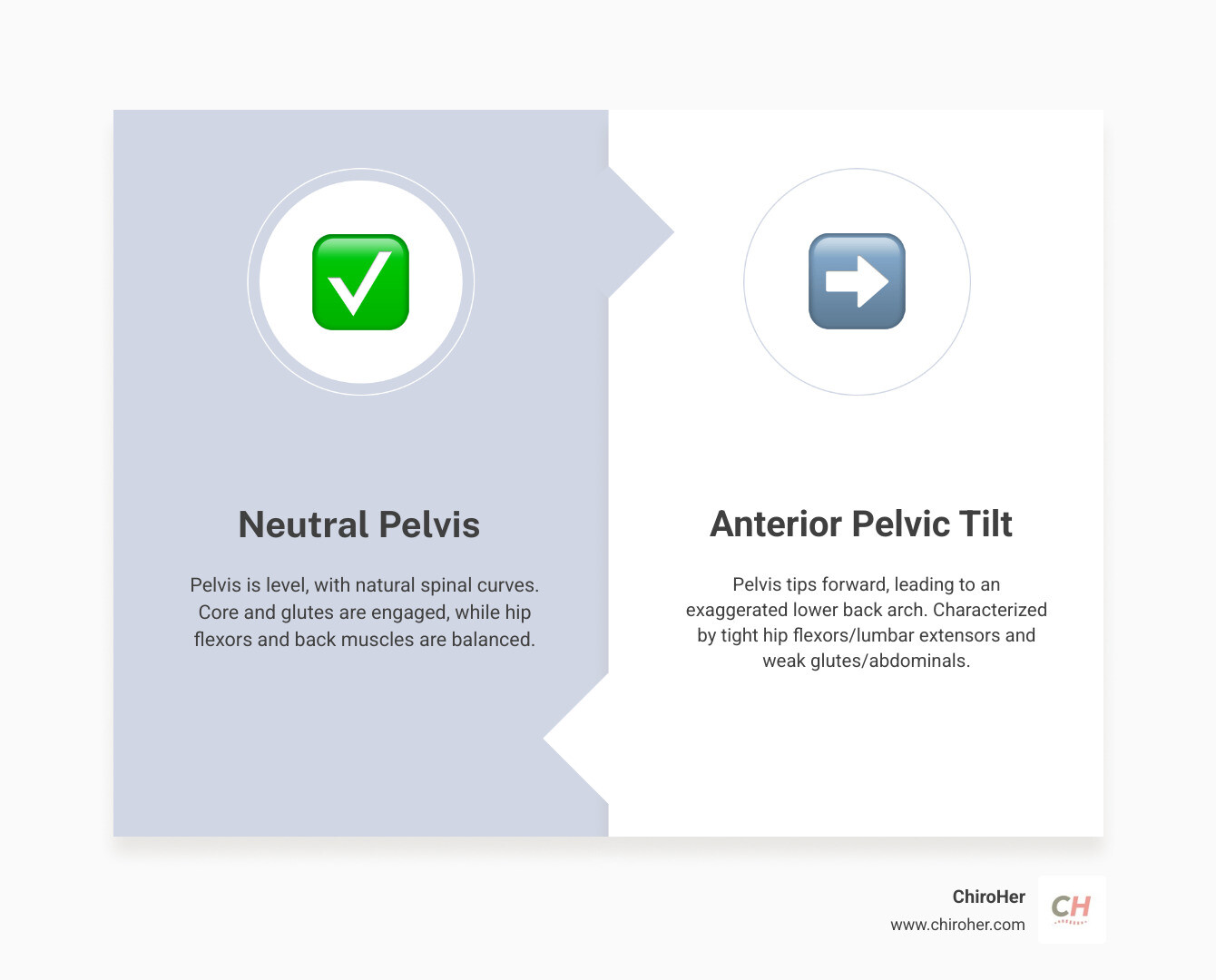
Imagine your pelvis is a bowl. In a neutral posture, the bowl is level. With anterior pelvic tilt (APT), the bowl tips forward, forcing your lower spine into an excessive curve (hyperlordosis). This is sometimes called "Donald Duck" posture because it creates a prominent behind and a bulging abdomen.
Studies suggest up to 85% of men and 75% of women have some degree of APT. At ChiroHer, we help you understand and address this condition to improve your posture and well-being.
What Causes Anterior Pelvic Tilt?
The main causes of APT are modern lifestyles and muscle imbalances.
- Prolonged Sitting: Sitting for long periods shortens and tightens your hip flexors while weakening your glutes and hamstrings, which are key for pelvic stability.
- Poor Posture: Habitual slouching or standing with an arched back reinforces the forward pelvic tilt.
- Muscle Imbalance: APT is a classic muscle imbalance issue.
- Tight Muscles: Hip flexors (psoas, iliacus) and lower back extensors (erector spinae) pull the front of the pelvis down.
- Weak Muscles: Core muscles (abdominals, obliques) and posterior chain muscles (glutes, hamstrings) fail to counteract this pull.
- Pregnancy: The body's natural adaptations to carrying a baby, including weight distribution and hormonal shifts, can increase anterior pelvic tilt.
- Other Factors: Obesity can add strain to the spine and pelvis. Even wearing high heels can shift your center of gravity and encourage a forward tilt, as highlighted in scientific research on how wearing high heels affects pelvic tilt.
How to Tell if You Have Anterior Pelvic Tilt
You can use these simple self-assessments at home:
- The Thomas Test: To check hip flexor tightness. Lie on the edge of a table, pulling one knee to your chest to flatten your back. If your other leg lifts off the table, your hip flexors are likely tight.
- The Wall Test: To assess your lower back curve. Stand with your head, shoulders, and bottom against a wall, heels about 6 inches away. If you can slide more than your hand into the gap behind your lower back, you may have an excessive curve.
- The Belt Buckle Test: Stand in front of a mirror wearing a belt. If the buckle points downward, your pelvis is likely tilted forward.
- Visual Cues: Look for an exaggerated lower back arch, a protruding stomach, and buttocks that stick out.
The Harmful Effects of an Unbalanced Pelvis
An excessive tilt can lead to widespread discomfort and health issues.
- Lower Back Pain: This is the most common complaint. The excessive curve puts pressure on your spinal discs and joints. Research highlights how anterior pelvic tilt increases pressure on the lower back, stressing the need to address the imbalance.
- Hip and Knee Pain: Altered pelvic alignment can disrupt hip and knee mechanics, causing pain and increasing injury risk.
- Sciatica: Pressure from the tilted pelvis can sometimes contribute to sciatica-like symptoms, such as pain or tingling down the leg.
- Muscle Fatigue: Your muscles work overtime to compensate for the imbalance, leading to fatigue in your back, hips, and neck.
- Poor Exercise Performance: APT can make it difficult to activate your glutes properly during exercises like squats and deadlifts, leading to compensation and reduced effectiveness.
The Best Exercise for Anterior Pelvic Tilt
The best way to address APT is to combine stretching tight muscles with strengthening weak ones. This dual approach helps restore pelvic alignment and leads to a more balanced, pain-free posture.

Our goal is to gently guide your pelvis back to a neutral position, allowing your body to move more efficiently.
Stretches to Loosen Tight Muscles
First, we need to lengthen the muscles pulling your pelvis forward, primarily the hip flexors.
- Kneeling Hip Flexor Stretch: Kneel on one knee with the other foot flat on the floor in front of you. Gently shift your weight forward, feeling a stretch in the front of your hip. Lightly tighten your abs and glutes to prevent your back from arching. Hold for 30 seconds, then switch sides.
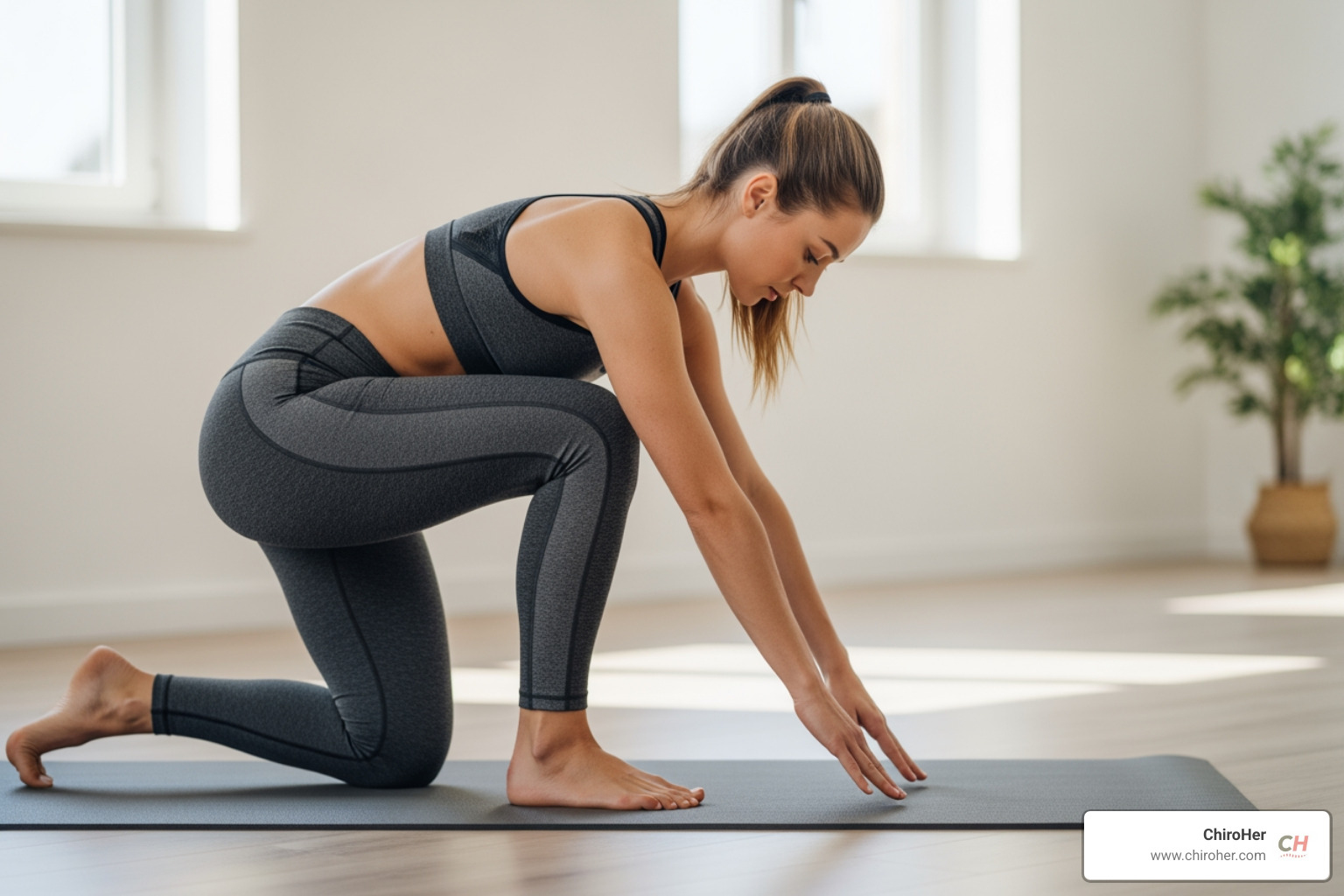
- Child's Pose: From your hands and knees, sink your hips back towards your heels and extend your arms forward. Rest your forehead on the mat and hold for 15-20 seconds. Repeat 3 times.
- Cat-Cow Stretch: On your hands and knees, inhale as you drop your belly and lift your chest (Cow). Exhale as you round your spine and tuck your chin (Cat). Flow between poses for 5 repetitions.
- Double Knee to Chest: Lie on your back and hug both knees to your chest. Hold for 15-20 seconds to gently stretch your lower back and glutes. Repeat 3 times.
Important Note: Avoid Hamstring Stretches (for now)! With APT, your hamstrings are already in a lengthened position. Stretching them further can be counterproductive.
Strengthening Exercises for Anterior Pelvic Tilt
Next, we strengthen the weak muscles: your glutes, hamstrings, and core. These are important for pulling your pelvis back into a neutral position.
- Glute Bridge: Lie on your back with knees bent. Squeeze your glutes to lift your hips until your body forms a straight line from knees to shoulders. Hold for 5 seconds, then lower. Aim for 10 repetitions.
- Plank: Support yourself on your forearms, keeping your body in a straight line from head to heels. Engage your core and glutes. Hold for 20-30 seconds. Aim for 2-5 repetitions.
- Bird-Dog: On your hands and knees, extend your right arm forward and your left leg back, keeping your back flat. Return to the start and repeat on the other side. Aim for 10 repetitions per side.
- Squats: Stand with feet slightly wider than hip-width. Lower your hips back and down as if sitting in a chair, keeping your chest up and knees in line with your toes. Push through your heels to return to the start. Aim for 10-15 repetitions.
- Dead Bug: Lie on your back with knees bent at 90 degrees over your hips and arms extended up. Slowly lower your opposite arm and leg towards the floor, keeping your lower back pressed down. Return to the start and repeat. Aim for 20 alternating repetitions.
- Posterior Pelvic Tilt Exercise: Lie on your back with knees bent. Squeeze your abs to gently flatten your lower back against the floor. Hold for a few seconds, then release.
How to Perform Your Exercise for Anterior Pelvic Tilt Routine
Consistency and proper form are key.
- Frequency: Perform these exercises 3-4 times per week.
- What to Avoid: Do not stretch your hamstrings. Stop any movement that causes sharp pain.
- Timeline for Results: You may notice improvements within 8 weeks with consistent practice, but results vary.
- Proper Form Over Quantity: It's better to do fewer reps with perfect form than many with poor technique. If you're unsure, seek professional guidance.
Beyond Exercise: Professional Care and Daily Habits
While exercises are powerful, lasting change often requires a holistic approach that combines professional care with mindful daily habits. This helps improve the tilt and your overall posture awareness.
When to Seek Professional Help
While many cases of APT improve with exercise, professional guidance is valuable if you experience:
- Persistent Pain: Chronic lower back, hip, or knee pain that doesn't improve with exercise.
- Limited Mobility: Your range of motion feels restricted despite stretching.
- When Exercises Don't Help: You see no significant improvement after several weeks of consistent effort.
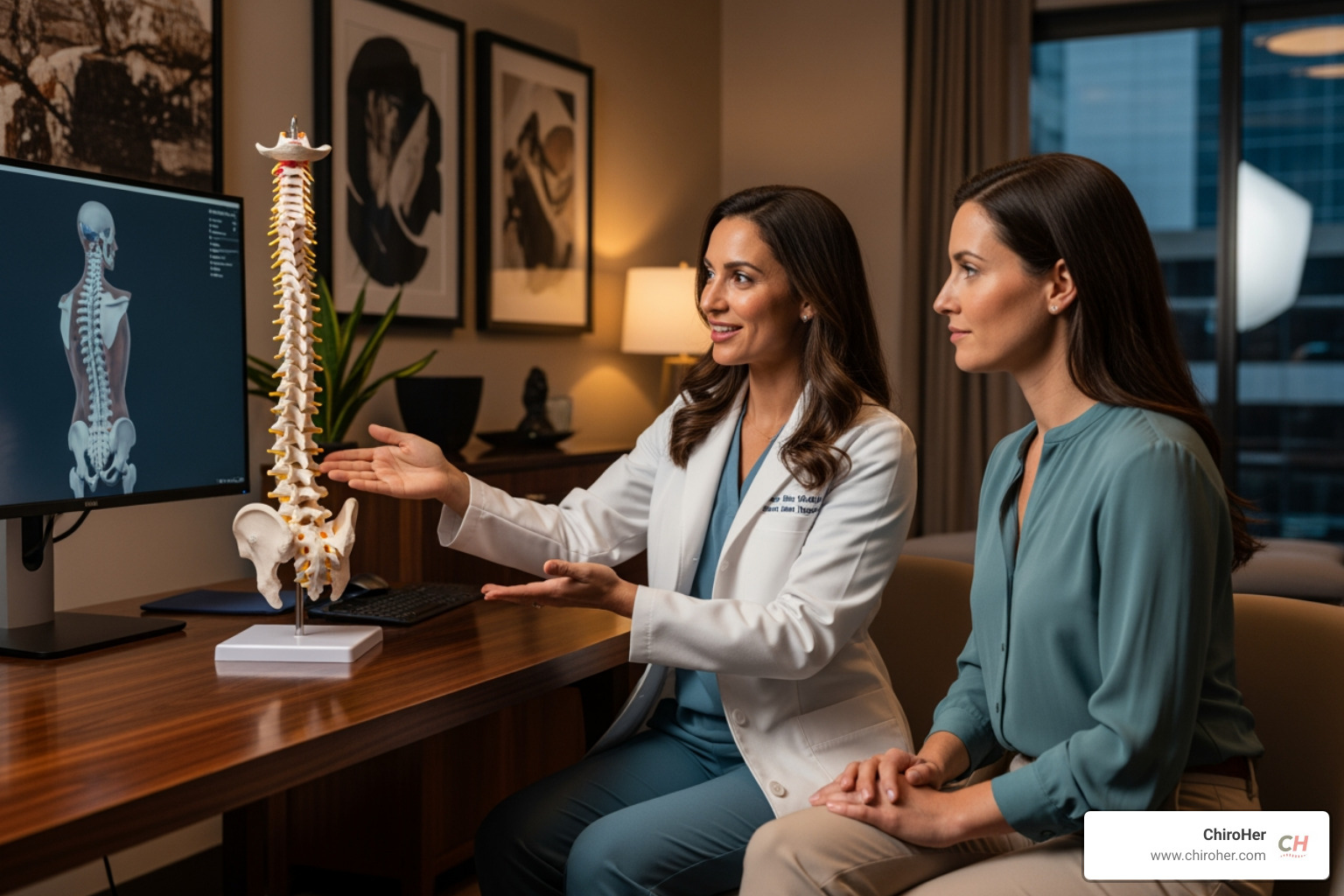
- Personalized Guidance: At ChiroHer, located conveniently for residents of Oklahoma City, Yukon, Edmond, Nichols Hills, Del City, Mustang, and Moore, we offer personalized chiropractic care and holistic wellness services. We conduct a thorough assessment to create a custom care plan that may include spinal adjustments and specific therapeutic exercises. Our goal is to address misalignments so your body can function optimally.
Don't hesitate to schedule a consultation with us if you're ready to take the next step toward a more balanced posture. We're here to support your health!
Daily Habits for a Balanced Pelvis
Small changes in your daily life can make a big difference.
- Ergonomics at Work: Use a standing desk for part of the day to break up long periods of sitting.
- Proper Sitting Posture: When sitting, keep your feet flat on the floor, knees slightly lower than your hips, and back relaxed. A lumbar support cushion can help.
- Supportive Footwear: Avoid high heels and choose supportive shoes. If you have flat feet, consider consulting a professional, as this can affect pelvic alignment.
- Mindful Movement: Be aware of your pelvic position while standing and walking. Try to maintain a neutral pelvis.
- Stretch Breaks: Get up and stretch every hour if you have a desk job. A short walk or simple stretches can counteract the effects of inactivity.
- Sleep Posture: Use a firm mattress. If you sleep on your side, place a pillow between your knees to keep your hips aligned.
By combining targeted exercises with these daily habits and seeking professional support when needed, you can build a strong foundation for a balanced posture and a healthier life.
This guide is for informational purposes and is not a substitute for already established medical advice from your healthcare provider.