
How to Relieve Neck Pain: Your Guide to Comfort
Understanding and Addressing Neck Pain at Home

You can help alleviate neck pain by trying these methods:
Apply heat or cold - Use a warm compress or cool pack for 15 minutes several times daily.
Perform gentle stretches - Try chin tucks, neck rotations, and shoulder rolls throughout the day.
Adjust your posture - Keep your ears aligned over your shoulders and your monitor at eye level.
Move regularly - Take breaks every 30 minutes to stretch and change positions.
Optimize sleep position - Sleep on your back or side with proper pillow support.
Manage stress - Practice relaxation techniques like meditation or deep breathing.
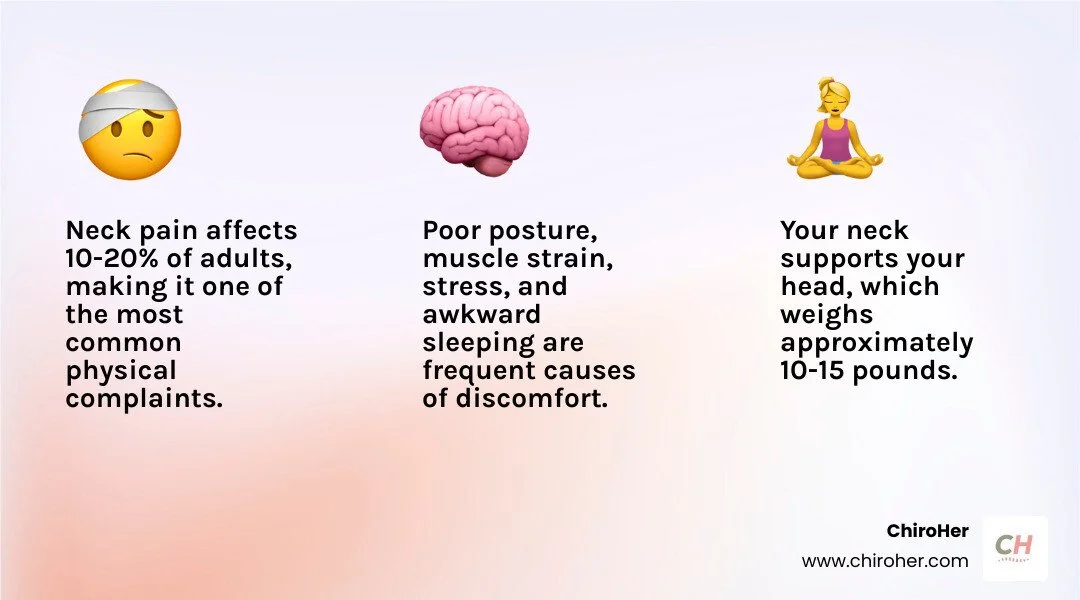
Neck pain affects up to 20% of adults, making it a common physical complaint. Whether it's from sleeping awkwardly, hours at a computer, or stress, most neck pain improves within a couple of weeks with simple self-care.
Your neck supports your head and allows for a wide range of motion. When something goes wrong due to poor posture, muscle strain, or tension, daily activities can become painful. Fortunately, research shows that exercises, posture corrections, and lifestyle adjustments can reduce pain and support recovery.
Hello, I'm Dr. Michelle Andrews, founder of ChiroHer in Oklahoma City. I've helped hundreds of women find relief from neck pain through chiropractic care, therapeutic exercises, and practical lifestyle modifications. This guide will walk you through proven strategies to find relief.
What's Causing Your Neck Pain?
Understanding the common causes of neck pain is the first step toward finding relief.
Poor Posture: A forward head position significantly increases strain on your neck muscles and joints, leading to chronic pain.
Forward Head Position and Tech Neck: Staring down at phones or computers for long periods causes a repetitive stress injury known as "tech neck." Learn more in our article on Tech Neck Pain.
Muscle Strain: Overuse from activities like cradling a phone, sleeping in an awkward position, or intense exercise can strain neck muscles.
Stress and Tension: Many people unconsciously tighten their neck and shoulder muscles when stressed, leading to persistent aches and stiffness.
Awkward Sleeping Positions: Waking with a stiff neck is often due to sleeping on your stomach or using pillows that don't properly support your head. Our article on Stiff Neck Pain in the Morning offers more insight.
Injuries: Accidents like whiplash from a car collision can cause significant neck pain that may take hours or weeks to develop.
Age-Related Wear and Tear: Conditions like arthritis or degenerating discs can develop with age, putting pressure on nerves and causing pain.
Red Flag Symptoms and When to See a Doctor:
While most neck pain resolves with self-care, seek professional medical attention if you experience any of the following:
Severe or constant pain that doesn't improve within a week.
Pain that radiates into your arm or leg, or numbness, tingling, or weakness in your arms or hands. These could be signs of a pinched nerve, which we discuss in Symptoms of Pinched Nerve in Neck and Shoulder.
Loss of bowel or bladder control, or trouble with walking and balance.
Pain that developed after an injury, like a car accident or fall.
Neck pain accompanied by a severe headache, fever, nausea, or unexplained weight loss.
If you're in the Oklahoma City area and have these symptoms, seek immediate medical advice.
Simple Home Remedies for Quick Relief
For common neck pain, these home remedies can provide relief:
Heat Therapy: Apply a warm compress or take a warm shower for 10-15 minutes to loosen stiff muscles.
Cold Therapy: For acute injuries (the first 48-72 hours), apply an ice pack wrapped in a cloth for 10-15 minutes to reduce inflammation.
OTC Pain Relievers: Medications like ibuprofen or acetaminophen can help manage pain. Use as directed and consult your doctor if you have concerns.
Gentle Movement: Avoid bed rest. Gentle movement improves blood flow and reduces stiffness. Slowly move your neck through its pain-free range of motion.
Gentle Massage: Massaging sore areas can help relax tight muscles. Direct movements toward the heart.
Avoiding Prolonged Rest: Take frequent breaks from sitting to move and stretch, preventing stiffness.
For more self-care tips, MedlinePlus offers a guide on neck pain or spasms - self care.
Gentle Stretches and Exercises to Alleviate Neck Pain
Once acute pain subsides, gentle stretches can relieve discomfort and prevent future episodes. Perform these movements slowly and stop if you feel sharp pain.

Chin Tucks: Sit or stand tall. Gently draw your chin backward to create a double chin. Hold for 5-10 seconds and repeat 10 times.
Neck Rotation: Slowly turn your head to the right as far as is comfortable. Hold for 10 seconds, then repeat on the left. Perform 10 repetitions per side.
Side Tilts: Gently tilt your right ear toward your right shoulder, keeping the shoulder down. Hold for 5-10 seconds, then repeat on the left. Perform 10 repetitions per side.
Shoulder Rolls: Roll your shoulders forward in a circle 5-10 times, then backward 5-10 times to release tension.
Scapular Squeezes: Squeeze your shoulder blades together, holding for 10-30 seconds. Repeat 2-3 times every hour, especially if you sit for long periods.
For more exercises, refer to the Cervical Exercise Guide from The Spine.org. If you have ongoing discomfort, our article on Neck and Shoulder Discomfort provides additional strategies.
How to Alleviate Neck Pain Through Lifestyle Changes

While quick fixes offer temporary relief, long-term relief from neck pain often requires lifestyle adjustments. Since about half of people with neck pain experience it again, prevention is an important goal. Small, consistent changes in your daily habits can make a big difference and help you alleviate neck pain before it starts.
Mastering Your Posture and Workspace Ergonomics
Good posture is your foundation for a healthy neck. Aim to keep your ears aligned directly over your shoulders, whether sitting, standing, or walking. This neutral spine alignment minimizes stress on your neck muscles.
At Your Desk: Sit with your feet flat on the floor, knees at a 90-degree angle, and your lower back supported. A supportive chair helps maintain proper alignment.
Computer Setup: Position your monitor at eye level to prevent looking down or craning your neck. If you use a laptop, a separate stand or external monitor is a great investment.
Phone Use: Use a headset or speakerphone for calls instead of cradling the phone. When texting, hold your phone higher to avoid hunching over. These habits are part of effective Tech Neck Pain Treatment.
Driving Posture: Adjust your car seat and headrest to fully support your back and head. Take breaks on long trips to walk and stretch.
Eyewear: If you're tilting your head to see clearly, your glasses prescription might be contributing to neck strain. A vision check could be a simple solution.
Optimizing Your Sleep and Managing Stress
You spend about a third of your life in bed, so your sleep setup has a major impact on your neck.
Best Positions: Sleeping on your back or side is best. Avoid sleeping on your stomach, as it forces your head into a twisted position for hours.
Pillow Support: Use a pillow that supports the natural curve of your neck. Back sleepers need a thinner pillow, while side sleepers need a thicker one to keep the head and neck level. Our guides on How to Sleep with Cervical Neck Pain and finding the Best Pillow for Neck and Shoulder Pain can help.
Stress and neck pain are closely linked. When you're anxious, you unconsciously tighten your neck and shoulder muscles, leading to chronic aches.
Relaxation Techniques: Practices like mindfulness, meditation, and deep breathing can calm your nervous system and help release muscle tension.
Gentle Movement: Yoga and tai chi combine movement with mindful breathing, improving both flexibility and stress levels.
Regular Exercise: Activities like walking or swimming strengthen your body and can be effective stress relievers.
Quitting Smoking: Smoking damages bone structure and slows healing. Quitting can significantly improve your musculoskeletal health. Resources from the Cleveland Clinic can provide support.
When to Seek Professional Care for Neck Pain
Sometimes home remedies and lifestyle changes aren't enough. If your neck pain persists for more than a week, interferes with daily activities, or includes red flag symptoms like radiating pain, numbness, or weakness, it's time to seek professional care. This can help address a minor issue before it can become chronic.

A professional can provide an accurate diagnosis, as issues like disc problems or nerve compression require specific treatments. At ChiroHer, we focus on identifying the root cause of your discomfort to create a treatment plan for both relief and long-term wellness.
Exploring Chiropractic and Related Treatments for Neck Pain
Hello, I'm Dr. Michelle Andrews, founder of ChiroHer. Our clinic serves Oklahoma City and surrounding communities like Yukon, Edmond, and Moore by providing personalized, compassionate care in an upscale, comfortable setting.
Our approach combines several therapies to help you heal:
Chiropractic Adjustments: These gentle, precise movements are intended to address spinal misalignments, reduce nerve irritation, and improve joint function. This is a cornerstone of our care, supporting your body's natural healing processes. Learn more about Chiropractic for Neck Pain.
Therapeutic Exercises: We provide exercises specific to your needs to help strengthen neck muscles, improve flexibility, and address postural imbalances. This active approach helps stabilize your neck and can reduce the chance of recurrence. See more on our therapeutic exercises page.
Massage Therapy: Our skilled therapists work to help release tight muscles, promote blood flow, and reduce pain. The Cleveland Clinic notes massage has shown benefits for muscle relaxation and pain relief.
Acupuncture: This practice is used to stimulate natural healing and pain-relief responses. Many find it effective for managing neck pain, especially when combined with other treatments.
We begin with a thorough consultation and examination to create a treatment plan for your unique situation. We are experienced in caring for women and prenatal clients, understanding the specific needs that come with different life stages.
Your neck pain doesn't have to be something you just live with. Ready to feel better? We'd love to help you schedule a consultation and start on your path toward lasting relief.
Building Trust: Expert Advice and Reliable Resources
When you're in pain, finding trustworthy information online can be challenging. At ChiroHer, we believe empowering you with reliable knowledge is as important as the hands-on care we provide.

Why Professional Guidance Matters
While self-care strategies are valuable, they work best as part of a comprehensive health plan. A qualified healthcare provider offers a personalized assessment that you can't get from an article. We can perform a physical examination, review your health history, and, if needed, use diagnostic imaging to identify the exact cause of your pain, such as a herniated disc or nerve impingement.
Professional care also means your progress is monitored, and your treatment plan can be adjusted as you heal. If your neck pain is severe, persistent, or accompanied by red flag symptoms (radiating pain, numbness, weakness), a professional evaluation is necessary.
How to Find Trustworthy Information
When researching health topics, stick to sources from established medical institutions, government health organizations, and professional associations. These sites use medical experts to review their content and base recommendations on current research. Be cautious of sites selling miracle cures or making claims that sound too good to be true.
Here are some excellent resources we recommend for learning about neck pain:
MedlinePlus offers comprehensive information on Neck Pain from the U.S. National Library of Medicine.
The American Chiropractic Association provides insights on chiropractic approaches to neck pain.
Harvard Health Publishing shares practical tips in its article, 6 Ways to Ease Neck Pain.
The Mayo Clinic has a detailed guide on Neck Pain: Diagnosis and Treatment.
These resources can help you become more informed, but they do not replace personalized care from a healthcare provider.
At ChiroHer, we are committed to being your partner in health. Our team in Oklahoma City is here to provide the expert, compassionate care you deserve. We hope this guide has given you practical tools to alleviate neck pain and the confidence to take the next steps toward long-term relief.
This guide is for informational purposes and is not a substitute for already established medical advice from your healthcare provider.