
Shoulder the Burden No More: Your Guide to Upper Shoulder Blade Pain Relief
Understanding What's Behind That Persistent Ache

Upper shoulder blade pain is one of the most common complaints I hear in my practice. If you're experiencing this discomfort, here's what you need to know right away:
Quick Answer: What Causes Upper Shoulder Blade Pain?
Most Common: Muscle strain from poor posture, desk work, or repetitive movements
Other Causes: Rotator cuff issues, arthritis, nerve compression, or scapular dyskinesis
Rare but Serious: Heart, lung, or gallbladder conditions (seek immediate care if accompanied by chest pain or breathing difficulty)
Relief Options: Rest, heat/cold therapy, stretching, ergonomic adjustments, and professional care like chiropractic treatment
Does this sound familiar? You're hunched over your laptop or scrolling through your phone when you feel it. That nagging ache between your shoulder blades. Sometimes it's a dull throb, other times a sharp, stabbing sensation that stops you mid-movement.
The medical term for this is interscapular pain, which simply means pain between your shoulder blades (the scapulae). This area of your upper back is packed with muscles like the rhomboids and trapezius that work constantly to support your posture and move your arms. When these muscles get overworked, strained, or irritated, pain is often the result.
The good news? Most upper shoulder blade pain isn't serious and responds well to simple at-home care and professional treatment. Understanding what's causing your pain is the first step toward finding lasting relief.
Hi! I'm Dr. Michelle Andrews, founder of ChiroHer, a boutique chiropractic clinic right here in Oklahoma City. I've helped hundreds of women find relief from upper shoulder blade pain through personalized, holistic care. Whether you're dealing with desk-related strain, postural issues, or recovering from an injury, I'm here to guide you toward lasting comfort.
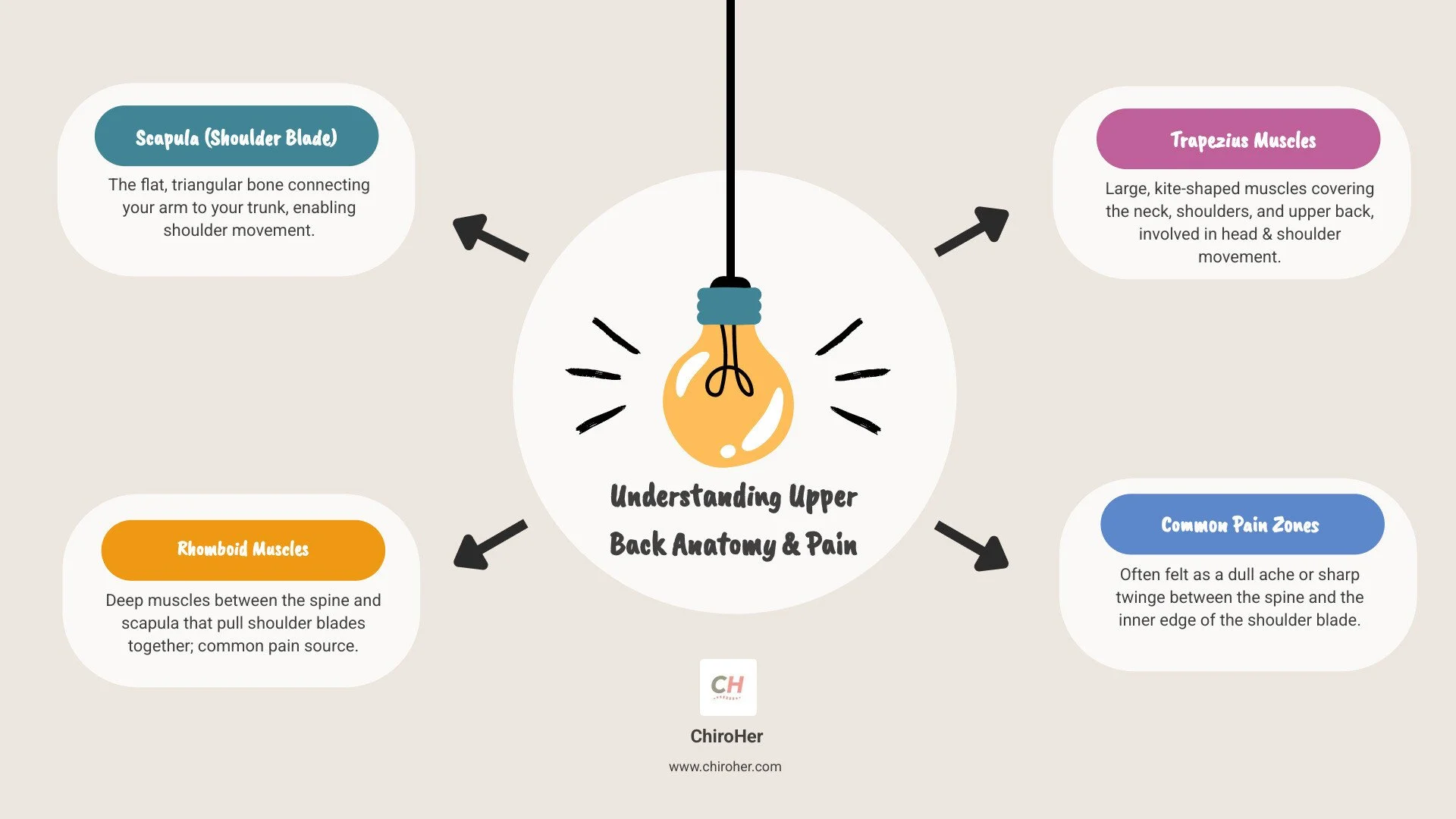
Understanding and Relieving Upper Shoulder Blade Pain

When you feel that familiar ache between your shoulder blades, it can be puzzling to know why it's happening. The causes of upper shoulder blade pain are diverse, ranging from everyday habits to more serious underlying conditions. Here, we break down the most common culprits.
Common Musculoskeletal Causes
Most upper shoulder blade pain cases stem from issues within our musculoskeletal system, often related to how we use our bodies daily.
Muscle Strain or Overuse: This is the most common cause. Repetitive motions from sports or work, lifting heavy objects incorrectly, or even sleeping in an awkward position can lead to muscle fatigue and strain. Prolonged computer use, which holds muscles in a static, forward-hunched position, is another frequent trigger.
Poor Posture: The way we sit and stand significantly impacts our upper back. Slouching over a desk or phone puts stress on the muscles around our shoulder blades. Over time, this can lead to chronic upper shoulder blade pain. It's not just about a "bad" posture, but more about sustained postures that prevent movement. You can learn more about how poor posture contributes to pain.
Injuries: Accidents, falls, or sudden movements can directly injure the muscles, ligaments, or bones around the shoulder blade. This includes sports injuries like those from throwing activities. Specific injuries like rotator cuff tears, shoulder dislocations, or fractures can manifest as upper shoulder blade pain.
Arthritis: Degenerative conditions like osteoarthritis in the neck or upper back can affect the joints and lead to pain that radiates to the shoulder blade area. This is common in the cervical (neck) or thoracic (upper back) spine.
Scapular Dyskinesis: This term describes an alteration in the normal position or motion of the shoulder blade. When the muscles that stabilize the scapula are imbalanced, it can lead to inefficient movement, pain, and sometimes a visible "winging" of the shoulder blade. The American Academy of Orthopaedic Surgeons (AAOS) provides information on scapular (shoulder blade) disorders.
When Pain Signals Something More Serious
While most upper shoulder blade pain is musculoskeletal, it can sometimes be a sign of a more serious condition. This is often referred pain, meaning the pain originates elsewhere but is felt in the shoulder blade.
Heart Conditions: Pain in the left shoulder blade can be a symptom of a heart attack. If the pain is sudden, severe, and accompanied by chest pain, shortness of breath, or dizziness, it's a medical emergency. Understanding the warning signs of a heart attack is crucial.
Lung Conditions: A pulmonary embolism (blood clot in the lungs) can cause sudden, sharp pain in the shoulder blade with shortness of breath. Pancoast tumors, a type of lung cancer, can also cause pain in the shoulder, shoulder blade, and arm.
Gallbladder Disease: Gallstones can cause referred pain, typically in the right upper shoulder blade pain area, often after eating fatty foods.
Pinched Nerves: A pinched nerve in the neck or upper back can send radiating pain to the shoulder blade, possibly with tingling, numbness, or weakness in the arm or hand.
Other Conditions: Less common causes include aortic dissection (a tear in the body's main artery), shingles (a viral infection), or certain cancers that have spread to the bones.
When to Call 911: If your upper shoulder blade pain is sudden, severe, and accompanied by any of these symptoms, please seek immediate medical attention by calling 911:
Chest pain or pressure
Difficulty breathing or shortness of breath
Dizziness or lightheadedness
Excessive sweating
Rapid or irregular heart rate
Sudden numbness or weakness in an arm or leg
Effective At-Home Strategies for Upper Shoulder Blade Pain
For most cases of upper shoulder blade pain that are not emergencies, several at-home strategies can provide relief.

Rest and Activity Modification: If certain activities worsen your pain, rest from them for a day or two. Avoid being completely sedentary, as gentle movement helps. Modify your routine to avoid aggravating the area.
Heat and Cold Therapy: This classic duo can work wonders.
Cold Therapy: Apply an ice pack for 15-20 minutes to reduce inflammation and numb pain. This is helpful for acute injuries. Always wrap the ice pack in a thin cloth.
Heat Therapy: Use a heating pad or take a hot bath for 15-20 minutes to relax tight muscles and improve blood flow. Heat is great for chronic stiffness.
Self-Massage: A gentle massage can release muscle tension. Use your hands, a foam roller, or a tennis ball against a wall to target knots between your shoulder blades.
Recommended Stretches: Regular stretching is key to improving flexibility. Here are a few effective stretches:
Doorway Stretch: Stand in a doorway and place your forearms on the frame with elbows bent at 90 degrees. Lean forward gently until you feel a stretch across your chest. Hold for 20-30 seconds.
Shoulder Blade Squeeze: Sit or stand tall. Gently squeeze your shoulder blades together. Hold for 5-10 seconds, then release. Repeat 10-15 times.
Wall Angels: Stand with your back against a wall. Press your lower back, head, and arms (bent at 90 degrees) against the wall. Slowly slide your arms up the wall, keeping contact, then slide them back down. Repeat 10-15 times.
You can find more helpful movements in our correct posture exercises guide.
Over-the-Counter (OTC) Medications: NSAIDs like ibuprofen or naproxen can help manage pain and inflammation. Always consult with your doctor before starting any new medication.
Professional Treatment Options for Lasting Relief
When upper shoulder blade pain persists despite at-home efforts, or if it's severe and impacts your daily life, professional care is often the next step. We believe in finding the root cause of your pain and creating a personalized plan for lasting relief.
Physical Therapy Guidance: A physical therapist can assess your movement patterns, identify muscle imbalances, and design a targeted exercise program to strengthen weak muscles and stretch tight ones. This can significantly improve posture and reduce strain on your shoulder blades.
Chiropractic Care: As your chiropractors in Oklahoma City, Yukon, Edmond, Nichols Hills, Del City, Mustang, and Moore, we specialize in addressing musculoskeletal pain. We understand that pain in the shoulder blade area can often be linked to misalignments in the spine. Through gentle spinal adjustments, we can restore proper joint movement, alleviate nerve compression, and reduce muscle tension. Many of our patients find significant relief from upper shoulder blade pain through our comprehensive chiropractic care.
Massage Therapy: Therapeutic massage is an excellent complement to chiropractic care. It helps to release deep muscle knots, improve circulation, and reduce overall tension in the upper back and shoulders. Whether it's to relax tight muscles or address specific trigger points, massage therapy can be incredibly beneficial.
Medications as Recommended by Your Provider: For some individuals, a doctor might recommend prescription medications such as muscle relaxers, stronger NSAIDs, or in rare cases, corticosteroid injections for localized inflammation. These are typically used for short-term relief while other treatments address the underlying issue.
Your Path to a Pain-Free Back
Living with upper shoulder blade pain doesn't have to be your normal. By understanding its causes and implementing effective strategies, you can significantly improve your comfort and quality of life.

Creating a Prevention-Focused Lifestyle
The best way to manage upper shoulder blade pain is to prevent it from becoming a recurring problem. Small changes in your daily habits can make a big difference.
Ergonomic Workspace: If you spend a lot of time at a desk, optimizing your workspace is crucial. Ensure your computer monitor is at eye level, your chair provides good lumbar support, and your feet are flat on the floor. These adjustments help maintain natural spinal curves and reduce strain.
Taking Breaks: Avoid prolonged periods of sitting or standing in one position. We recommend taking short breaks every 30-60 minutes to stand, stretch, and move around. This prevents muscles from becoming stiff and overworked.
Balanced Exercise: Regular physical activity that strengthens your core and upper back muscles, while also incorporating flexibility, is vital. Exercise helps to improve muscle endurance and support better posture.
Stress Management: There's a strong link between stress and physical pain. When we're stressed, our bodies often tense up, especially in the neck and shoulders. Practicing deep breathing exercises, meditation, or other relaxation techniques can help reduce muscle tension and prevent upper shoulder blade pain flare-ups.
Supportive Sleep: Your sleep setup plays a role too. Using the best pillow for neck and shoulder pain can ensure your neck and spine are properly aligned throughout the night, reducing morning stiffness and pain.
How We Can Help You Move Forward with Upper Shoulder Blade Pain
At ChiroHer, we are dedicated to helping you find relief from upper shoulder blade pain and other musculoskeletal issues. Our award-winning, patient-focused care means we listen to your unique story and develop a personalized plan that works for you. We pride ourselves on offering a holistic approach that combines chiropractic adjustments, acupuncture, and other wellness services in a comfortable, upscale environment.
We understand the challenges women face, from postural changes during pregnancy to the demands of daily life. Whether you're in Oklahoma City, Yukon, Edmond, Nichols Hills, Del City, Mustang, or Moore, our team is here to support your health. We invite you to experience the ChiroHer difference.
Ready to address your upper shoulder blade pain? Schedule a Consultation with us today, or explore our Back Pain services to learn more about how we can help you move and feel better.
Building Trust: Our Expertise and Trusted Resources
At ChiroHer, our commitment to your well-being is rooted in a foundation of extensive experience, continuous learning, and evidence-based practices. We believe that informed care leads to better outcomes, which is why we prioritize staying at the forefront of chiropractic and holistic health.
ChiroHer’s experience in women’s musculoskeletal health: Our practice has a particular focus on women's health, including the unique musculoskeletal challenges faced during pregnancy and motherhood. This specialized knowledge allows us to provide effective and compassionate care for conditions like upper shoulder blade pain that can be exacerbated by these life stages.
Ongoing education and certifications: Our team regularly participates in advanced training and certifications to ensure we are offering the most current and effective treatment modalities. This dedication to professional development means you receive care based on the latest research and best practices.
Reference to external resources: We encourage you to be an active participant in your health. For further reading and to deepen your understanding of musculoskeletal health, we recommend reliable sources such as the American Chiropractic Association and OrthoInfo by AAOS. These organizations provide valuable, peer-reviewed information that aligns with our commitment to transparency and patient education.
Emphasis on evidence-based care: Every treatment plan we create is informed by scientific evidence and custom to your individual needs. We integrate proven techniques with a holistic perspective to ensure comprehensive care to help you find relief from upper shoulder blade pain, helping you achieve optimal health and comfort.
This article is for informational purposes only and does not constitute medical advice. The information contained herein is not a substitute for, and should never be relied upon for, professional medical advice. Always seek the advice of your physician or other qualified health provider with any questions you may have regarding a medical condition.