
Bye-Bye Backache: Conquering Pregnancy Pain in Your Final Trimester
Understanding Back Pain in Your Final Trimester

Back pain during pregnancy 3rd trimester affects 60-70% of expectant mothers, making it one of the most common complaints during late pregnancy. If you're experiencing this discomfort right now, here's what you need to know:
Quick Relief Guide:
Practice good posture - Stand tall with shoulders back
Use supportive gear - Wear low-heeled shoes and consider a maternity belt
Sleep on your side - Place pillows between your knees and under your belly
Apply heat or cold - Use heating pads on low setting for 15 minutes
Stay active - Gentle walking and prenatal yoga help strengthen supporting muscles
Seek help if needed - Contact your provider for severe pain, numbness, fever, or bleeding
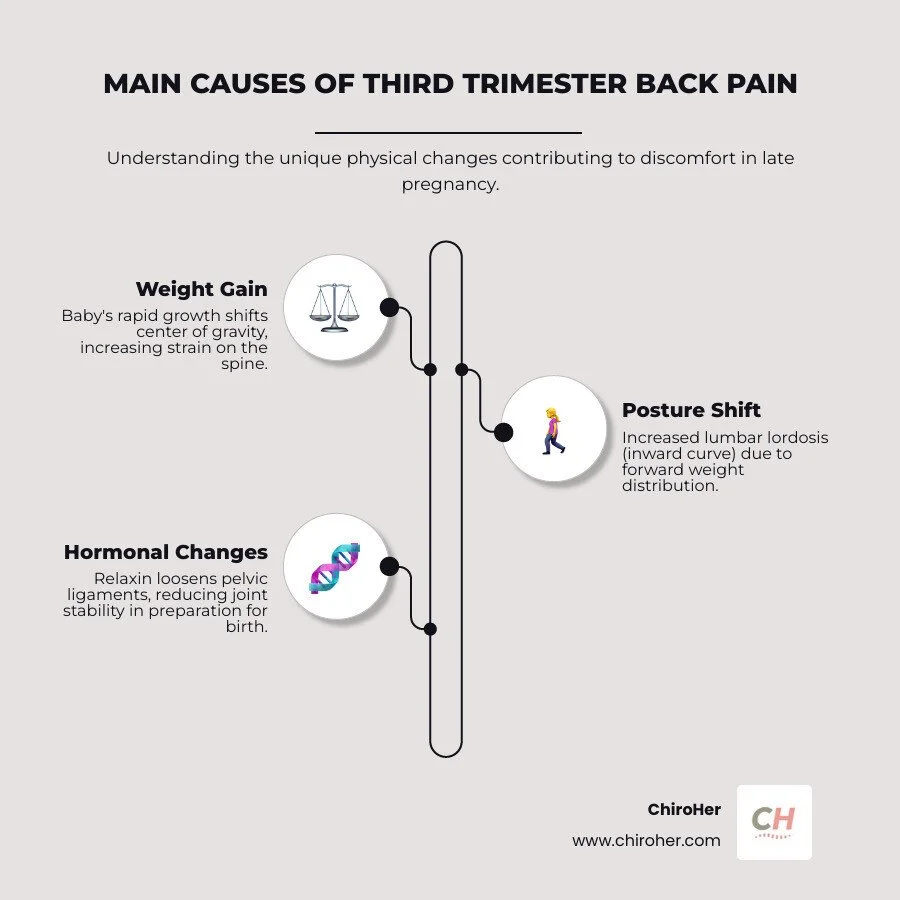
The third trimester brings unique challenges. Your baby gains the most weight during these final months, shifting your center of gravity forward and increasing the curve in your lower back. Hormones like relaxin loosen your pelvic ligaments to prepare for birth, but this can also reduce stability in your spine and joints. Add weakened abdominal muscles and the pressure of carrying extra weight, and it's no wonder your back hurts.
The good news? Most third trimester back pain is manageable with the right approach, and there are clear warning signs that help you know when pain signals something more serious.
I'm Dr. Michelle Andrews, founder of ChiroHer in Oklahoma City. I've worked with hundreds of expecting mothers experiencing back pain during pregnancy 3rd trimester, helping them find relief through gentle, safe chiropractic adjustments and personalized care plans. My goal is always to help you feel more comfortable during these final weeks before you meet your baby.
Why You're Aching: The Causes of Third Trimester Back Pain
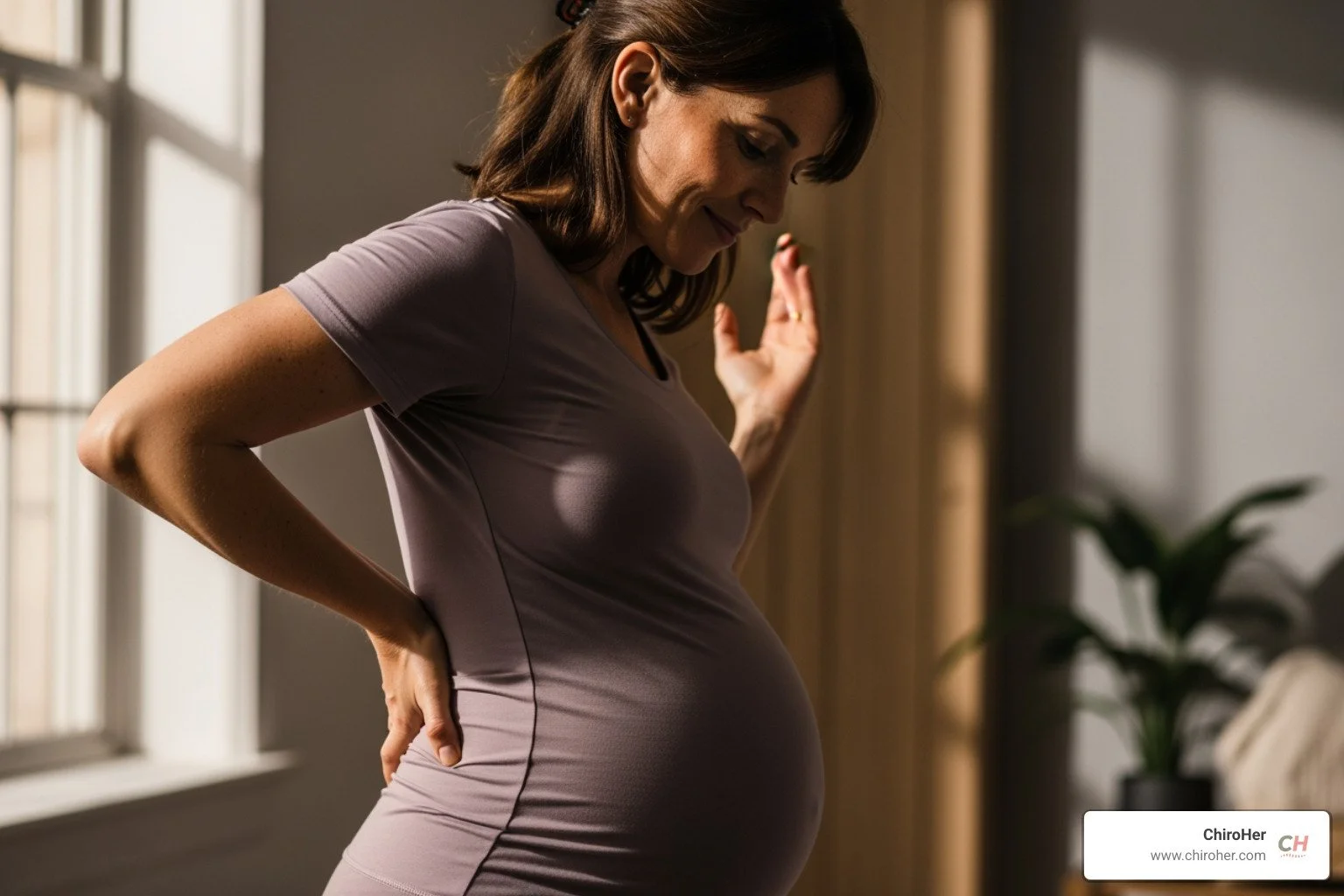
Back pain is a common pregnancy discomfort, especially in the third trimester when it can become severe for about one-third of individuals. As your body prepares for childbirth, these final months bring unique physical challenges. Understanding the cause of your discomfort is the first step toward relief.
The Role of Weight Gain, Posture, and Hormones
As your pregnancy progresses, several changes contribute to back pain.
First, the natural weight gain of 24-26 pounds adds stress to your spine. This extra weight from your baby, uterus, and amniotic fluid is a primary factor. The Centers for Disease Control and Prevention (CDC) offers guidelines for healthy weight gain, and studies link higher BMI to more back pain. You can review the recommendations in this Scientific research on pregnancy weight gain. This abdominal weight also shifts your center of gravity forward. Your body compensates by increasing the curve in your lower back (lumbar lordosis), which strains back muscles.
Hormones like relaxin and progesterone also contribute. Relaxin softens pelvic ligaments for childbirth, but this can reduce stability in your spine and pelvic joints, leading to strain and potential pelvic misalignment. Learn more in our guide on More info about pelvic misalignment.
Finally, the baby's position can add pressure. If the baby's head presses on your lower back or tailbone, or if the fetus is large, it can worsen the pain.
How Muscle Changes Contribute to Discomfort
Beyond weight and hormones, changes in your core muscles are a significant factor.
As your baby grows, your abdominal muscles stretch and weaken. Since these muscles are key for spine support, your back muscles must work harder, leading to strain. This can be worsened by diastasis recti (abdominal muscle separation), a common condition where the "six-pack" muscles separate. This separation further weakens your core, increasing back pain and contributing to pelvic instability. You can find more details on how these changes might feel in our article about More info about what a misaligned pelvis feels like.
The combined effect of these changes creates a cycle of discomfort, making your back muscles work overtime.
Is It Normal Pain or Something More Serious?
While some back pain is normal, it's important to know when it might signal a serious issue. Normal pain is often a dull ache in the lower back, hips, or buttocks that worsens with activity. You might also feel sciatica, a sharp pain radiating down your leg from sciatic nerve compression. Learn more in our article on More info about pregnancy and sciatica.
However, certain warning signs mean you should contact your healthcare provider immediately.
Seek urgent medical attention if your back pain is accompanied by:
Severe or intense pain that is sudden, sharp, or prevents you from performing normal activities.
Pain lasting longer than two weeks despite rest and home remedies.
Pain after a fall or injury.
Symptoms of preterm labor: This includes rhythmic cramping or contractions, increasing pressure in the pelvis, or any vaginal bleeding. Back pain, especially in the lower back, can be a sign of early labor in the second or third trimester.
Signs of a Urinary Tract Infection (UTI): This could be back pain along with a fever, chills, or a burning sensation during urination.
Preeclampsia symptoms: While preeclampsia pain commonly affects the shoulder and upper abdomen, lower back pain might occur alongside these symptoms if it has caused problems with the liver. Other signs of preeclampsia include severe headaches, dizziness, vision changes, or sudden swelling in your hands or face.
Numbness, tingling, or weakness in one or both legs, or difficulty walking.
Loss of feeling in your buttocks or genitals.
The American College of Obstetrics and Gynecology (ACOG) advises contacting your healthcare professional if your back pain becomes severe or lasts longer than 14 days. They will want to rule out any underlying causes. You can find detailed recommendations from ACOG guidance on when to call a professional.
Your Guide to Managing Back Pain During Pregnancy 3rd Trimester
The good news is that most back pain during the third trimester can be managed effectively with a combination of lifestyle adjustments, self-care strategies, and professional support. Our goal at ChiroHer is to empower you with the knowledge and tools to steer these final weeks with greater comfort.

At-Home Relief Strategies and Lifestyle Adjustments for Back Pain During Pregnancy 3rd Trimester
Many simple strategies can help alleviate your back pain and improve daily comfort:
Practice Good Posture: Stand tall with your shoulders back. When sitting, use a small pillow for back support and keep your feet flat on the floor. If standing for long periods, rest one foot on a low stool.
Wear Supportive Shoes: Choose low-heeled shoes with good arch support. Avoid high heels, which strain your back.
Master Proper Lifting Technique: Squat to lift, using your legs instead of your back. Keep objects close to your body and ask for help with heavy items.
Consider Supportive Gear: A maternity support belt can help lift your belly and reduce back strain.
Warm Baths and Heat/Cold Therapy: A warm bath can soothe sore muscles. You can also apply a heating pad (on low) or a cold pack to your back for 15 minutes for localized relief.
Balance Rest and Activity: Take frequent breaks from sitting or standing to stretch and walk. Ensure you get enough rest.
Optimize Your Sleep: Sleep on your side with pillows between your knees and under your belly for support. A body pillow can also provide comfort and proper alignment.
Gentle Massage: Ask your partner for a gentle back rub, or see a certified prenatal massage therapist to relieve muscle tension.
For more comprehensive approaches to managing discomfort naturally, explore our guide on More info about natural back pain relief.
Safe Exercises and Chiropractic Care
Staying active and seeking professional care can significantly reduce back pain.

Gentle Exercises:
Pelvic Tilts: On your back or all fours, flatten your back against the floor and tilt your pelvis up. This strengthens abdominal muscles.
Cat-Cow Stretch: On all fours, alternate between arching your back up and dropping your belly down. Repeat 10 times to mobilize the spine.
Prenatal Yoga: Classes designed for pregnancy can safely improve flexibility, strength, and balance.
Swimming and Water Exercise: Water supports your weight, relieving pressure on your back and joints. It's an excellent low-impact option.
Walking: A gentle walk helps maintain muscle strength and improves circulation.
Chiropractic Care for Pregnancy: Our team at ChiroHer specializes in prenatal chiropractic care. We use gentle, safe adjustments to balance your pelvis and spine, which can reduce back, hip, and sciatic pain. Our approach, including the Webster Technique, helps optimize fetal positioning and can lead to a more comfortable pregnancy and birth. Many patients in Oklahoma City, Yukon, Edmond, and surrounding areas find relief with our care. Learn more on our page about More info about chiropractic for pregnancy.
Prenatal Massage: A professional prenatal massage can target specific areas of tension, such as your lower back and hips, providing much-needed relief and relaxation. Ensure your massage therapist is certified in prenatal massage.
When to Call Your Doctor or a Specialist for Back Pain During Pregnancy 3rd Trimester
While home remedies and supportive therapies are effective, it's important to know when to seek medical advice. Your health and your baby's well-being are our top priorities.
Contact your OB-GYN or midwife if your pain is severe, persistent, or accompanied by any of the warning signs mentioned earlier, such as vaginal bleeding, rhythmic cramping, fever, or numbness in your legs. Any pain after a fall or injury requires immediate attention.
At ChiroHer in Oklahoma City, our team provides compassionate care throughout your pregnancy. If you're looking for specialized support for third-trimester back pain, we offer chiropractic, acupuncture, and holistic wellness services to help you feel your best. You can easily Schedule a consultation with a prenatal chiropractor at our locations in Oklahoma City, Yukon, Edmond, Nichols Hills, Del City, Mustang, and Moore.
Building Trust: What Science and Experts Say About Pregnancy Back Pain
We understand that during pregnancy, you want to ensure every choice you make is safe and backed by reliable information. That's why we emphasize evidence-based care and encourage you to consult reputable sources and healthcare professionals.
Organizations like the Centers for Disease Control and Prevention (CDC) provide valuable insights into healthy pregnancy practices, including weight gain guidelines. You can review their recommendations on Scientific research on pregnancy weight gain.
Similarly, the American College of Obstetrics and Gynecology (ACOG) offers comprehensive guidance on various pregnancy-related concerns, including when to seek medical attention for back pain. Their insights help ensure you understand the difference between common discomforts and signs that require a doctor's visit. For more detailed information, please refer to ACOG guidance on when to call a professional.
At ChiroHer, our team stays current with the latest research and best practices in prenatal care. We integrate this knowledge into our personalized treatment plans, ensuring that the chiropractic, acupuncture, and holistic wellness services we offer are not only effective but also safe for both you and your baby. Our commitment is to provide you with care that supports a comfortable and healthy pregnancy, grounded in scientific understanding and expert consensus.
This article is for informational purposes only and does not constitute medical advice. The information contained herein is not a substitute for, and should never be relied upon for, professional medical advice. Always seek the advice of your physician or other qualified health provider with any questions you may have regarding a medical condition.