
Stop the Slouch and Master Your Pelvic Alignment
Why Pelvic Alignment Matters More Than You Think for Women
Anterior pelvic tilt in females is one of the most common postural imbalances affecting women today, and research suggests it impacts roughly 75% of women, often without causing any obvious symptoms at first.
Here is a quick overview of what you need to know:
| Topic | Key Point |
|---|---|
| What it is | The pelvis tips too far forward, increasing the curve in the lower back |
| Common signs | Lower back pain, belly pooch, hip stiffness, swayback posture |
| Main causes | Prolonged sitting, tight hip flexors, weak glutes and core, pregnancy, high heels |
| Normal angle | Up to 8 degrees is considered typical; above that is considered excessive |
| Can it improve | Yes, with targeted stretching, strengthening, and movement habit changes |
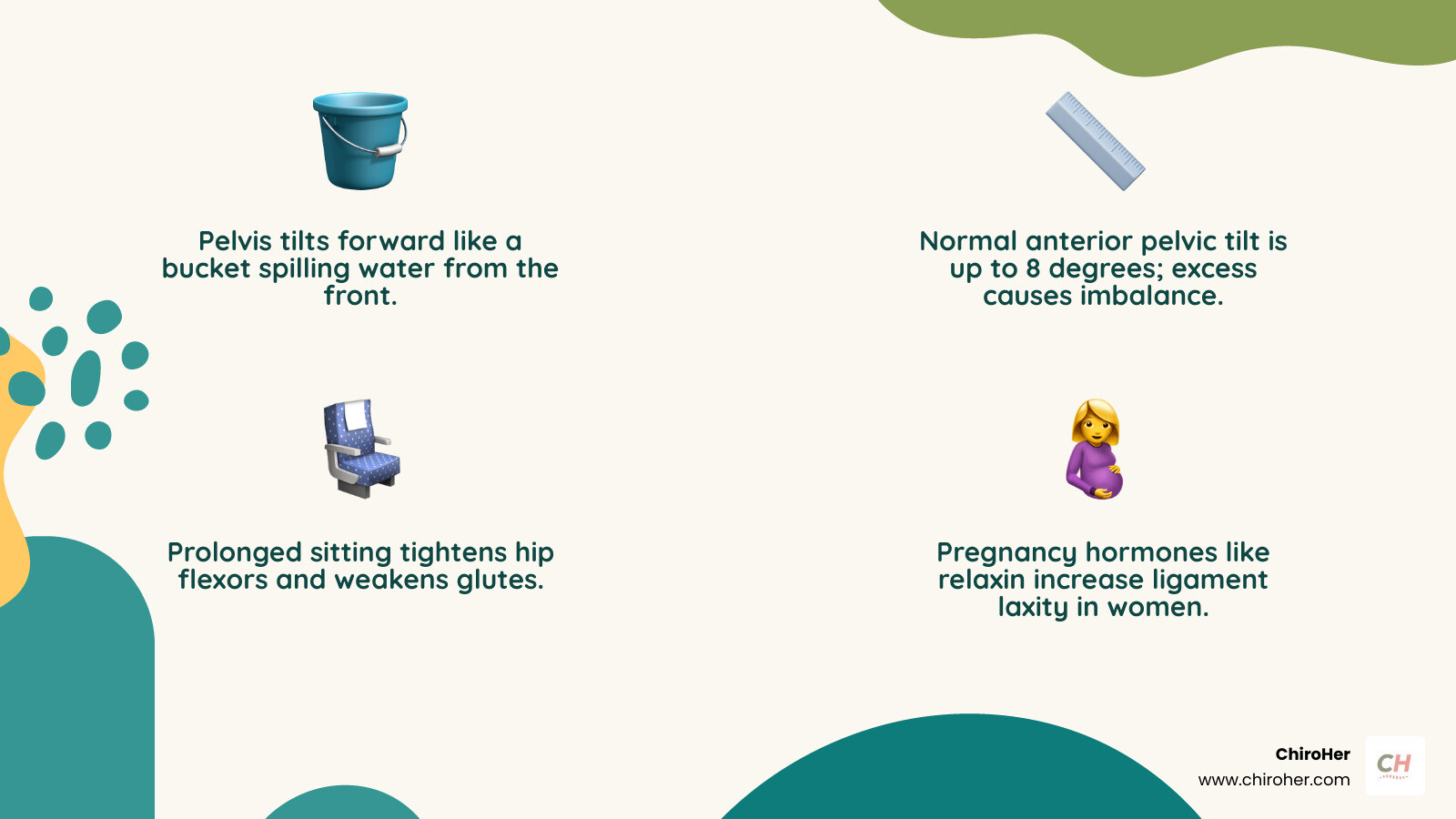
Think of your pelvis like a bucket of water. When the bucket tilts forward, water spills out the front. That is exactly what happens with anterior pelvic tilt. The front of the pelvis drops down, the lower back arches more than it should, and everything connected to it, including your hips, core, and spine, has to compensate.
For women, this imbalance is not just a posture problem. It can quietly affect how you move, how you feel, and even how you look. And because women's bodies go through unique changes like pregnancy, hormonal shifts, and years of wearing heeled shoes, the risk factors are different and often more layered than they are for men.
This guide walks you through what causes it, how to spot it, and what actually works to correct it.
Hi! I'm Dr. Michelle Andrews, D.C., founder of ChiroHer in Oklahoma City, and I'm Webster Technique certified with extensive training in prenatal and postnatal chiropractic care, which means I work closely with women navigating anterior pelvic tilt at every stage of life. I've helped hundreds of women, from busy professionals to new moms, improve their pelvic alignment and get out of pain without relying on medication.
This guide is for informational purposes and is not a substitute for already established medical advice from your healthcare provider.
Understanding Anterior Pelvic Tilt Female Causes and Symptoms
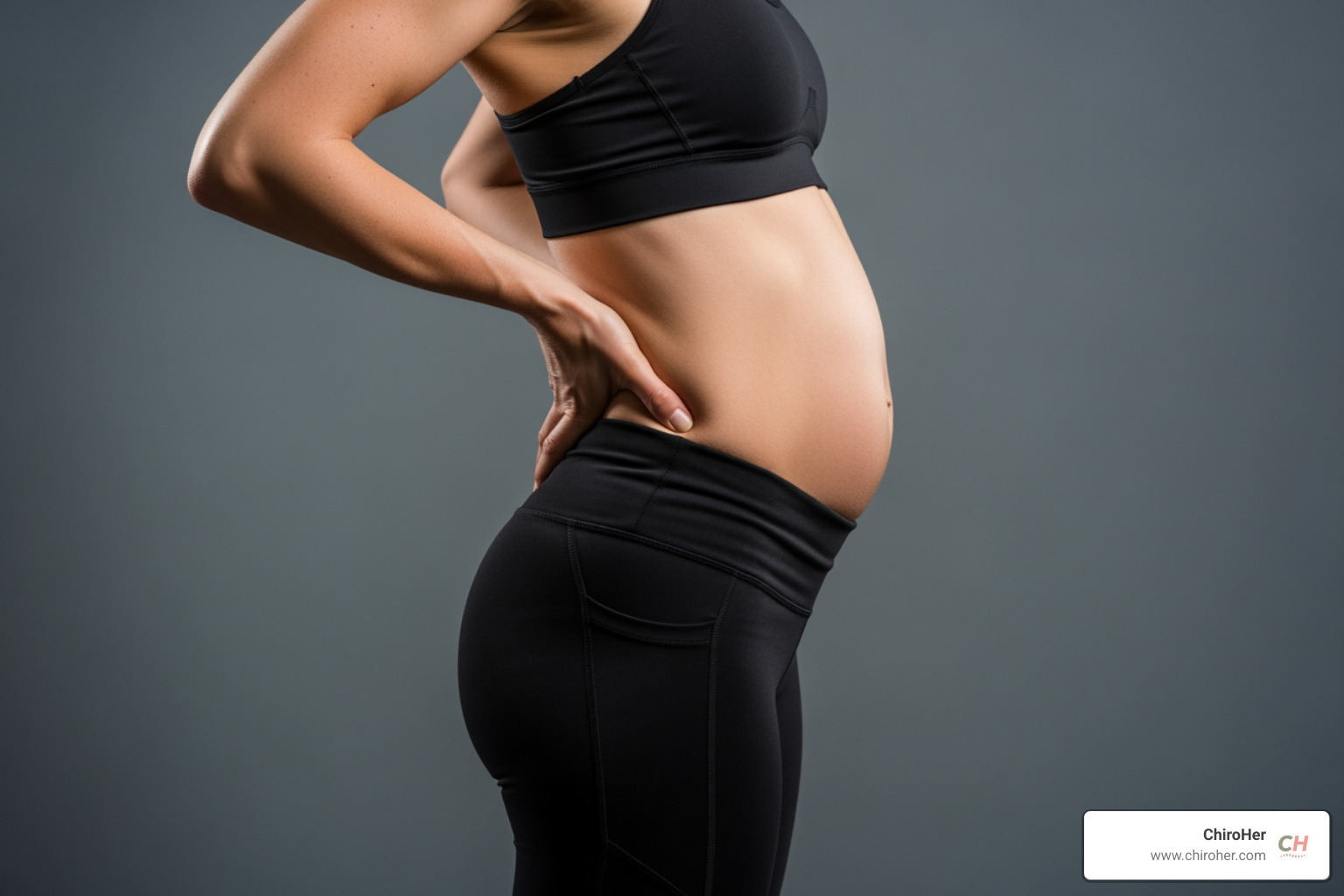
Anterior pelvic tilt (APT) occurs when the front of the pelvis rotates forward and the back of the pelvis rises. This mechanical shift forces the lower spine into an exaggerated arch, often referred to as swayback posture. While a small amount of tilt is normal, excessive tilt can lead to a cascade of physical issues.
For many women, the most frustrating symptom is the belly pooch. Even women with very low body fat may notice their lower abdomen protruding. This isn't necessarily about fat; it's about the internal organs being pushed forward because the pelvis is no longer providing a level "floor" for the torso.
Common symptoms we see at ChiroHer include:
- Persistent lower back pain or tightness, especially after standing for long periods.
- Hip flexor stiffness that makes it feel like you can't fully straighten your hips.
- Weakness in the glutes and hamstrings.
- A feeling of instability during movements like squats or lunges.
- Changes in height perception, as the exaggerated curve can make you appear slightly shorter than you are.
According to Cleveland Clinic, this condition is often the result of muscle imbalances where the muscles in the front of the hips are too tight and the muscles in the back are too weak. If you are curious about how this feels in your own body, you can read more about what a misaligned pelvis feels like to see if your symptoms match.
Why Women Experience Anterior Pelvic Tilt Differently
Women face unique physiological factors that make them more prone to anterior pelvic tilt female alignment issues. One of the most significant factors is pregnancy. As the baby grows, the center of gravity shifts forward. To compensate and stay upright, the lower back arches more, pulling the pelvis into an anterior tilt.
During pregnancy, the body also releases a hormone called relaxin. This hormone is vital for allowing the pelvis to expand for birth, but it also increases ligament laxity. This extra flexibility can make the joints less stable, allowing the pelvis to tip forward more easily. Postpartum, many women find that their bodies don't automatically "snap back" to a neutral position, especially if abdominal muscles were weakened or separated during pregnancy.
Footwear also plays a massive role. Habitually wearing high heels forces the body to shift its weight forward. To keep from falling over, the pelvis tilts anteriorly. One study of women who habitually wore high heels found their baseline tilt averaged 12.3 degrees, well above the normal 8-degree reference value. Understanding these causes and symptoms during pregnancy is crucial for long term recovery.
Identifying Anterior Pelvic Tilt Female Alignment at Home
You don't always need a clinical exam to get a general idea of your pelvic position. Here are three simple ways to check yourself:
- The Thomas Test: Sit at the very edge of a sturdy table or high bed. Lay back and pull both knees to your chest. Hold one knee firmly against your chest and slowly lower the other leg until it hangs freely. If your lowered leg cannot touch the table or stays lifted, it indicates tight hip flexors and a likely anterior tilt.
- The Belt Buckle Test: Put on a belt and stand sideways in front of a mirror. Look at the line of the belt. If the buckle is significantly lower than the back of the belt, your pelvis is tilting forward.
- The Wall Test: Stand with your back against a wall, heels about two inches away. Ideally, there should be just enough space for your hand to slide behind your lower back. If you can fit your entire forearm or a large gap exists, your tilt may be excessive.
Learning how to identify these symptoms is the first step toward correcting the slouch.
Effective Strategies for Correcting and Managing Pelvic Alignment

The good news is that anterior pelvic tilt female posture is rarely permanent. It is typically a functional issue, meaning it's caused by how you move and hold your body rather than a structural deformity in your bones. Correction involves a two-pronged approach: stretching what is tight and strengthening what is weak.
Most women with APT have "Lower Crossed Syndrome." This means the hip flexors and lower back muscles are overactive and tight, while the abdominals and glutes are underactive and weak. By balancing these four groups, we can level the "bucket" of the pelvis.
Strengthening the Core and Posterior Chain
To pull the pelvis back into a neutral position, we need to wake up the muscles that live on the back of your body (the posterior chain) and your deep core.
- Glute Bridges: These are excellent for activating the glutes and hamstrings without straining the back. Focus on tucking your tailbone as you lift to ensure the movement comes from your hips, not your spine.
- Planks: Planks teach your core to resist the arching of the lower back. Think about pulling your belly button toward your spine and squeezing your glutes.
- Dead Bugs: This exercise is a favorite at ChiroHer because it forces you to keep your lower back flat against the floor while moving your limbs, which is the ultimate test of pelvic control.
For more specific movements, check out our guide on stretches and exercises for a misaligned pelvis.
Stretching Tight Hip Flexors and Quads
If your hip flexors are constantly "on," they act like tight rubber bands pulling the front of your pelvis down toward your knees.
- Half-Kneeling Hip Flexor Stretch: Kneel on one knee (like a proposal). Instead of just leaning forward, tuck your pelvis under first. You should feel a deep stretch in the front of the hip of the kneeling leg. Hold for 30 seconds.
- Psoas Release: Using a foam roller or a soft ball to gently massage the area just inside your hip bone can help down-regulate tight muscles.
- Movement Breaks: If you work a desk job in Oklahoma City, try to stand every 30 minutes. Prolonged sitting is the primary driver of hip flexor tightness.
Research from 2021 shows that hip flexor stretches can provide an almost immediate reduction in pelvic tilt, though long-term changes usually take about 8 weeks of consistency. You can find more targeted stretches to align the pelvis on our blog.
Professional Care and Long Term Maintenance
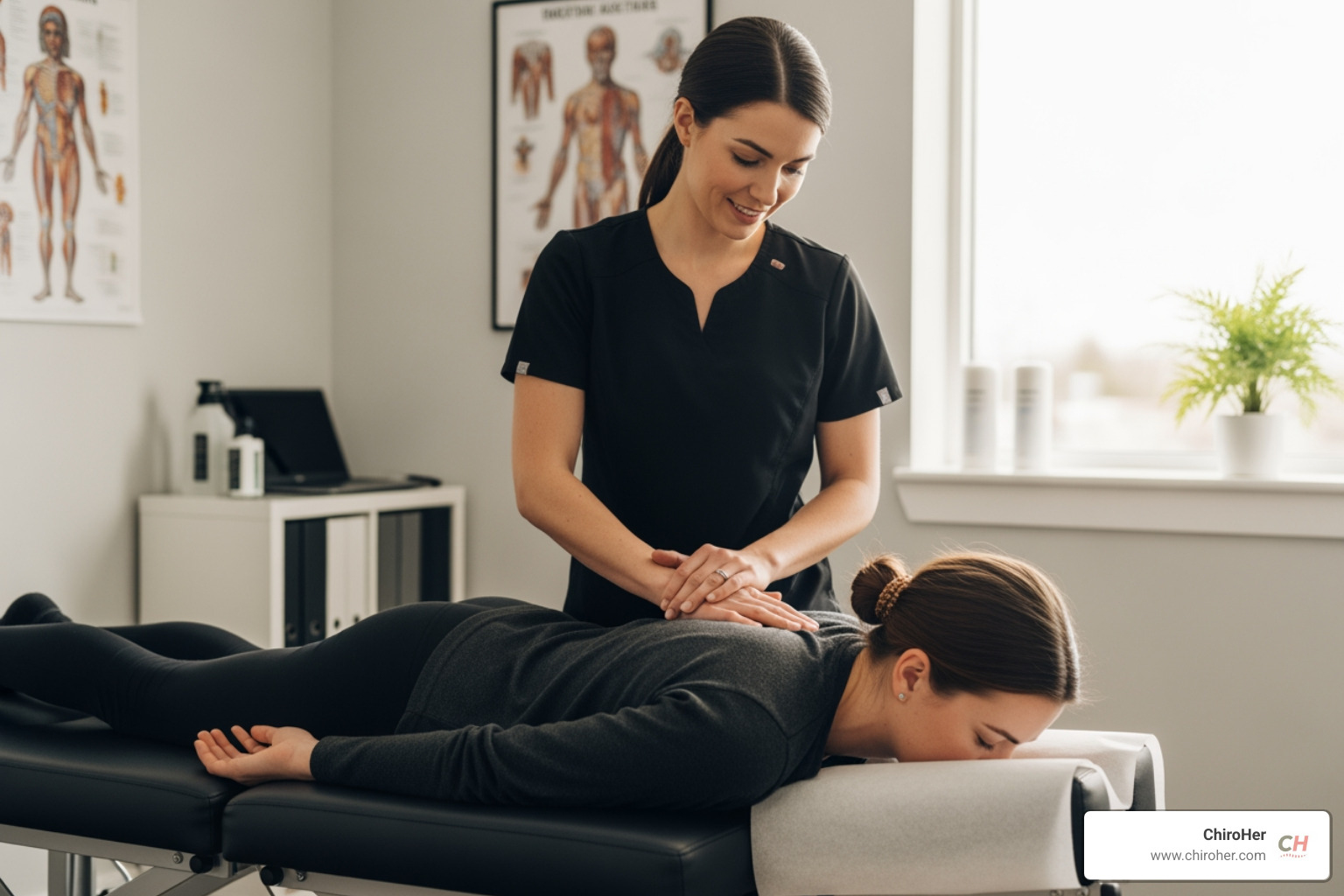
While home exercises are vital, professional care can significantly speed up the process. At ChiroHer, we look at the body as a whole. Sometimes, a "stuck" joint in the lower back or a misalignment in the feet can make it impossible for your muscles to relax, no matter how much you stretch.
Our approach includes:
- Chiropractic Adjustments: We use gentle techniques to restore motion to the sacroiliac (SI) joints and lumbar spine, making it easier for you to maintain a neutral posture.
- Soft Tissue Therapy: We address the "knots" and adhesions in the hip flexors and lower back that might be holding the tilt in place.
- Ergonomic Guidance: We help you set up your workspace in Yukon or Edmond so your daily habits aren't undoing your hard work.
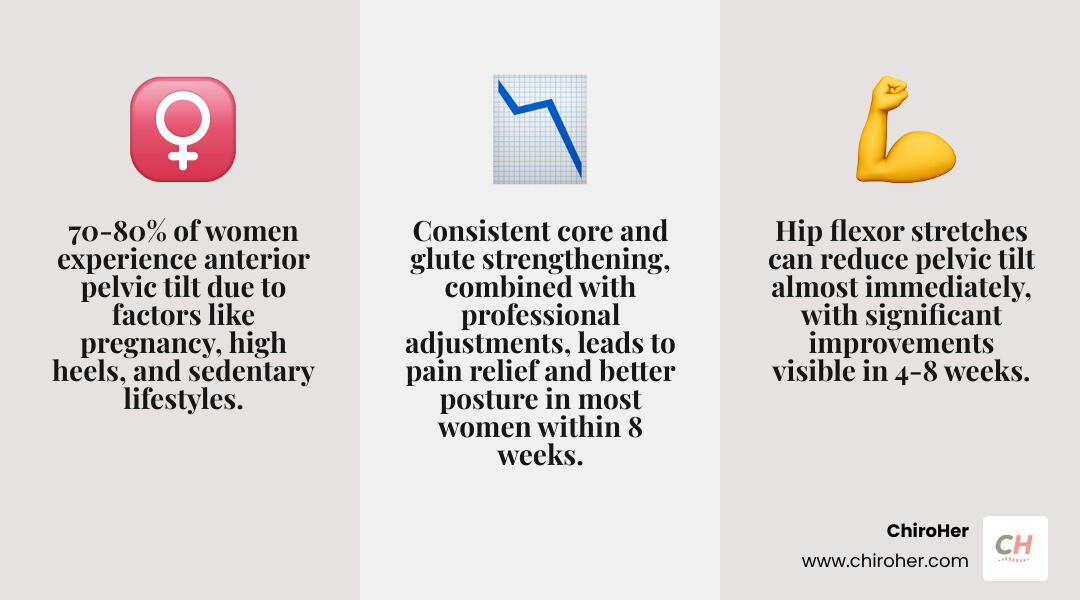
Consistency is the key to making these changes stick. It isn't about being "perfect" all the time; it's about building the awareness to notice when you're slouching and having the strength to pull yourself back into alignment. Most women see significant improvements in pain and posture within 4 to 8 weeks of a dedicated program.
If you're tired of the lower back ache or the "Instagram booty" posture that's causing you discomfort, we're here to help. Whether you're in Nichols Hills, Moore, or Mustang, our team is dedicated to helping women reclaim their alignment.
Ready to stop the slouch? Book an appointment with us today or explore our how to fix anterior pelvic tilt guide for more tips.
This guide is for informational purposes and is not a substitute for already established medical advice from your healthcare provider.