
Stomach Savvy: Unlocking Digestive Harmony with Acupuncture
Understanding Bloating and How Acupuncture Can Help

Acupuncture for bloating is a natural treatment using thin needles at specific body points to help reduce gas, improve digestion, and restore balance to your digestive system.
Quick answer: How acupuncture helps with bloating
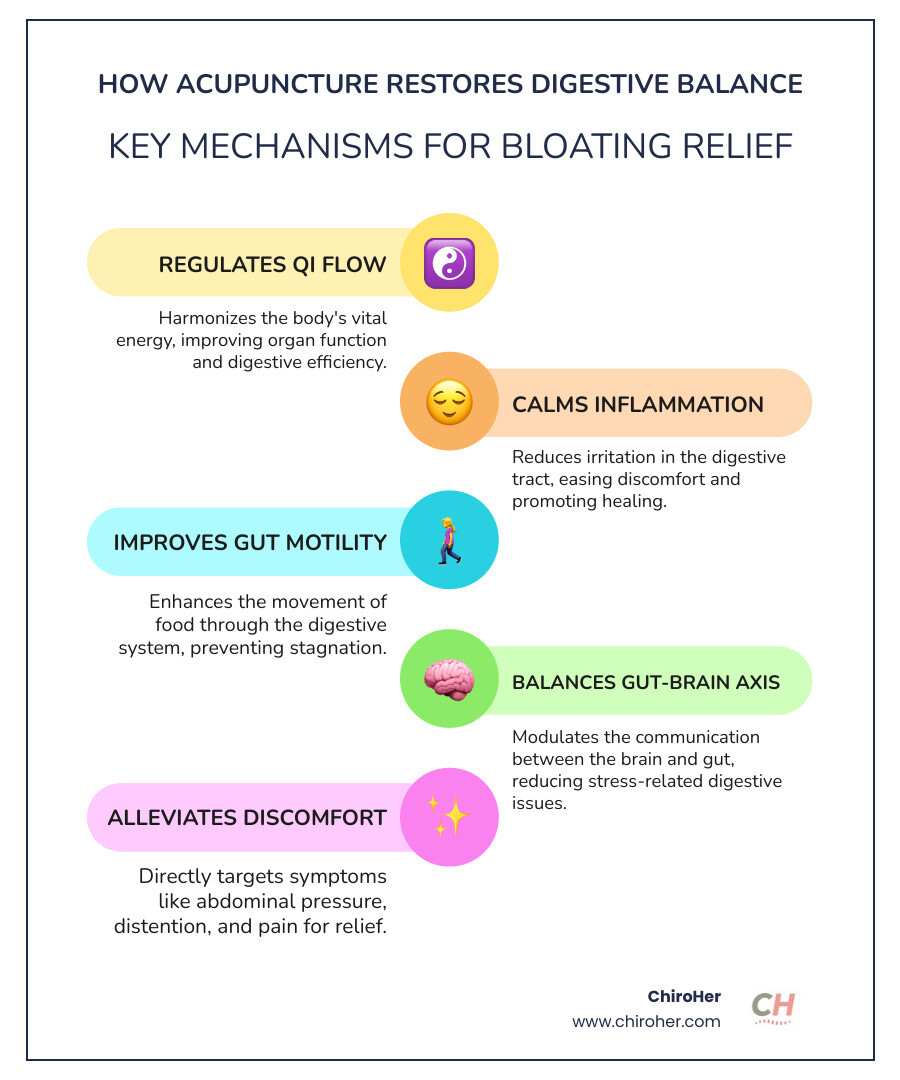
- Improves gut motility by helping food move through your digestive system more efficiently
- Helps reduce inflammation and calm irritation in the digestive tract
- Supports the gut-brain connection to ease stress-related digestive issues
- Uses specific points such as ST36, CV12, and ST25 that are important for bloating relief
- Has growing research support for managing IBS symptoms, including bloating
Bloating is a common issue that can cause:
- Uncomfortable abdominal distention
- A tight, full feeling in your belly
- Pressure and pain that can disrupt daily life
According to the National Institute of Diabetes and Digestive and Kidney Diseases, this discomfort can stem from various factors, including diet, swallowing air, and certain medical conditions. This feeling is more than an inconvenience and can impact your work, social life, and overall well-being.
Traditional Chinese Medicine has used acupuncture for thousands of years to help with digestive disorders. Modern research now suggests that acupuncture can improve bloating by:
- Supporting more regular digestive function
- Calming the nervous system
- Helping reduce inflammation in the gut
For example, studies show that acupuncture and acupressure can:
- Increase gas release
- Improve bowel function
- Reduce symptoms like upper abdominal bloating and fullness in patients with constipation or postprandial distress syndrome
Hi! I'm Dr. Michelle Andrews, founder of ChiroHer in Oklahoma City. While my practice focuses on chiropractic care for women, prenatal health, and sports recovery, I understand how holistic approaches like acupuncture can support comprehensive wellness care.
How Acupuncture for Bloating Works
When you experience bloating, it is often a sign that your digestive system is not working in sync. This discomfort can feel like:
- Fullness or tightness in the abdomen
- Pressure or mild to moderate pain
- A sensation of swelling or distention
It can be caused by factors such as excess gas, constipation, or irritable bowel syndrome (IBS). At ChiroHer, we focus on how acupuncture offers a holistic path to relief.
The Traditional Chinese Medicine Perspective
From a Traditional Chinese Medicine (TCM) perspective, your body has energy pathways called meridians where a vital life force called Qi (pronounced "chee") flows. When Qi is blocked, it can lead to illness.
In TCM, bloating is often seen as a sign of:
- Stagnant Qi in the digestive system
- Imbalance in the Spleen and Stomach organ systems
- A build-up of what TCM calls dampness, which refers to excess fluid or sluggishness
The Spleen and Stomach are seen as central to digestion:
- The Spleen transforms food into Qi and blood
- The Stomach begins the process of food breakdown
If these organ systems are weak because of diet, stress, or overwork, Qi can get stuck, leading to symptoms such as:
- Bloating and gas
- Indigestion
- A heavy, tired feeling after meals
Acupuncture aims to correct these imbalances by inserting thin needles into specific acupoints to help:
- Improve Qi flow and support smoother digestion
- Harmonize organ systems such as the Stomach and Spleen
- Support your body's natural healing processes
This approach focuses on restoring internal balance rather than only masking symptoms. By looking at the root cause, acupuncture can support longer-term relief. For more on TCM theory, you can read this overview of its conceptual framework.
The Modern Scientific Explanation
Modern research offers several explanations for how acupuncture may improve digestive health.
Studies suggest acupuncture can:
- Help regulate gut motility, the movement of food through your digestive tract
- Support more normal bowel rhythm in people with slow or overactive digestion
- Engage nerve pathways that influence the digestive system
This research on acupuncture for gastrointestinal function highlights its possible role in regulating motility.
Acupuncture may also help:
- Lower certain inflammatory markers in the body
- Reduce irritation in the gut lining
- Support a healthier environment for digestion
Another important area is the gut-brain axis, the communication network linking your digestive system and your brain. Stress can disturb this network and trigger or worsen bloating.
By stimulating specific points, acupuncture has been shown to:
- Activate the parasympathetic (rest and digest) nervous system
- Encourage the release of natural pain-relieving chemicals
- Influence neurotransmitters that play a role in digestion and stress
Research findings include:
- IBS symptom relief: A meta-analysis reported that acupuncture helped reduce IBS symptoms such as abdominal pain and bloating
- Acid reflux and GERD: A study found that acupuncture reduced acid reflux episodes and improved esophageal function in people with GERD
- Post-operative recovery: Several studies found that acupressure reduced bloating and pain after surgery and supported faster recovery
- Constipation and gas: Clinical research suggests acupressure can improve constipation and increase gas passage, which can ease bloating
- Functional dyspepsia: A clinical trial reported that acupuncture improved upper abdominal bloating and fullness, with benefits lasting for weeks after treatments ended
These findings suggest that acupuncture can support your body's own ability to regulate digestion and relieve bloating.
Key Acupuncture Points for Bloating Relief
Every treatment is personalized, but certain acupuncture points are often used for bloating and digestive discomfort.
Common points include:
Stomach 36 (ST36 - Zusanli)
- Located below the kneecap on the lower leg
- Used to support overall digestive health
- May help regulate gut motility and reduce abdominal pain and nausea
Large Intestine 4 (LI4 - Hegu)
- Found in the web between your thumb and index finger
- Often used to ease pain and stress
- Can support stress-related digestive symptoms
Pericardium 6 (P6 - Nei Guan)
- Located on the inner forearm above the wrist
- Widely used for nausea and motion sickness
- Can help calm an upset stomach
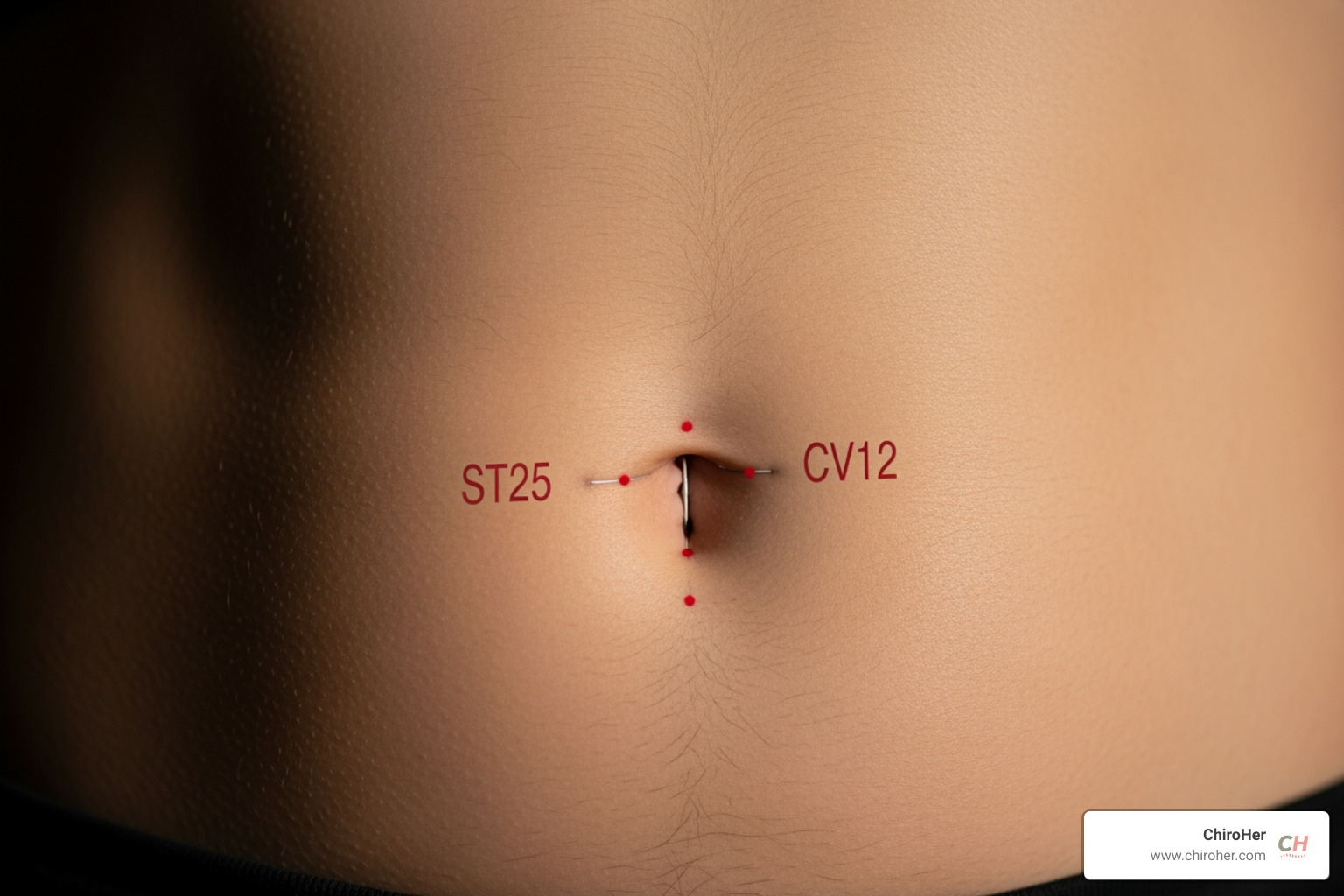
Stomach 25 (ST25 - Tianshu)
- Located on the abdomen on either side of your navel
- Often chosen for abdominal pain and bloating
- Used to support more regular intestinal function
Conception Vessel 12 (CV12 - Zhongwan)
- Situated on the midline of your abdomen above the navel
- A key point for upper abdominal fullness and discomfort
- Often used for symptoms such as bloating and indigestion
By stimulating these and other points, your practitioner works to support natural digestive function and help ease bloating.
Your Acupuncture Experience and Holistic Care
Choosing acupuncture for bloating at ChiroHer means stepping into a supportive, patient-focused environment. We believe in personalized care that helps you feel your best.

What to Expect During Your First Session
Your first visit is a thorough step toward creating a personalized treatment plan. Here is what usually happens:
Initial consultation
- Discussion of your health history
- Review of digestive symptoms, lifestyle, diet, and stress levels
- Opportunity to ask questions about acupuncture
TCM assessment
- Tongue observation for color, shape, and coating
- Pulse assessment at both wrists
- These traditional methods offer insight into your internal balance
Needle insertion
- Very thin, sterile needles are gently inserted at specific acupoints
- You may feel a mild sensation such as a dull ache, tingling, or warmth
- The goal is a comfortable experience with minimal discomfort
Relaxation period
- Needles usually remain in place for 20 to 30 minutes
- Many patients find this time deeply calming and may even fall asleep
Treatment plan
- Recommendations on how often to come in
- Discussion of how acupuncture fits with your overall care
- For digestive issues, a series of sessions is often recommended for the most benefit
Possible side effects
- Mild soreness or slight bruising at an insertion site can occur
- Serious side effects are rare when acupuncture is performed by a trained professional
Complementing Acupuncture with Lifestyle Changes
Acupuncture works best when combined with healthy daily habits. We encourage our patients in Oklahoma City and nearby areas such as Yukon, Edmond, Nichols Hills, Del City, Mustang, and Moore to support their digestion with practical changes.
Some helpful steps include:
Dietary tips
- Keep a simple food journal to notice which foods make your bloating worse
- Common triggers include certain dairy products, high-fat meals, carbonated drinks, and some high-FODMAP foods
- Eat smaller, more frequent meals instead of very large meals
- Increase fiber from fruits, vegetables, and whole grains slowly to avoid excess gas
- Talk with your healthcare provider about whether probiotics might be right for you
Mindful eating habits
- Eat slowly and chew thoroughly to support better digestion
- Try to eat without screens or strong distractions
- Avoid lying down right after meals when possible
Stress management
- Practice deep breathing, gentle stretching, or meditation to calm your nervous system
- Consider yoga, walking, or other low-impact movement to support digestion and gas movement
- Aim for regular sleep patterns, since poor sleep can worsen digestive symptoms
Hydration
- Drink enough water through the day to help prevent constipation
- Limit very sugary drinks and excessive caffeine, which can irritate the gut for some people
By combining acupuncture with these habits, you help create a more stable foundation for digestive health.
Building Trust and Finding Reliable Information
When you are choosing any treatment, it helps to look at trustworthy sources.
For digestive health and bloating, useful, evidence-based resources include:
- National Institute of Diabetes and Digestive and Kidney Diseases (NIDDK): Detailed information on gas, bloating, IBS, and other digestive conditions
- American College of Gastroenterology: Patient-focused explanations of bloating, when to seek care, and standard treatment options
- World Health Organization (WHO) – Traditional, Complementary and Integrative Medicine: Background on the use of traditional practices, including acupuncture, around the world
- Cochrane Library: Systematic reviews that summarize research on topics such as acupuncture and IBS (search "acupuncture irritable bowel syndrome")
These sources can help you understand both conventional and complementary options so you can make informed decisions with your healthcare provider.
When to Seek Professional Help for Bloating
While acupuncture and lifestyle changes can help many people, it is important to know when to seek medical advice.
You should contact a healthcare professional if your bloating is:
Persistent or severe
- Does not improve over time
- Causes significant pain or keeps you from normal activities
Accompanied by warning signs, such as:
- Unexplained weight loss
- Fever or chills
- Blood in your stool or black, tarry stools
- Persistent vomiting
- Difficulty swallowing
New or changing
- Sudden onset of bloating, especially if you are over age 50
- Symptoms that are gradually getting worse
A proper medical evaluation can help rule out underlying conditions such as celiac disease, inflammatory bowel disease, or certain cancers. After you have a clear diagnosis, you and your doctor can consider a care plan that may include both medical treatments and supportive options like acupuncture.
At ChiroHer in Oklahoma City, we integrate chiropractic services with other holistic approaches. If you are struggling with bloating and want to explore acupuncture as part of your care, we welcome you to learn more about our services.
This guide is for informational purposes and is not a substitute for already established medical advice from your healthcare provider.